
The Prayer During Battle (Ṣalāt al-Khawf)
Bismillahir Rahmanir Raheem,
وَإِذَا كُنتَ فِيهِمْ فَأَقَمْتَ لَهُمُ الصَّلَاةَ فَلْتَقُمْ طَائِفَةٌ مِّنْهُم مَّعَكَ وَلْيَأْخُذُوا أَسْلِحَتَهُمْ فَإِذَا سَجَدُوا فَلْيَكُونُوا مِن وَرَائِكُمْ وَلْتَأْتِ طَائِفَةٌ أُخْرَىٰ لَمْ يُصَلُّوا فَلْيُصَلُّوا مَعَكَ وَلْيَأْخُذُوا حِذْرَهُمْ وَأَسْلِحَتَهُمْ ۗ وَدَّ الَّذِينَ كَفَرُوا لَوْ تَغْفُلُونَ عَنْ أَسْلِحَتِكُمْ وَأَمْتِعَتِكُمْ فَيَمِيلُونَ عَلَيْكُم مَّيْلَةً وَاحِدَةً ۚ وَلَا جُنَاحَ عَلَيْكُمْ إِن كَانَ بِكُمْ أَذًى مِّن مَّطَرٍ أَوْ كُنتُم مَّرْضَىٰ أَن تَضَعُوا أَسْلِحَتَكُمْ ۖ وَخُذُوا حِذْرَكُمْ ۗ إِنَّ اللَّهَ أَعَدَّ لِلْكَافِرِينَ عَذَابًا مُّهِينًا۱٠۲
And when you are among them and lead them in prayer, let a group of them stand [in prayer] with you and let them carry their arms. And when they have prostrated, let them be [in position] behind you and have the other group come forward which has not [yet] prayed and let them pray with you, taking precaution and carrying their arms. Those who disbelieve wish that you would neglect your weapons and your baggage so they could come down upon you in one [single] attack. But there is no blame upon you, if you are troubled by rain or are ill, for putting down your arms, but take precaution. Indeed, Allah has prepared for the disbelievers a humiliating punishment.
(Al Quran 4:102)
This verse was revealed during one of the Prophet Muhammad ﷺ’s military expeditions, when Muslims faced enemies in battle but still had to maintain their daily prayers. It teaches how to perform prayer in times of danger, ensuring that believers never abandon their connection with Allah even on the battlefield.
Background Explanation (Tafsīr Context):
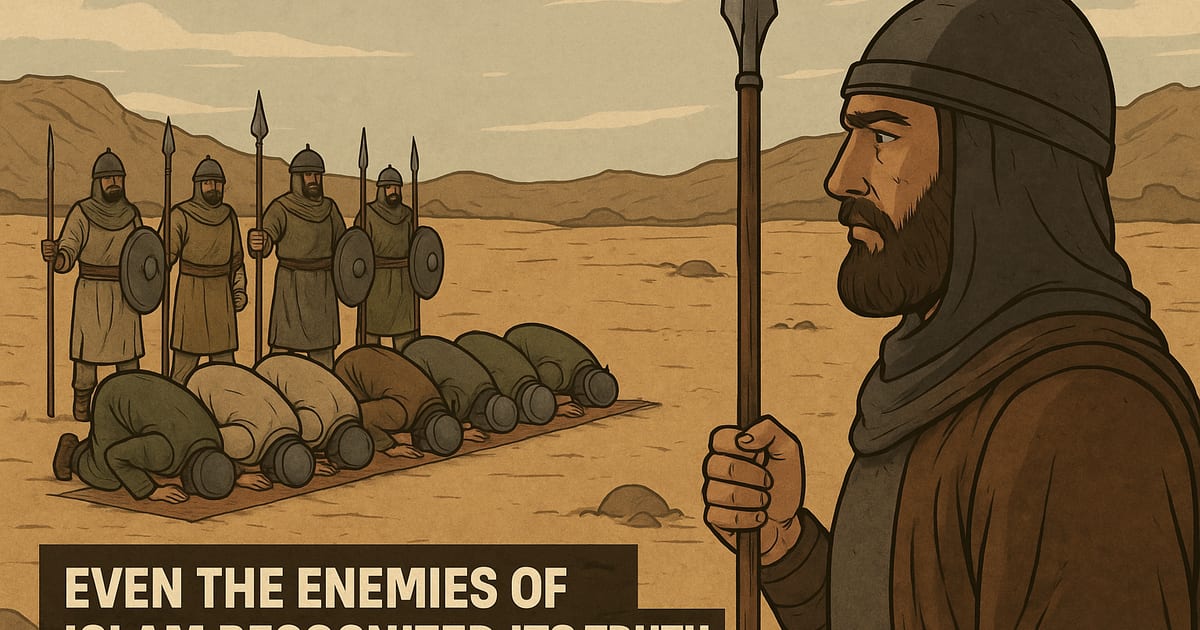
When the Muslims were engaged in battle against disbelievers, the Prophet ﷺ would lead the army in Ṣalāt al-Khawf (the Prayer of Fear).
Since the enemy could attack at any time, Allah commanded that the Muslim army divide into two groups:
Group 1: Prays with the Prophet ﷺ while carrying their weapons.
Group 2: Keeps watch, defending the camp.
After the first group finishes its part, it switches positions with the second group, ensuring that worship continues while safety is preserved.
Wisdom Behind the Command:
Maintaining prayer is essential — even in life-threatening situations.
Discipline and coordination among believers are vital for success in both faith and battle.
Precaution (ḥiḏhr) is part of faith — Islam encourages believers to be wise and alert, not reckless.
It shows Allah’s mercy and practicality: if rain or sickness makes holding weapons difficult, it is allowed to set them aside — but vigilance must remain.
Authentic Tafsīr References:
Ibn Kathīr explains that this verse establishes the rules for “Ṣalāt al-Khawf,” a unique prayer performed when Muslims face danger, based on real incidents during the Prophet’s campaigns — such as the Battle of Asfān or Dhat ar-Riqāʿ.
Al-Ṭabarī adds that it demonstrates the perfection of Islam’s balance between worship, strategy, and survival.
Core Message:
Even in moments of fear, Allah does not exempt His servants from prayer — instead, He teaches them how to worship Him wisely and fearlessly, with both faith and vigilance.
🌿 Context of the Incident: Battle of Dhat ar-Riqāʿ
incident referring to happened during the Battle of Dhat ar-Riqāʿ (ذات الرقاع) — and yes, it is closely related to the revelation of Surah An-Nisā’ 4:102 about Ṣalāt al-Khawf (the Prayer of Fear).
This battle took place in the 4th or 5th year after Hijrah (around 625–626 CE).
The Prophet ﷺ led the Muslim army against several hostile tribes — mainly Banū Ghatafān — who were preparing to attack Madinah.
Among the enemy commanders was Khalid ibn al-Walīd, who at that time was not yet a Muslim.
⚔️ The Attempted Attack During Prayer
During this campaign, the Prophet ﷺ and his Companions stopped to perform Ṣalāh (prayer).
Khalid ibn al-Walīd (before Islam) observed this and said to his men:
“Now is the time to attack them while they are praying.”
However, Allah revealed Surah An-Nisā’ 4:102, instructing the Prophet ﷺ how to lead the Prayer of Fear — where part of the army prays while the other guards.
When Khalid saw this unique discipline and divine coordination, he was deeply impressed.
💭 Khalid’s Reflection
Witnessing how the believers balanced worship and warfare with such calmness, order, and faith, Khalid ibn al-Walīd (raḍiyallāhu ‘anhu) remarked words of admiration and awe, something to the effect of:
“This man (Muhammad ﷺ) is surely protected and guided. His cause will one day prevail.”
Not long after, Khalid accepted Islam, embracing the truth he had witnessed with his own eyes — and later became one of the greatest generals in Islamic history, known as Sayf Allāh al-Maslūl (the Drawn Sword of Allah).
📖 Summary of the Lesson
The verse (An-Nisā’ 4:102) and this event show that faith and strategy go hand in hand.
The Prayer of Fear was a miracle of balance — the soldiers never stopped worshipping, yet they never left their defense.
And even the enemies — like Khalid — could recognize that this discipline was from Allah, not human design.