
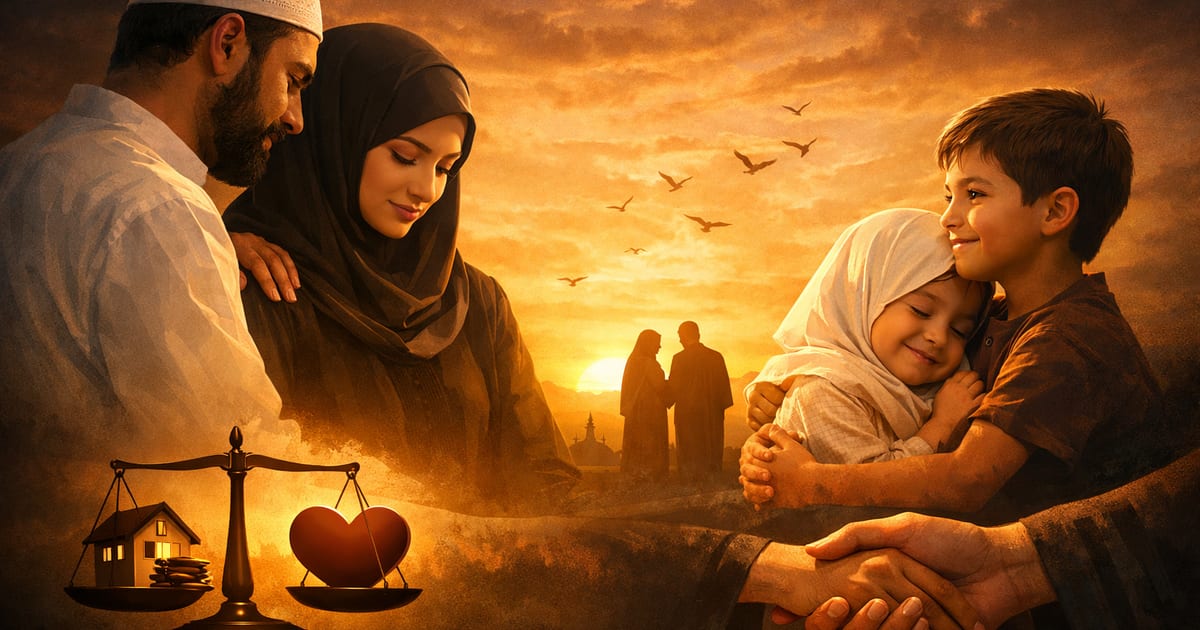
Leadership, Responsibility & Mercy in the Family - Surah An-Nisā’ 4:34
Bismillahir Rahmanir Raheem
(Understanding Surah An-Nisā’ 4:34 in Its True Context)
🌿 1. Context of the Verse
Surah An-Nisā’ was revealed in Madinah, where a structured Muslim society was being built.
The chapter discusses:
Rights of women
Marriage responsibilities
Financial obligations
Justice within families
Protection of vulnerable members of society
This verse specifically addresses:
Family leadership, responsibility, and conflict resolution in marriage.
It is not about superiority, but about role and accountability.
🌿 2. Key Phrase Breakdown
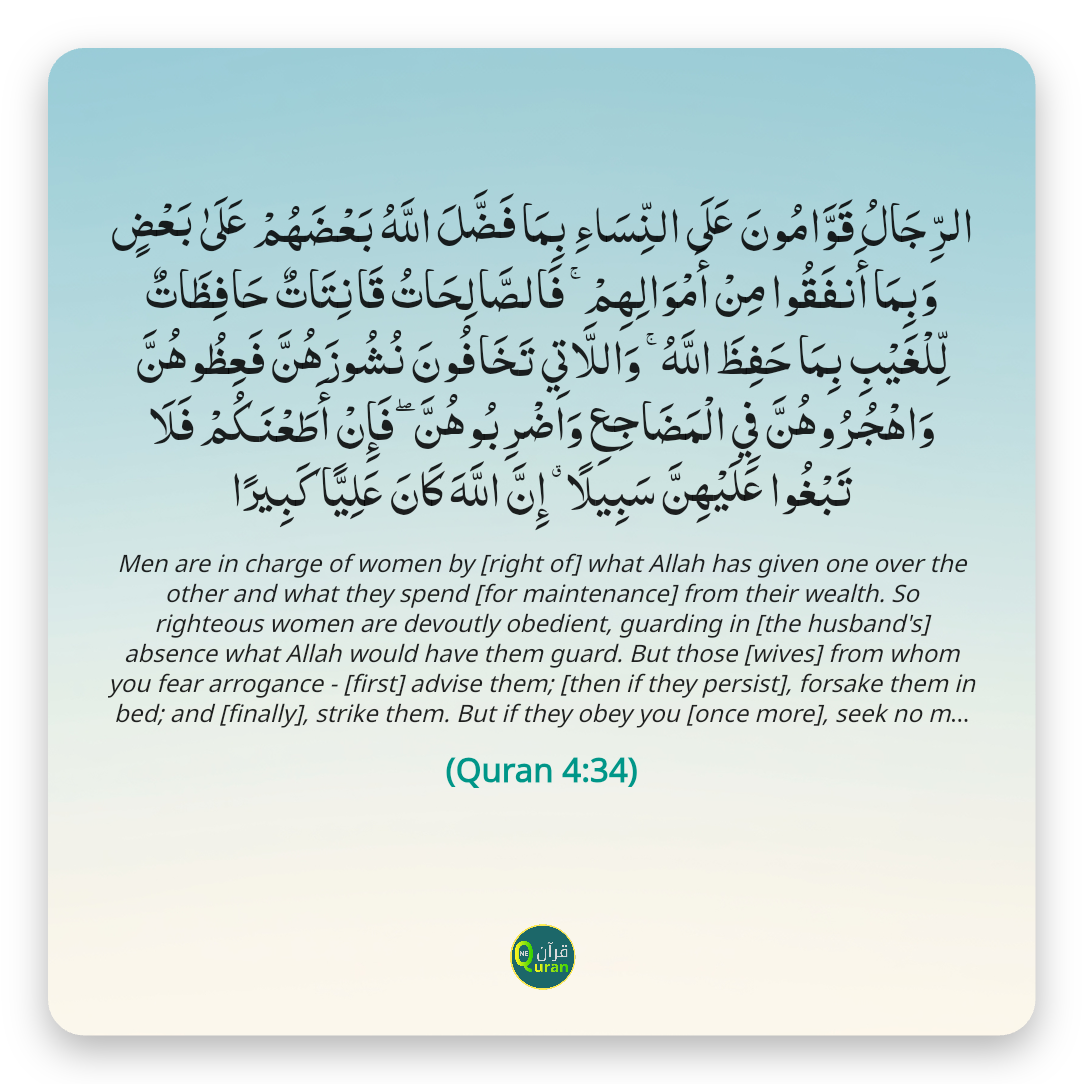
الرِّجَالُ قَوَّامُونَ عَلَى النِّسَاءِ
“Men are qawwāmūn over women”
The word qawwāmūn comes from qāma — meaning:
To stand up for
To take care of
To maintain
To be responsible for
It does not mean dictator or controller.
It means:
Responsible caretaker and accountable leader of the household.
بِمَا فَضَّلَ اللَّهُ بَعْضَهُمْ عَلَىٰ بَعْضٍ
“Because Allah has given some more than others”
This does not mean men are superior in value.
The Qur’an clearly says:
“Indeed, the most noble of you in the sight of Allah is the most righteous.” (49:13)
Here it refers to:
Physical strength
Financial obligation
Social responsibility in that era
It is about functional roles, not spiritual superiority.
وَبِمَا أَنفَقُوا مِنْ أَمْوَالِهِمْ
“And because they spend from their wealth”
This is crucial.
Men are given leadership because they are financially responsible for:
Housing
Food
Clothing
Protection
Maintenance
Leadership in Islam always comes with burden, not privilege.
🌿 3. Description of Righteous Women
فَالصَّالِحَاتُ قَانِتَاتٌ
“Righteous women are devoted”
Meaning:
Loyal to Allah
Cooperative in goodness
Supportive of the family structure
حَافِظَاتٌ لِّلْغَيْبِ
“Guarding in the unseen”
Meaning:
Protecting the husband’s honor
Protecting the home
Protecting trust and privacy
This is mutual — men are also commanded elsewhere to guard and protect.
🌿 4. When Serious Marital Conflict Occurs (Nushūz)
The verse then addresses nushūz, which means:
Serious rebellion
Continuous harmful behavior
Breakdown of marital cooperation
It is not about minor disagreements.
Allah outlines three escalating steps, showing Islam promotes gradual resolution — not immediate punishment.
Step 1: فَعِظُوهُنَّ
Advise them
→ Calm discussion
→ Reminder of Allah
→ Emotional reconciliation
Step 2: وَاهْجُرُوهُنَّ فِي الْمَضَاجِعِ
Separate in bed
→ Emotional signal
→ Cooling off
→ Showing seriousness
Step 3: وَاضْرِبُوهُنَّ
Often translated “strike them”
This is the most misunderstood word.
From authentic explanations:
It must NOT be harmful
Must NOT cause pain
Must NOT leave marks
Must NOT hit the face
Must NOT be humiliating
Many scholars say it is symbolic or extremely light
And most importantly:
The Prophet ﷺ never hit any woman.
As reported in :
“The Messenger of Allah never struck a servant nor a woman.”
He also said:
“The best of you are the best to their wives.”
So any interpretation that justifies abuse contradicts the Sunnah.
Many contemporary scholars explain that:
It was a restriction of pre-Islamic abuse
It set strict limits
It discouraged violence
The Prophet’s example shows the ideal model is no hitting
🌿 5. Final Warning
فَإِنْ أَطَعْنَكُمْ فَلَا تَبْغُوا عَلَيْهِنَّ سَبِيلًا
“If they return to harmony, seek no way against them.”
Meaning:
Do not seek revenge
Do not humiliate
Do not bring up past mistakes
End the conflict completely
Then Allah ends with:
إِنَّ اللَّهَ كَانَ عَلِيًّا كَبِيرًا
“Indeed Allah is Most High, Most Great.”
This reminds the husband:
You are not ultimate authority. Allah is.
If leadership becomes oppression, Allah is above you.
🌿 6. Simplified Understanding
This verse teaches:
✔ Marriage is built on responsibility
✔ Leadership means accountability, not dominance
✔ Financial responsibility is tied to authority
✔ Conflict must be resolved gradually
✔ Abuse is against the Prophet’s example
✔ Mercy is the foundation of family life
Islam did not introduce oppression — it regulated and restricted it, and the Prophet ﷺ modeled mercy.
🌿 7. Deeper Reflection
In reality:
The Qur’an is not empowering men to dominate. It is making men answerable.
If a man:
Fails to provide
Is unjust
Is abusive
Is arrogant
He is violating this verse.
True qiwāmah = protection + justice + mercy.
🌿 8. Balanced Conclusion for Your Post
This verse is about:
Structured responsibility, not superiority.
Protection, not control.
Reconciliation, not violence.
The Sunnah clarifies the spirit of the verse: Mercy, dignity, and accountability before Allah.