
Dua for Anxiety, Sadness and Life's Burdens
Bismillahir Rahmanir Raheem
Seeking Allah's Protection from Worry, Grief and Hardship
Every person experiences moments of anxiety, sadness, stress and hardship.
We may worry about our future, struggle with financial difficulties, carry heavy debts, lose motivation, or feel overwhelmed by life's challenges.
Islam teaches us that the first place to turn during every difficulty is Allah ﷻ. Among the beautiful supplications taught by Prophet Muhammad ﷺ is this comprehensive dua, seeking Allah's protection from eight major hardships that can affect a person's heart, mind, character and daily life.
This is one of the authentic supplications that every Muslim should learn, understand and recite regularly.
The Dua (Arabic)
اللَّهُمَّ إِنِّي أَعُوذُ بِكَ مِنَ الْهَمِّ وَالْحَزَنِ، وَالْعَجْزِ وَالْكَسَلِ، وَالْبُخْلِ وَالْجُبْنِ، وَضَلَعِ الدَّيْنِ، وَغَلَبَةِ الرِّجَالِ
Transliteration
Allahumma innī aʿūdhu bika minal-hammi wal-ḥazan, wal-ʿajzi wal-kasal, wal-bukhli wal-jubn, wa ḍalaʿid-dayn, wa ghalabatir-rijāl.
English Translation
"O Allah, I seek refuge in You from anxiety and sorrow, from weakness and laziness, from miserliness and cowardice, from being overwhelmed by debt, and from being overpowered by people."
Learn & Download Dua
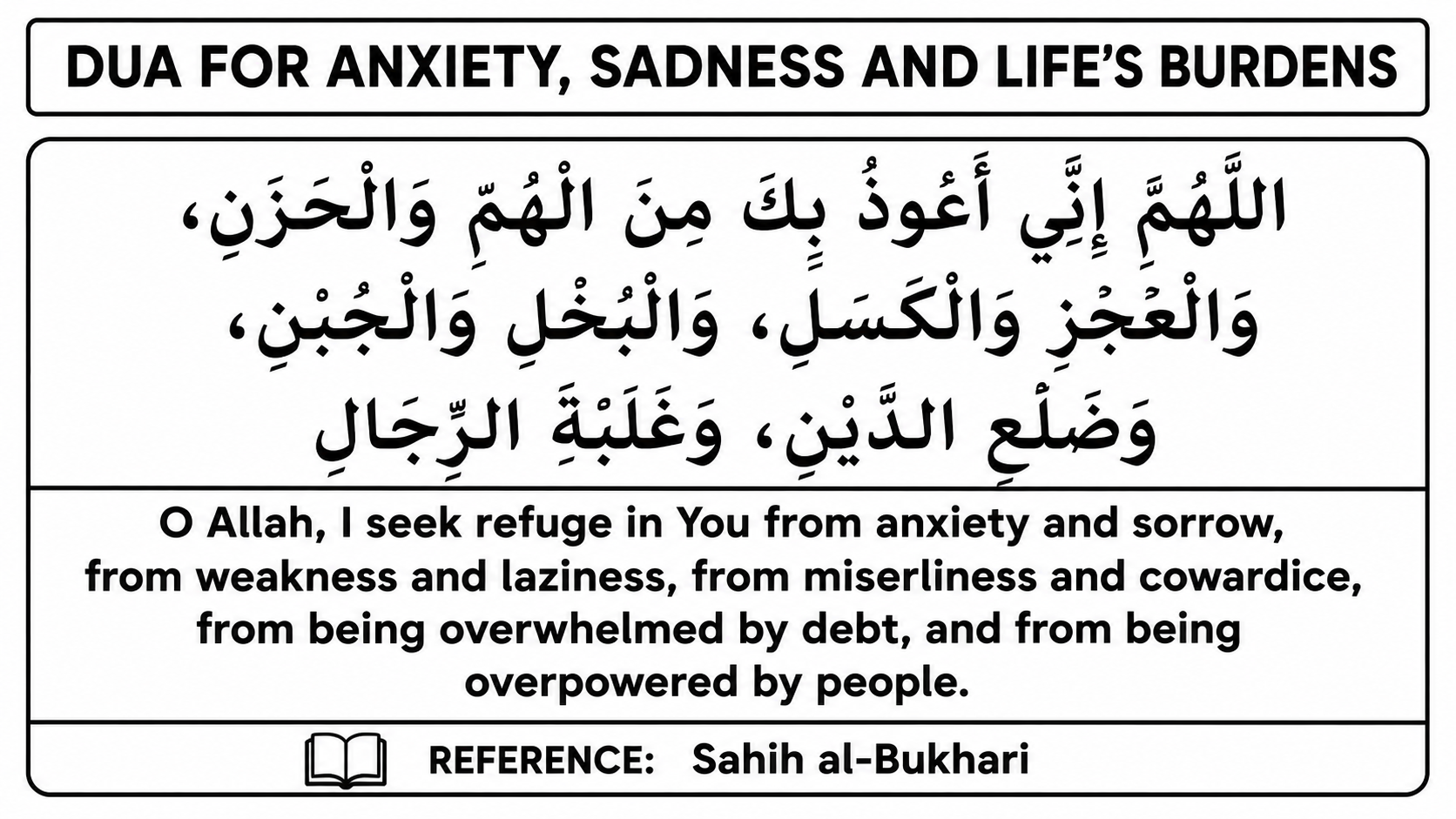
Authentic Reference
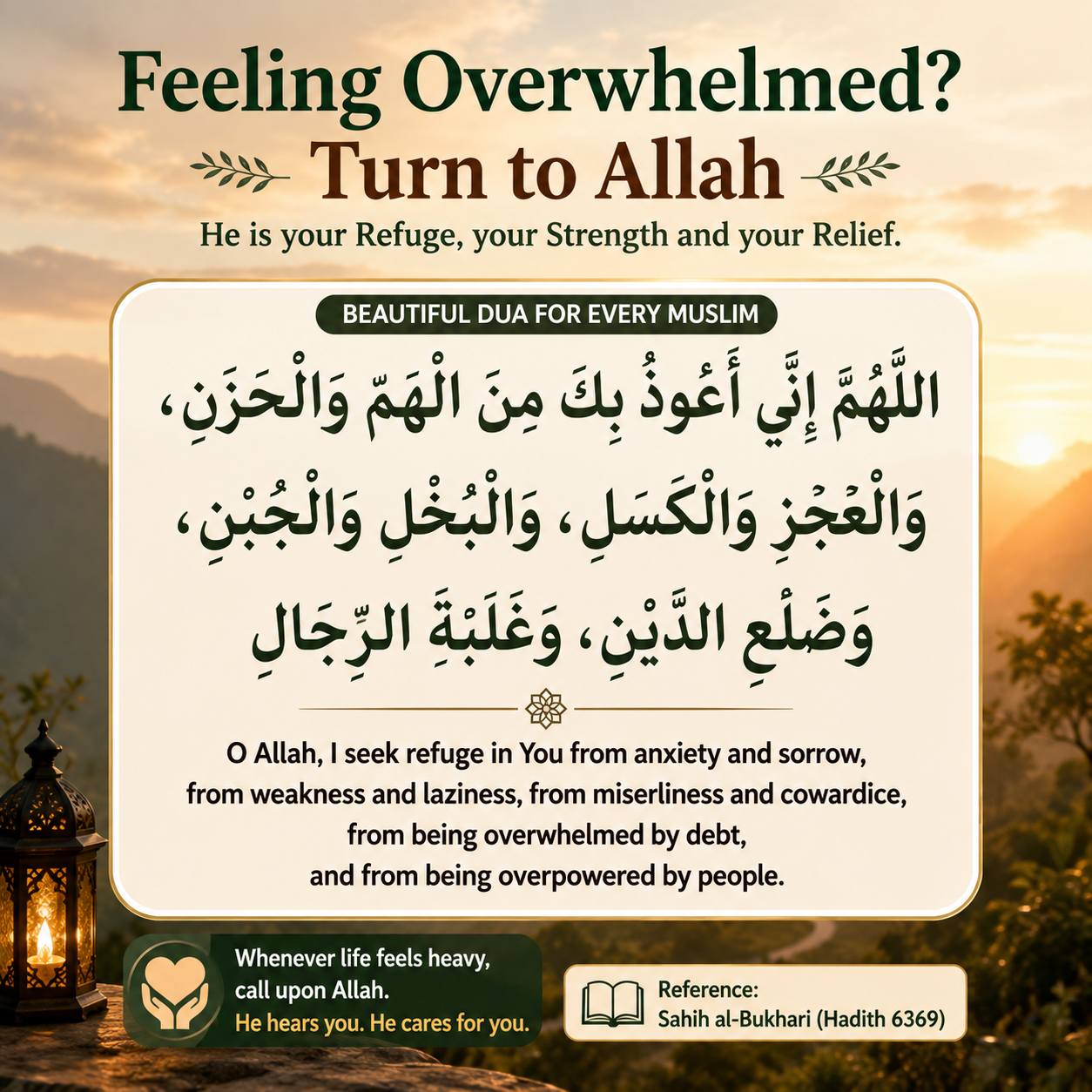
This authentic supplication was narrated by Anas ibn Malik (may Allah be pleased with him), who reported that the Prophet Muhammad ﷺ frequently recited this dua.
Reference: Sahih al-Bukhari (Hadith 6369)
Note: Hadith numbering may differ slightly between printed editions, but this supplication is authentically recorded in Sahih al-Bukhari.
Understanding the Dua
1. Anxiety (Al-Hamm)
This refers to worries about the future.
Examples include:
Worrying about income and finances.
Fear of what tomorrow may bring.
Stress over work or business.
Constant overthinking.
2. Sadness (Al-Hazan)
This refers to grief over things that have already happened.
Examples include:
Losing a loved one.
Regretting past mistakes.
Feeling disappointed after a difficult experience.
3. Weakness ('Ajz)
Feeling unable to do what is right even though you sincerely want to.
4. Laziness (Kasal)
Having the ability to do something beneficial but lacking the motivation to act.
5. Miserliness (Bukhl)
Being unwilling to spend or share the blessings that Allah has given.
6. Cowardice (Jubn)
Allowing fear to prevent you from standing for the truth or fulfilling your responsibilities.
7. Being Overwhelmed by Debt (Ḍala'id-Dayn)
Carrying debts that become heavy and cause continual worry, hardship and emotional stress.
8. Being Overpowered by People (Ghalabatir-Rijāl)
Being oppressed, treated unjustly, controlled or humiliated by others.
When Should You Recite This Dua?
This dua may be recited at any time.
It is especially recommended:
During the morning and evening adhkar.
After the obligatory prayers.
While in sujood.
During the last third of the night.
Whenever you feel anxious or overwhelmed.
During times of financial hardship.
When carrying heavy debts.
Before important meetings or decisions.
Whenever your heart feels burdened.
Background of This Hadith
The Prophet Muhammad ﷺ regularly recited this supplication as part of his daily worship. The authentic narration does not mention a specific event that prompted him to say it. Rather, it teaches Muslims that these eight hardships are among the greatest challenges people face throughout their lives.
The dua begins by seeking protection for the heart from anxiety and sadness, then asks Allah for protection from personal weaknesses, harmful character traits, financial burdens, and finally oppression by others. It reminds us that Allah alone is the One who can bring peace to the heart and relief from every difficulty.
Lessons We Learn
Turn to Allah before turning to people.
Anxiety and sadness are natural human experiences, and Islam teaches us how to seek relief from them.
A believer should strive to be strong, productive, generous and courageous.
Islam encourages financial responsibility and warns against becoming overwhelmed by debt.
Allah alone is the Best Protector against hardship, injustice and oppression.
A Practical Reminder
Whenever you feel anxious, stressed, lonely, financially burdened or emotionally exhausted, pause for a moment, raise your hands sincerely, and recite this beautiful supplication with conviction and hope.
Remember that Allah hears every sincere prayer and knows every hardship you are facing.
Allah says in the Qur'an:
"And whoever relies upon Allah – then He is sufficient for him."
(Surah At-Talaq 65:3)
May Allah ﷻ remove our worries, replace our sadness with tranquillity, ease our debts, protect us from oppression, strengthen our hearts, and grant us relief in this life and the Hereafter.
Āmīn.