
Quranic Studies
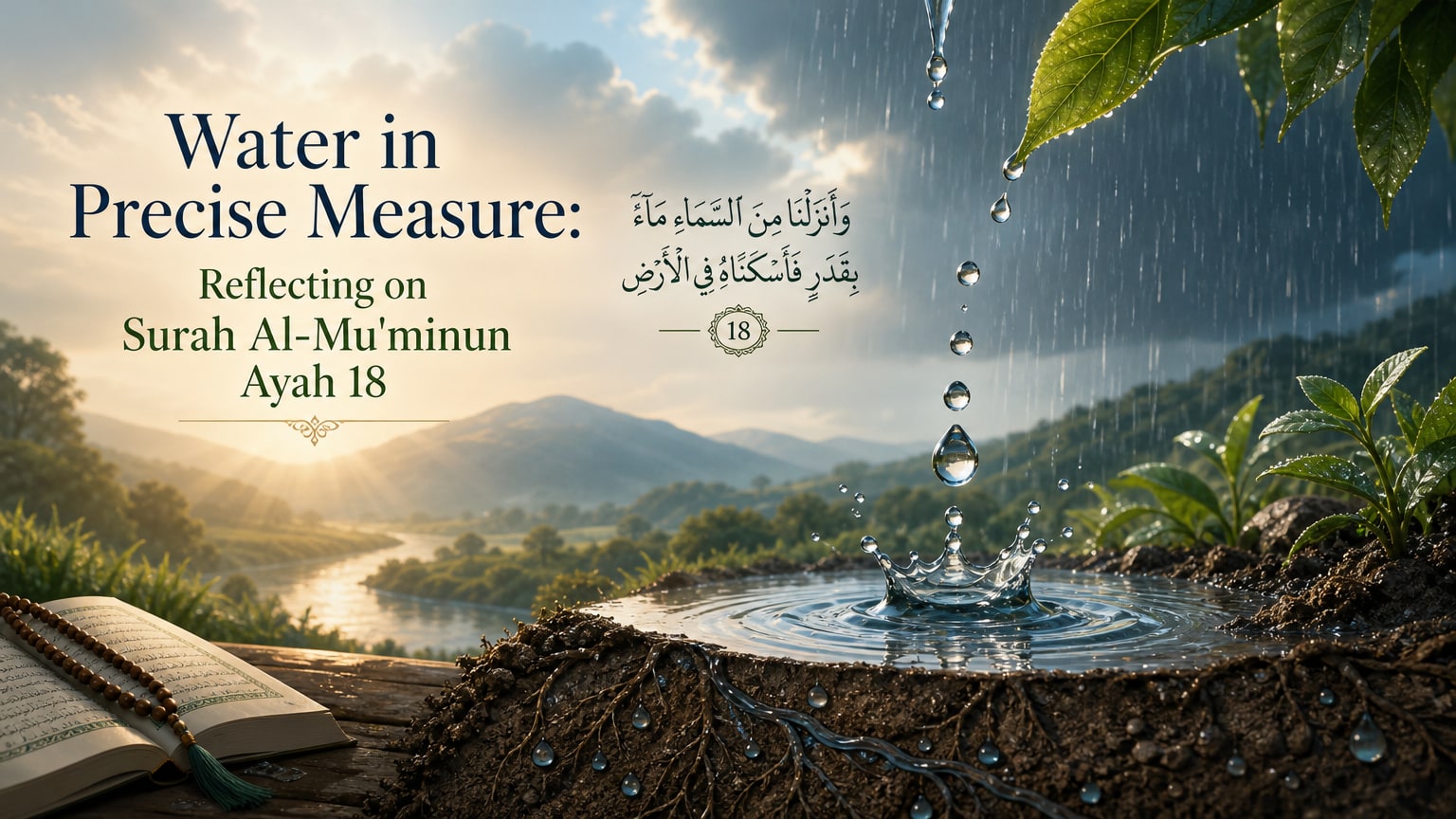
Water in Precise Measure: Reflecting on Surah Al-Mu'minun Ayah 18
A profound reflection on Surah Al-Mu'minun Ayah 18, analyzing the delicate balance of rainwater, hydrologic mechanics, and spiritual gratitude.
Water is the foundational element of physical life on Earth. In the Holy Qur'an, Allah repeatedly draws human attention to natural phenomena, not merely as poetic metaphors, but as tangible signs (ayat) of divine wisdom, precision, and sustaining mercy. Among the most remarkable verses addressing this delicate balance is the eighteenth ayah of Surah Al-Mu'minun (The Believers).
The Ayah: Arabic, Transliteration, and Translation
Arabic Text:
وَأَنزَلْنَا مِنَ السَّمَاءِ مَاءً بِقَدَرٍ فَأَسْكَنَّاهُ فِي الْأَرْضِ ۖ وَإِنَّا عَلَىٰ ذَهَابٍ بِهِ لَقَادِرُونَTransliteration:
Wa anzalnaa minas samaaa'i maaa'am biqadarin fa-askannaahu fil ardi wa innaa 'alaa zahaabim bihee laqaa diroonTranslation:
"And We have sent down rain from the sky in a measured amount and settled it in the earth. And indeed, We are Able to take it away." (Surah Al-Mu'minun 23:18)
Context and Thematic Placement in Surah Al-Mu'minun
Surah Al-Mu'minun opens by listing the foundational moral and spiritual traits of true believers—such as humility in prayer, honesty, and chastity. Following this spiritual baseline, the chapter immediately shifts outward, reminding mankind of their own biological creation and then expanding toward cosmic governance. Ayah 18 sits squarely within this discourse of divine provision.
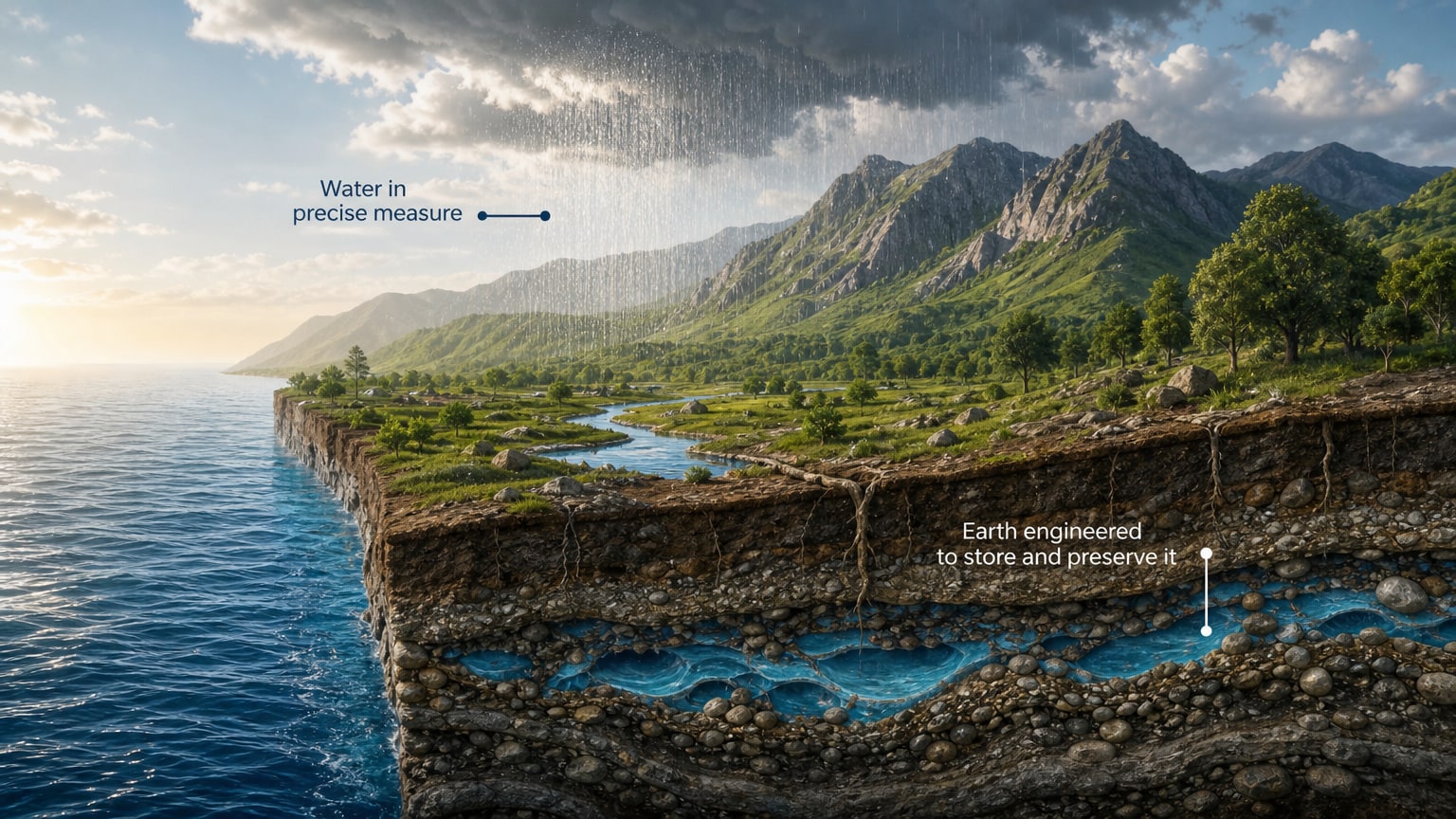
Classical commentators such as Ibn Kathir and Al-Tabari note that the ayah highlights two fundamental gifts: the initial provision of water in life-sustaining proportions, and the engineering of the Earth to store and preserve it for human and ecological consumption. Without either mechanism, terrestrial life would cease to exist.
Mechanical and Scientific Perspectives: The Hydrological Balance
When evaluated through modern environmental science and mechanics, this verse reveals profound insights into the precision of Earth's atmospheric and geological systems:
"In a Measured Amount" (Biqadar): The water cycle operates on a closed, extraordinarily regulated budget. The total volume of water on Earth remains virtually constant over geological eras. If precipitation were excessive, torrential deluges and continuous erosion would strip away topsoils; if insufficient, aridification would extinguish plant and animal life. Cloud droplet coalescence, atmospheric pressure, and terminal velocity ensure rain falls as droplets rather than destructive torrents.
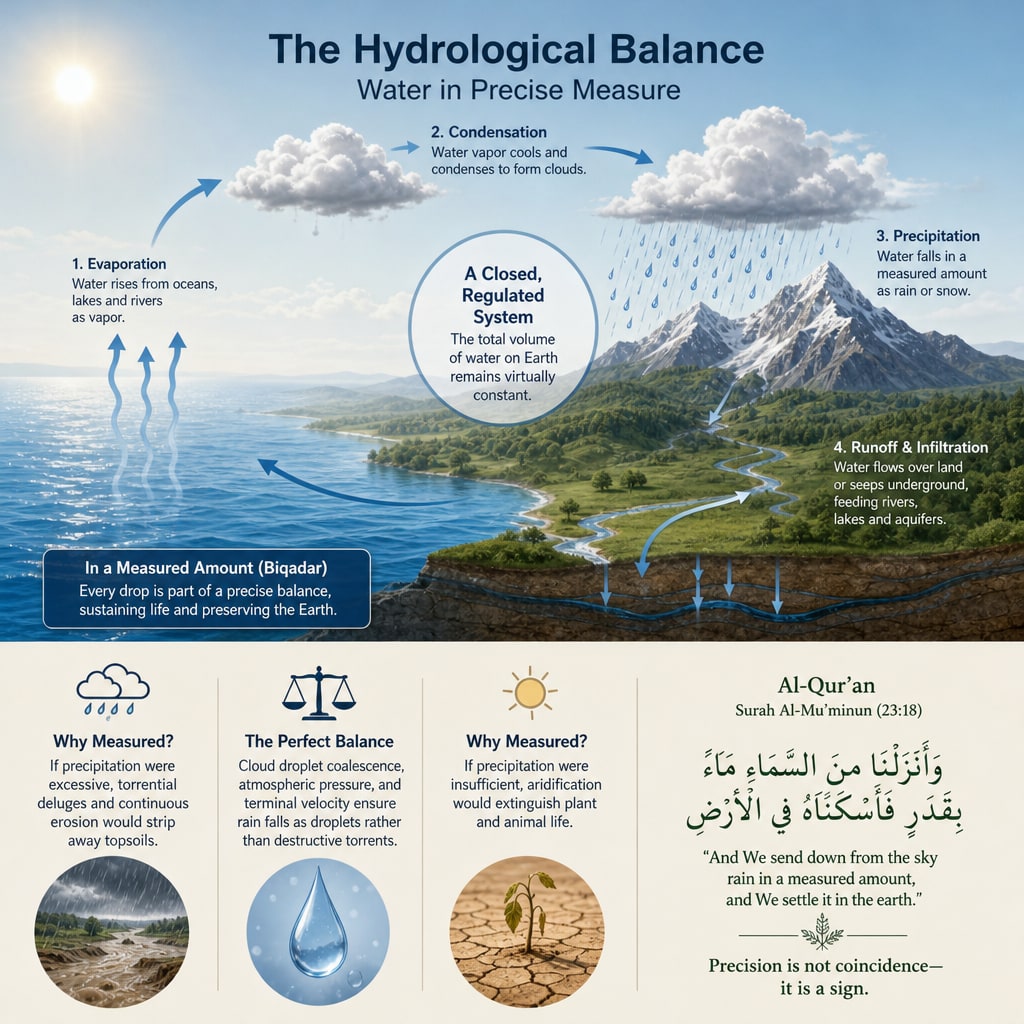
"Settled It in the Earth" (Fa-askannahu fil-Ard): The phrase fa-askannahu implies resting, lodging, or settling peacefully. In hydrogeology, this directly reflects groundwater infiltration and percolation into aquifers, subterranean karst reservoirs, and natural catchment basins. Rainwater does not merely roll off into oceans; impermeable bedrocks beneath porous sedimentary layers trap vast reserves of freshwater, allowing wells, springs, and irrigation systems to function continuously across dry seasons.
"We Are Able to Take It Away" (Wa Inna 'Ala Zahaabin Bihee Laqadirun): Mechanically, groundwater tables are fragile. Changes in subsurface permeability, seismic shifting, severe drought, contamination, or excessive evaporation can drop water tables below retrievable levels. In hydrological terms, the depletion or inaccessibility of freshwater reservoirs is a constant vulnerability that modern civilizations grapple with today.
Key Lessons and Spiritual Takeaways
Reflecting upon Surah Al-Mu'minun Ayah 18 provides essential lessons for both personal worldview and collective stewardship:
Humility in Dependence: Every drink of clean water is a product of atmospheric equilibrium and subterranean storage completely beyond autonomous human creation.
Environmental Conservation: Recognizing water as a measured, settled provision calls for strict avoidance of wastefulness (israf). Water management is not merely an engineering task; it is a sacred trust.
Gratitude Over Complacency: The closing reminder that Allah has full power to remove water serves as an antidote to arrogance. Natural resources are neither permanent nor guaranteed by default; they depend on divine sustenance.
Ultimately, this verse unites theological awe with empirical observation, inviting humanity to contemplate the rain clouds and the subterranean aquifers with eyes of deep gratitude and responsible care.
- #quran
- #al-muminun
- #tafsir
- #water cycle
- #islam and science
- #reflection