
Quran Studies
Understanding the Parable of the Fly: A Simple Guide to Surah Al-Hajj 22:73
Discover the profound lesson behind Surah Al-Hajj verse 73. Explore the Arabic text, transliteration, English translation, and practical life reflections.
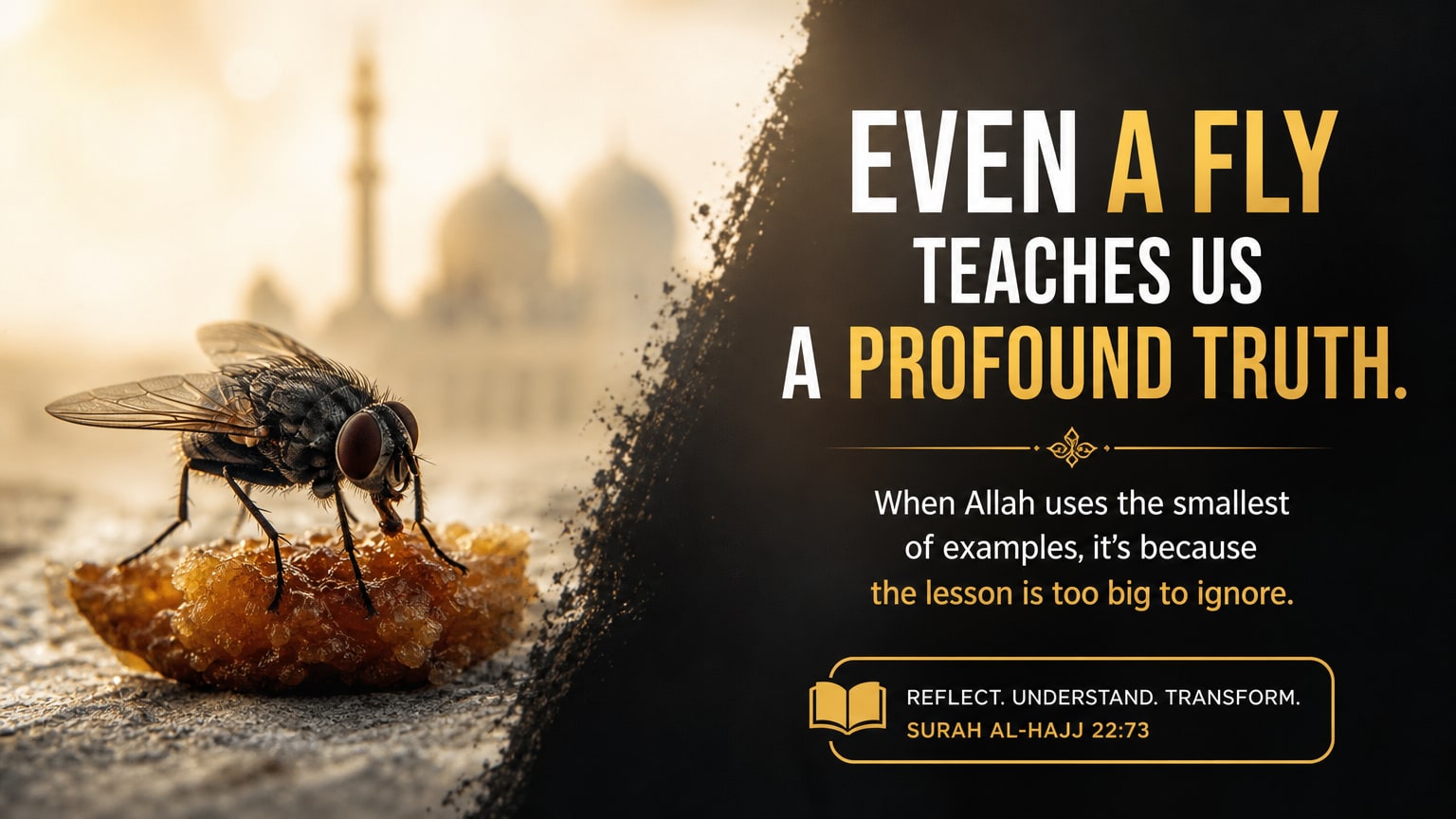
When reading the Quran, one of the most remarkable literary and spiritual features we encounter is its use of parables (amthal). Allah presents powerful, relatable images drawn from nature to help human beings comprehend deep metaphysical realities. A vivid example of this appears in Surah Al-Hajj (22:73), where the creator illustrates the utter helplessness of false deities and human arrogance through one of the smallest, most overlooked creatures on Earth: the common housefly.
The Verse: Text, Transliteration, and Translation
Before diving into the meaning and life lessons, let us look directly at the verse presented in Surah Al-Hajj, verse 73:
Arabic:
يَا أَيُّهَا النَّاسُ ضُرِبَ مَثَلٌ فَاسْتَمِعُوا لَهُ ۚ إِنَّ الَّذِينَ تَدْعُونَ مِن دُونِ اللَّهِ لَن يَخْلُقُوا ذُبَابًا وَلَوِ اجْتَمَعُوا لَهُ ۖ وَإِن يَسْلُبْهُمُ الذُّبَابُ شَيْئًا لَّا يَسْتَنقِذُوهُ مِنْهُ ۚ ضَعُفَ الطَّالِبُ وَالْمَطْلُوبُTransliteration:
Yā ayyuhan-nāsu duriba mathalun fastami‘ū lah. Innal-ladhīna tad‘ūna min dūnillāhi lay-yakhluqū dhubābanw-wa lawij-tama‘ū lah. Wa iny-yaslubhumudh-dhubābu shay'al-lā yastanqidhūhu minh. Da‘ufat-tālibu wal-matlūb.English Translation:
“O people, an example is presented, so listen to it. Indeed, those you invoke besides Allah will never create [as much as] a fly, even if they gathered together for that purpose. And if the fly should steal away from them a [tiny] thing, they could not recover it from him. Weak are the pursuer and pursued.” (Quran 22:73)
Breaking Down the Core Message
This verse addresses humanity directly with an open call: “O people, an example is presented, so listen to it.” It is not merely aimed at scholars; it is framed in clear, vivid terms for anyone seeking the truth. There are two major dimensions highlighted in this parable:
1. The Impossibility of True Creation
Human beings, idols, false gods, and all worldly powers combined cannot create even a single living fly from absolute nothingness. Despite cutting-edge technology, artificial intelligence, and sophisticated engineering, humanity can rearrange existing elements created by Allah, but we cannot breathe life into dust. By focusing on a creature as seemingly insignificant and fragile as a fly, the verse exposes the limits of created beings and reminds us that absolute creative power belongs solely to Allah (Al-Khaliq).
2. The Inability to Recover What Is Lost
The second half of the parable presents an even sharper observation: “And if the fly should steal away from them a [tiny] thing, they could not recover it from him.” In classical times, idols were often adorned with honey, perfume, or food offerings, which flies would land on and consume. The idols could neither defend themselves nor reclaim what was taken.
Remarkably, modern biology deepens our appreciation of this image. When a fly lands on food, it does not chew; it immediately secretes digestive enzymes onto the substance to liquefy it before sucking it up. By the time a fly takes something, the substance has already begun transforming at a molecular level, making it physically impossible to retrieve in its original state. The Quran succinctly summarizes this dynamic: “Weak are the pursuer and pursued.”
Practical Lessons to Apply in Daily Life
How can we take this profound Quranic verse and bring its lessons into our everyday mindset and interactions? Here are four practical ways to reflect on and apply Surah Al-Hajj 22:73:
- Cultivate Genuine Humility: Whenever you feel pride over your status, wealth, or intellect, remember the fly. If the greatest minds and authorities cannot manufacture a single fly, human pride has no solid ground to stand on.
- Rely Exclusively on the Creator: People often place their ultimate trust in other human beings, companies, or material assets. While we take practical means, our heart's ultimate reliance (tawakkul) must remain anchored in Allah alone, who holds real power.
- Study and Share Quranic Wisdom Simply: You do not need complex academic terminology to share the beauty of the Quran. Explaining simple verses like this one to friends, children, or study groups provides clear, memorable entry points to faith.
- Reflect on the Natural World: Use the small wonders of nature as reminders of divine craftsmanship. Even the tiny insects we dismiss carry complex biological systems that testify to the majesty of their Creator.
Conclusion
The parable in Surah Al-Hajj (22:73) remains timeless because it strips away all pretenses of human self-sufficiency. By presenting an easily understandable challenge involving a modest creature, the Quran invites every seeker to reflect on true power, true creation, and the importance of worshiping the One who fashioned the heavens, the earth, and every living thing between them.
- #quran
- #tafsir
- #surah al hajj
- #islamic reflections
- #quranic parables