
Islamic Spirituality
The Transformative Power of Qiyam al-Layl: Why the Night Prayer Repairs Hearts
Discover how Qiyam al-Layl heals the soul, erases sins, and brings unmatched honor through authentic prophetic narrations and Quranic reminders.
In the quiet stillness of the late hours, when creation rests and the world falls silent, lies an extraordinary doorway to spiritual revival. It is a path walked by all the prophets, the upright pioneers of faith, and those who revitalized communities across generations. While many passionately revive this discipline during the blessed nights of Ramadan, its transformative sweetness was intended to be a lifelong sanctuary for the soul. The night prayer, known as Qiyam al-Layl, stands as one of the most powerful means to repair faith, heal broken spirits, and reconstruct an intimate connection with the Creator.
The Prophetic Foundation of the Night Vigil
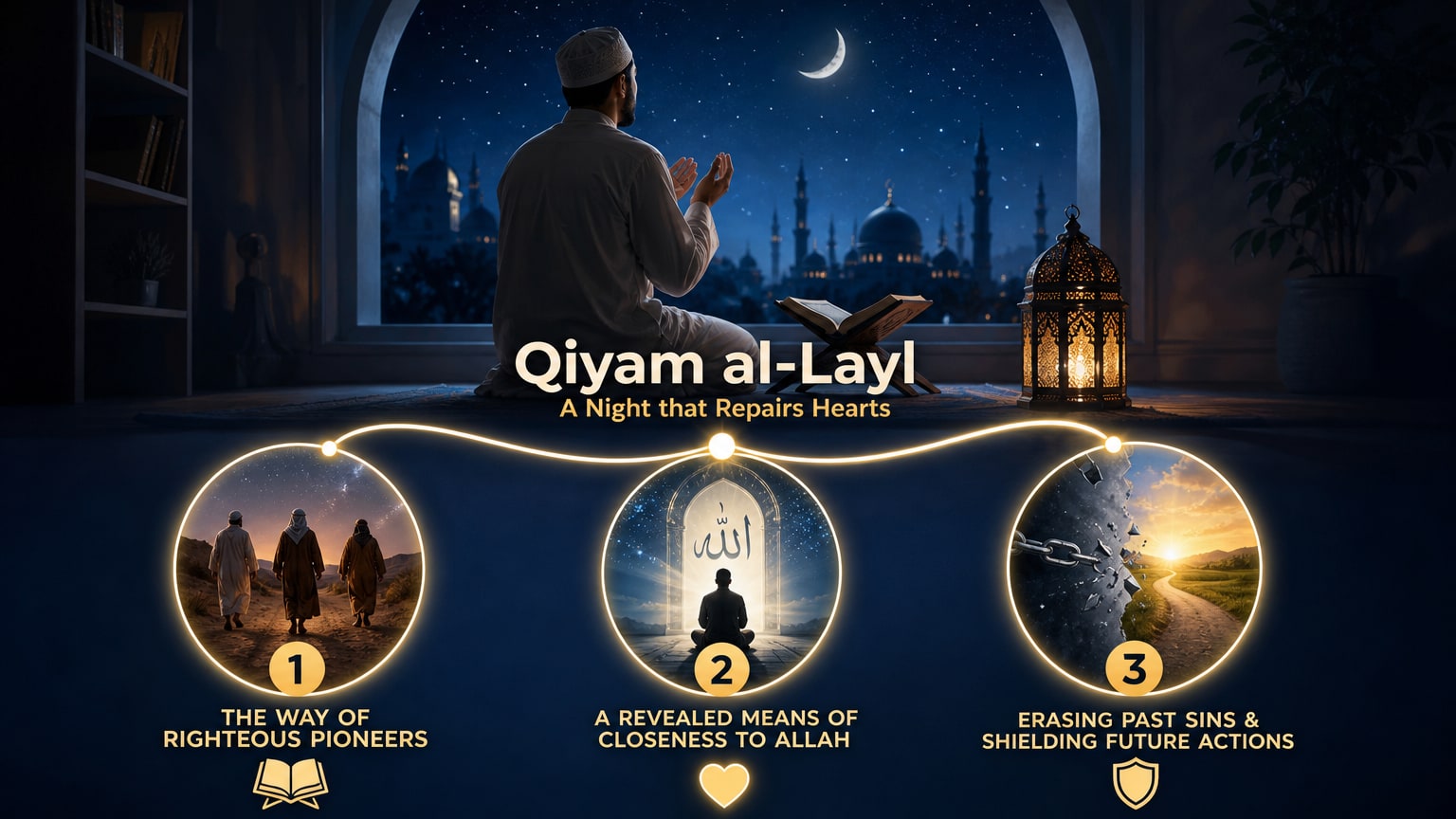
To grasp the reality of the night vigil, we turn to the foundational counsel left by the Messenger of Allah (peace and blessings be upon him). In a well-documented hadith recorded by Imam at-Tirmidhi (Jami` at-Tirmidhi, Hadith 3549; authenticated by scholars including al-Hakim and al-Albani), Abu Umamah al-Bahili reported that the Prophet (peace and blessings be upon him) said:
عَلَيْكُمْ بِقِيَامِ اللَّيْلِ فَإِنَّهُ دَأْبُ الصَّالِحِينَ قَبْلَكُمْ، وَهُوَ قُرْبَةٌ إِلَى رَبِّكُمْ، وَمَكْفَرَةٌ لِلسَّيِّئَاتِ، وَمَنْهَاةٌ عَنِ الإِثْمِ
“Hold fast to the night prayer, for indeed it was the custom of the righteous before you, a means of drawing near to your Lord, an expiation for sins, and a shield against misdeeds.”
This single narration outlines four immense pillars of benefit. By dissecting them, we can understand why the early generations held so fiercely onto their portion of the night.
1. The Way of the Righteous Pioneers
The first virtue declared in the narration is that night prayer is da’b as-salihin—the habitual practice of the pious predecessors. Before deep legal rulings and lengthy responsibilities were placed upon the early Muslim community, Allah commanded the Prophet (peace and blessings be upon him) in Mecca to rise at night. In Surah al-Muzzammil (Quran 73:1-4), Allah revealed:
يَا أَيُّهَا الْمُزَّمِّلُ قُمِ اللَّيْلَ إِلَّا قَلِيلًا نِّصْفَهُ أَوِ انقُصْ مِنْهُ قَلِيلًا أَوْ زِدْ عَلَيْهِ وَرَتِّلِ الْقُرْآنَ تَرْتِيلًا
“O you wrapped in garments! Stand to pray all night, except a little—half of it, or a little less, or a little more; and recite the Quran in a measured, distinct tone.” [Surah al-Muzzammil 73:1-4]
At a stage when only a handful of short chapters had been revealed, the early believers spent up to two-thirds of the night repeating these passages, engaging in supplication, seeking forgiveness, and anchoring their character. When the scholar Abu az-Zinad later described the streets of Madinah before the break of dawn, he recounted that every home resonated with the gentle recitation of the Quran. Similarly, the early tabi‘i Tawus ibn Kaysan noted with awe that it was unthinkable to find someone asleep during the final portion of the night.
This steadfastness was so standard among righteous scholars that when Imam Ahmad ibn Hanbal hosted a student of knowledge and noticed his jug of water remained untouched for night wudu, he remarked in sorrow: “SubhanAllah, a seeker of knowledge who has no regular devotion at night?” It prompts us to reflect: if the teachers and leaders of the past could not imagine enduring worldly duties without night prayer, how can we expect spiritual stability today without it?
2. An Unrivaled Means of Closeness to Allah
The second pillar highlights that Qiyam is a direct ladder of nearness to Allah (qurbatun ila Rabbikum). The reward of this private devotion is so magnificent that Allah has intentionally kept its ultimate scope hidden from human imagination, as stated in Surah as-Sajdah:
تَتَجَافَىٰ جُنُوبُهُمْ عَنِ الْمَضَاجِعِ يَدْعُونَ رَبَّهُمْ خَوْفًا وَطَمَعًا وَمِمَّا رَزَقْنَاهُمْ يُنفِقُونَ فَلَا تَعْلَمُ نَفْسٌ مَّا أُخْفِيَ لَهُم مِّن قُرَّةِ أَعْيُنٍ جَزَاءً بِمَا كَانُوا يَعْمَلُونَ
“Their sides forsake their beds, calling upon their Lord in fear and hope, and they spend out of what We have provided them. No soul knows what delight of the eyes is kept hidden for them as a reward for what they used to do.” [Surah as-Sajdah 32:16-17]
Scholars such as Ibn al-Qayyim remarked on the poetic balance of this verse: because the servant concealed their worship in the dark where no human eye could witness it, Allah concealed their divine reward so grandly that no human mind can conceive it.
In another uplifting narration recorded by Imam at-Tirmidhi (Hadith 1984, graded Hasan), ‘Ali ibn Abi Talib reported that the Prophet (peace and blessings be upon him) described lofty chambers in Paradise so pure and translucent that their interior can be seen from the outside and their exterior from within. When a desert Arab asked who could inherit such rooms, the Messenger replied that they are prepared for those who speak kindly, feed the hungry, fast consistently, and pray at night while people sleep.
3. Erasing Past Faults and Shielding Future Actions
We all struggle with weaknesses, slipping into regressions that leave lingering guilt and anxiety in our chests. The Prophet (peace and blessings be upon him) promised that Qiyam al-Layl acts on two fronts: it serves as an expiation for previous misdeeds (makfaratun lis-sayyi’at) and a defensive safeguard against future sins (manhatun ‘anil-ithm).
Standing in sincere repentance during the quiet hours washes away past lapses from the record. More importantly, it generates internal resolve. When an individual tastes the sweet presence of standing before their Lord while everyone else is asleep, the transient allure of unlawful desires begins to lose its grip. The heart develops dignity, spiritual discipline, and clarity.
The True Honor of the Believer
In a well-known instruction narrated by Sahl ibn Sa‘d (recorded by al-Hakim in al-Mustadrak, 7921, authenticated as Sahih), the Angel Jibril delivered a momentous reminder to the Prophet (peace and blessings be upon him):
“O Muhammad, live as long as you wish, for you will surely die. Love whom you wish, for you will surely be separated from them. Do as you wish, for you will surely be repaid for it. And know that the honor of the believer resides in his night prayer, and his dignity lies in his independence from people.”
When someone honors Allah in the stillness of the night, Allah clothes them with quiet prestige and reverence by day. Early scholars observed that those who uphold night prayers are granted luminosity on their faces, inner peace in their interactions, and an undeniable aura of grace. It is said that the scholar Sa‘id ibn al-Musayyab stated that whoever prays by night, Allah places light upon their face that draws the affection and goodwill of righteous hearts.
Simple Ways to Build the Habit Today
Cultivating Qiyam does not require standing for seven hours immediately. Sustainable progress begins with manageable, authentic steps:
- Start with two rak‘ahs: Pray two brief cycles after Salat al-‘Isha or just fifteen minutes before Fajr begins, followed by the Witr prayer.
- Engage in genuine Du‘a: Utilize your prostrations to plead for your personal worries, family needs, and forgiveness.
- Sleep with intention: Go to bed early, perform wudu before sleeping, and ask Allah to wake you up for His sake.
- Preserve the habit: Consistency in small deeds is more beloved to Allah than occasional bursts followed by burnout.
By claiming even a small portion of the night, you walk in the footsteps of the greatest souls who ever lived, shielding your heart from sin and gaining the radiant pleasure of your Creator.
- #qiyam al-layl
- #night prayer
- #tahajjud
- #hadith
- #quran reflection
- #spiritual growth
- #ramadan preparation