
Qur'an & Reflection
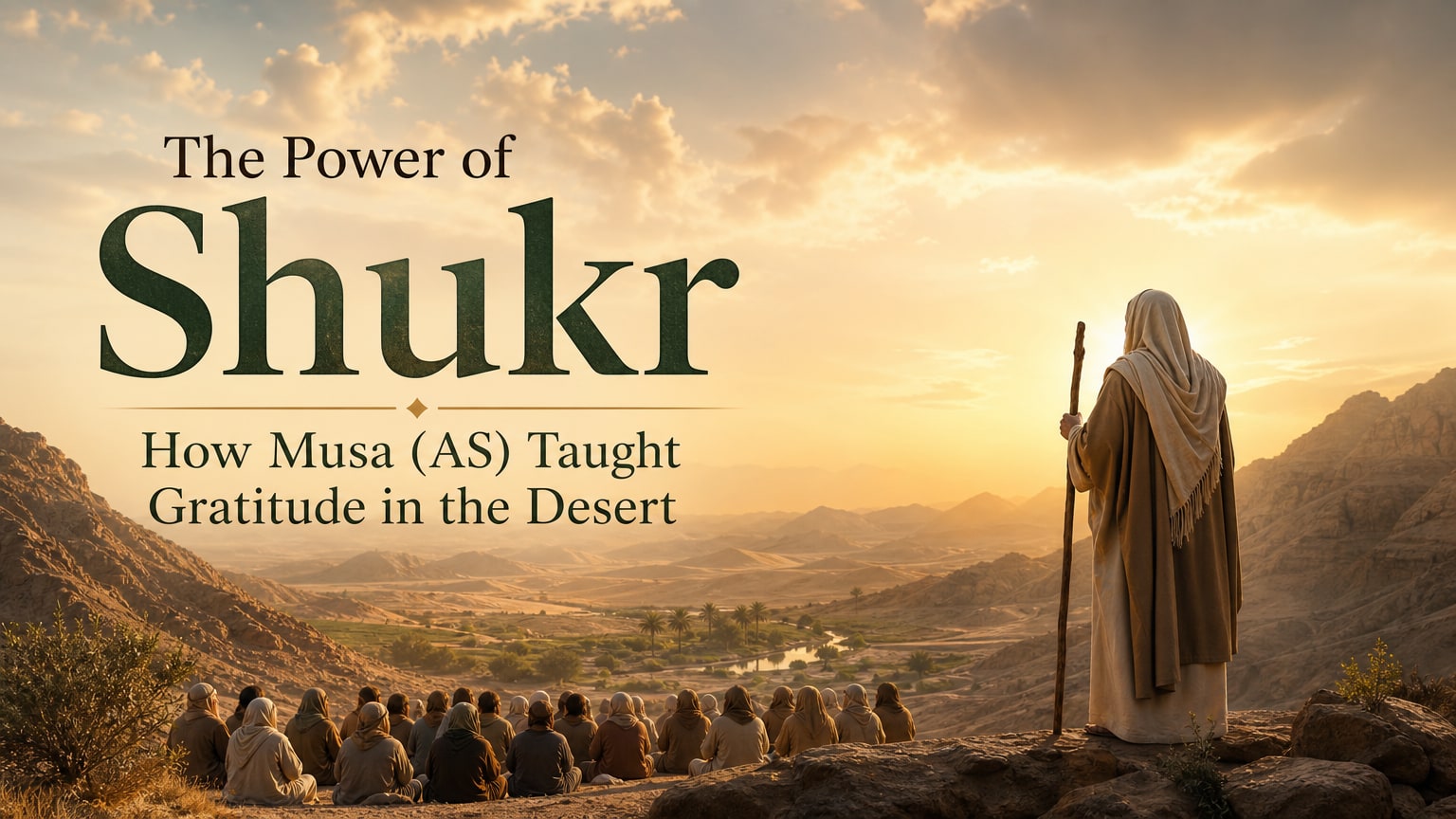
The Power of Shukr: How Musa (AS) Taught Gratitude in the Desert
Discover how Prophet Musa (AS) taught Banu Isra'il gratitude during severe trials in the desert, and learn how shifting from complaint to shukr unlocks Allah's divine increase.
Gratitude (shukr) is frequently described in Islamic discourse as a foundational pillar of faith. Yet, when faced with overwhelming trials, systemic hardship, or personal grief, truly feeling grateful can seem difficult. In Surah Ibrahim, the Noble Qur'an reveals a transformative psychological and spiritual masterclass through the life of Prophet Musa (peace be upon him) and his followers. This narrative illustrates that authentic gratitude is not passive sentimentality, but an intentional reorientation of the heart away from perpetual grievance toward divine mercy.
The Historical and Emotional Context: A Traumatized Nation
To grasp the profound depth of the Qur'anic discourse on gratitude, one must examine the state of Banu Isra'il at the moment these directives were delivered. For centuries, they had survived under the brutal tyranny of Fir'awn (Pharaoh). Generations had witnessed extreme degradation, systemic exploitation, the slaughter of newborn sons, and the enslavement of their families. This prolonged subjugation generated deep collective trauma.
Even when Musa (AS) arrived with clear signs, their initial response reflected the deep cynicism borne of continuous oppression. As recorded in Surah Al-A'raf:
قَالُوا أُوذِينَا مِن قَبْلِ أَن تَأْتِيَنَا وَمِن بَعْدِ مَا جِئْتَنَا
"They said: 'We were persecuted before you came to us and after you have come to us.'" (Surah Al-A'raf, 7:129)
When Allah miraculously parted the sea, drowning Fir'awn and liberating the Israelites, their external chains were severed. However, stepping onto the dry sands of the Sinai Peninsula, their immediate reality remained harsh. They were stranded in an arid wasteland under blistering heat, with no homes, vulnerable borders, crying infants, and limited provisions. Human instinct under such duress focuses naturally on immediate discomforts.
Reframing the Narrative: From Trauma to Rescue
In the midst of this desolate setting, Allah commanded Musa (AS) to address his weary community. The instruction delivered to them represents a radical psychological pivot:
وَإِذْ قَالَ مُوسَىٰ لِقَوْمِهِ اذْكُرُوا نِعْمَةَ اللَّهِ عَلَيْكُمْ إِذْ أَنجَاكُم مِّنْ آلِ فِرْعَوْنَ يَسُومُونَكُمْ سُوءَ الْعَذَابِ وَيُذَبِّحُونَ أَبْنَاءَكُمْ وَيَسْتَحْيُونَ نِسَاءَكُمْ ۚ وَفِي ذَٰلِكُم بَلَاءٌ مِّن رَّبِّكُمْ عَظِيمٌ
"And [remember] when Moses said to his people, 'Remember the favor of Allah upon you when He delivered you from the people of Pharaoh, who inflicted upon you the worst torment and were slaughtering your sons and letting your women live. And in that was a great trial from your Lord.'" (Surah Ibrahim, 14:6)
At first glance, enumerating their past humiliation—the murder of their children and the degradation of their households—might seem counterproductive to people already suffering in a scorching desert. Yet Musa (AS) explicitly directed their attention to the contrast: remember the deliverance. The linguistic root of ni'mah carries connotations of comfort, ease, and tenderness. While they stood destitute in the desert, they were nonetheless emancipated from tyrannical slaughter.
The classical scholars of Tafsir observe that the Arabic word bala' (بَلَاء) in this verse bears a dual significance: it denotes both a severe trial and a tremendous favor or blessing. The trial of their bondage was immense, but the divine intervention that preserved and rescued them was equally extraordinary.
From External Oppression to Internal Liberation
In the opening passages of Surah Ibrahim, Allah defines the overarching purpose of revelation:
كِتَابٌ أَنزَلْنَاهُ إِلَيْكَ لِتُخْرِجَ النَّاسَ مِنَ الظُّلُمَاتِ إِلَى النُّورِ
"A Book which We have revealed to you, [O Muhammad], that you might bring mankind out of darknesses into the light..." (Surah Ibrahim, 14:1)
When Musa (AS) led his people across the parted sea, they emerged physically from the dark shadow of Egyptian captivity into literal daylight. Yet, spiritual darkness can persist even after physical liberation. The soul remains entrapped when it languishes in relentless resentment, victimhood, and bitterness. By commanding them to remember the deliverance, Allah sought to liberate their hearts from the internal confinement of ungrateful despair into the radiant clarity of faith.
The Divine Proclamation: Unlimited Increase
Having instructed his nation to shift their focus from the tragedy to the rescue, Musa (AS) delivered one of the most celebrated declarations in scripture:
وَإِذْ تَأَذَّنَ رَبُّكُمْ لَئِن شَكَرْتُمْ لَأَزِيدَنَّكُمْ ۖ وَلَئِن كَفَرْتُمْ إِنَّ عَذَابِي لَشَدِيدٌ
"And [remember] when your Lord proclaimed: 'If you are grateful, I will surely increase you [in favor]; but if you deny, indeed, My punishment is severe.'" (Surah Ibrahim, 14:7)
The phrasing here holds remarkable rhetorical weight:
Ta'adhdhana (تَأَذَّنَ): Rather than employing the standard verb qala ("He said"), the text uses a formulation denoting a formal, resounding proclamation meant to be heard and internalized with utmost seriousness.
Unconditional Guarantee (لَأَزِيدَنَّكُمْ): Featuring the emphatic particle lam alongside the doubled nun of emphasis, the divine promise to give increase is guaranteed beyond doubt.
The Absence of a Limiting Object: Allah does not specify what He will increase. He does not say, "I will increase your wealth, food, or water." By omitting the direct object (maf'ul), the promise remains boundless. He may increase patience, wisdom, inner peace, sustenance, spiritual stature, or external relief.
The Mercy in Warning: When addressing ingratitude (kufr an-ni'mah), Allah does not say, "I will definitely punish you." Instead, the statement shifts: "Indeed, My punishment is severe." The door to return remains accessible without an automatic sentence being executed.
The Prophet's Model: Aligning Words with Inner State
Authentic gratitude is an internal discipline, not a superficial platitude. Uttering "Alhamdulillah" while nurturing a heart filled with resentment reduces a sacred devotion to mere routine. The Messenger of Allah ﷺ modeled gratitude as an active state of devotion. Al-Mughirah ibn Shu'bah (may Allah be pleased with him) reported:
The Prophet ﷺ stood in prayer until his feet became swollen. It was said to him, "Why do you do this when Allah has forgiven your past and future sins?" He replied: "Should I not be a grateful servant?" (Sahih al-Bukhari, 4836; Sahih Muslim, 2819)
Similarly, the Prophet Yusuf (peace be upon him), after enduring abandonment, enslavement, and wrongful imprisonment, chose not to recite a catalog of grievances when given audience. Instead, as recorded in Surah Yusuf (12:38), he attributed his preservation and upright path directly to the bounty of Allah upon his noble ancestors and mankind.
Practical Steps to Cultivate True Shukr
Because the human ego defaults easily toward identifying flaws, deficits, and discomforts, developing genuine gratitude requires deliberate mental and spiritual effort. Practical actions include:
Identify the Relief, Not Just the Scar: When reflecting on past adversity, identify the precise means by which Allah brought deliverance, rather than ruminating endlessly on the pain itself.
Practice Specificity in Daily Thanks: Avoid generic declarations. Name specific provisions—breath, shelter, physical mobility, the clarity of faith—and thank Allah distinctly for each.
Guard the Tongue Against Habitual Complaint: Chronic complaining clouds spiritual vision. Replace critical reactions regarding petty discomforts with immediate acknowledgments of safety and ease.
Utilize Hardship as Spiritual Refinement: View life’s hurdles through the lens of divine cultivation, remembering that relief often follows endurance.
Conclusion: Choosing the Path of Light
The Israelites began their journey across the desert with cracked walking sticks, crying children, and empty hands. Yet through the spiritual framework of shukr, that same community was cultivated into a civilization that produced righteous rulers and prophets, including Dawud and Sulaiman (peace be upon them). Our trials, griefs, and past challenges are real, but they do not hold ultimate power over our destiny. By redirecting the focus of our hearts toward Allah's enduring rescues and blessings, we step out of internal darkness into light, securing the boundless increase promised by our Creator.
- #gratitude
- #shukr
- #prophet musa
- #surah ibrahim
- #tafsir
- #islamic mindset
- #patience