
Islamic Studies
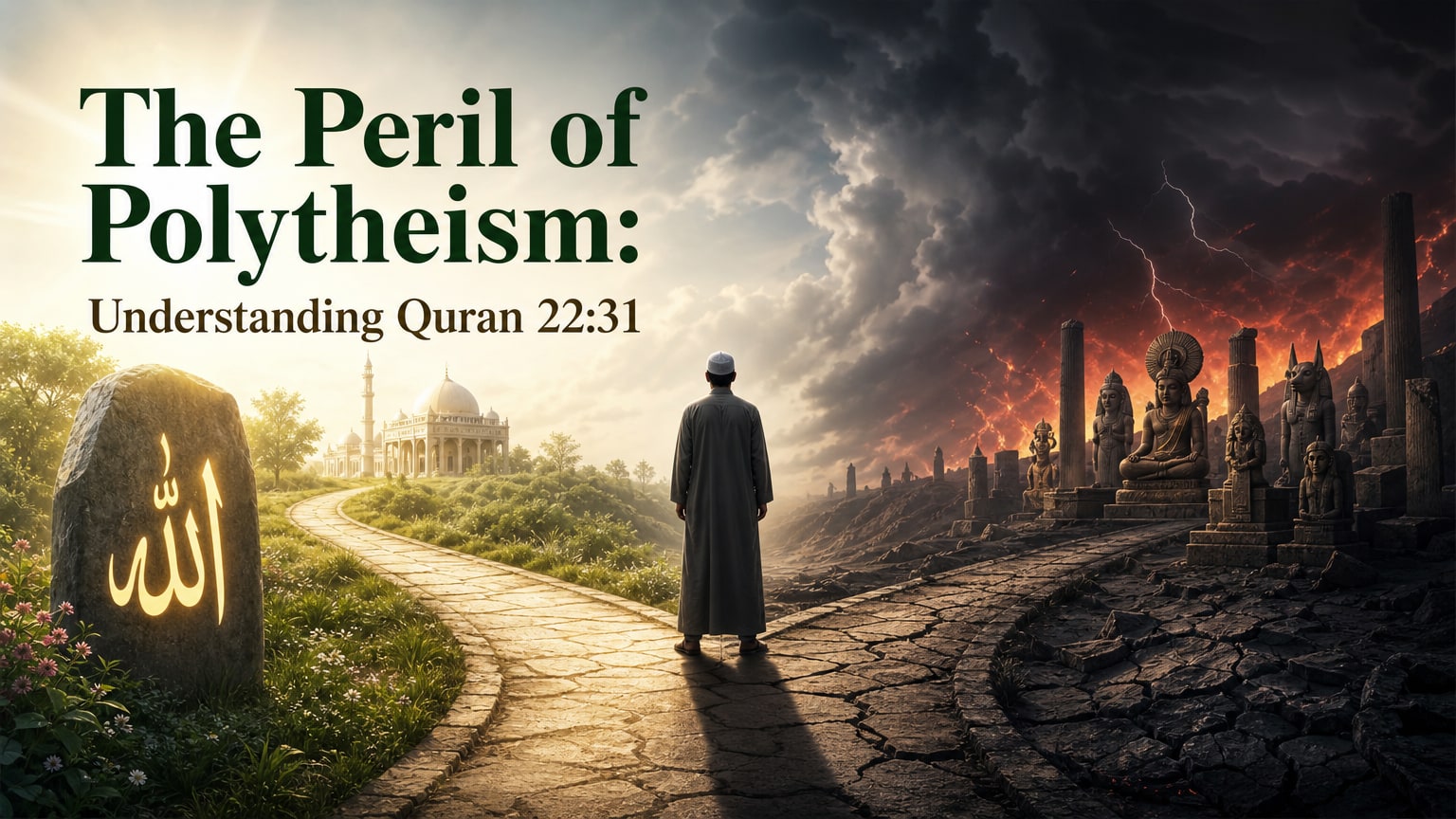
The Peril of Polytheism: Understanding Quran 22:31
This post delves into Quran 22:31, explaining its profound message about pure monotheism and the severe consequences of associating partners with Allah, using vivid metaphors to illustrate spiritual downfall.
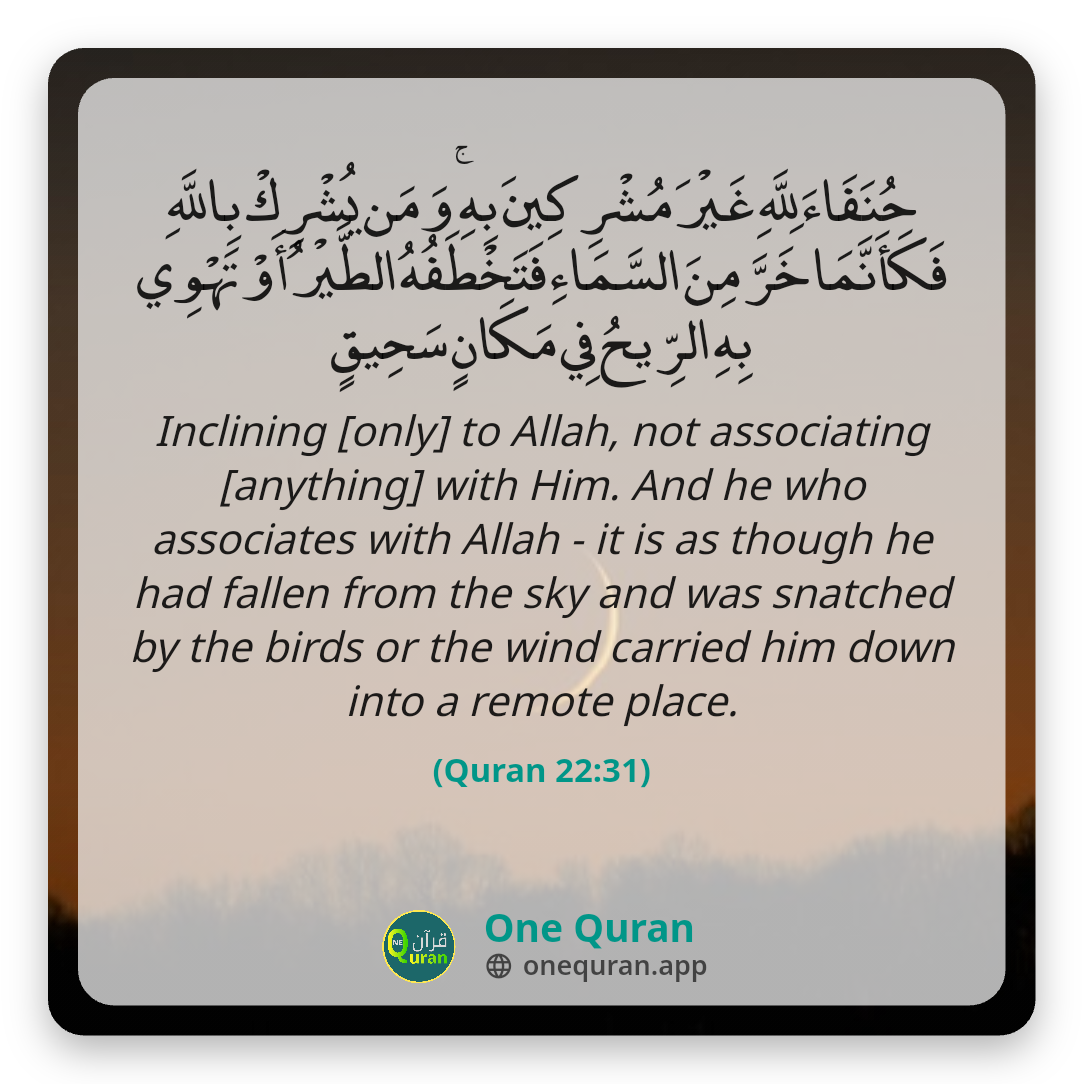
In the vast ocean of divine revelation, certain verses stand out for their profound imagery and clear guidance. Quran 22:31 is one such verse, offering a powerful admonition against polytheism (shirk) and a clear call to pure monotheism (tawhid). This verse, as depicted in the provided image, serves as a cornerstone for understanding the core tenets of Islamic belief, emphasizing devotion solely to Allah and illustrating the devastating spiritual repercussions of deviation.
حُنَفَاءَ لِلَّهِ غَيْرَ مُشْرِكِينَ بِهِ ۚ وَمَن يُشْرِكْ بِاللَّهِ فَكَأَنَّمَا خَرَّ مِنَ السَّمَاءِ فَتَخْطَفُهُ الطَّيْرُ أَوْ تَهْوِي بِهِ الرِّيحُ فِي مَكَانٍ سَحِيقٍ۳۱
Inclining [only] to Allah, not associating [anything] with Him. And he who associates with Allah - it is as though he had fallen from the sky and was snatched by the birds or the wind carried him down into a remote place.
(Al Quran 22:31)
The Essence of Tawhid: Incline Only to Allah
The verse begins with a foundational principle: "Inclining [only] to Allah, not associating [anything] with Him." This opening phrase encapsulates the very heart of Islam – the concept of Tawhid. Tawhid means the oneness of God, the absolute singularity of Allah in His essence, attributes, and actions. To incline 'only' to Allah signifies a complete and unwavering devotion, directing all acts of worship, supplication, and reliance exclusively towards Him.
Pure Devotion: It means that our prayers, sacrifices, vows, and hopes should be directed to none other than Allah.
Exclusive Reliance: It implies that we acknowledge Allah as the sole creator, sustainer, and disposer of all affairs, and thus our trust and dependence should be placed solely in Him.
Freedom from Idolatry: This phrase is a direct command to shun all forms of idolatry, whether it involves worshipping physical idols, venerating saints beyond their human capacity, or attributing divine qualities to any created being.
The emphasis on 'not associating anything with Him' is crucial. It warns against even subtle forms of shirk, which can sometimes manifest unknowingly. This includes seeking help from others as if they possess independent power, or believing that intermediaries can bring one closer to Allah without His direct permission and command.
The Dire Consequences of Shirk: A Vivid Metaphor
The second part of the verse employs a striking and powerful metaphor to describe the state of one who commits shirk: "And he who associates with Allah - it is as though he had fallen from the sky and was snatched by the birds or the wind carried him down into a remote place." This imagery is not merely figurative; it conveys a deep spiritual truth about the ultimate fate and instability of a polytheist.
Falling from the Sky: Loss of Foundation
Imagine falling from the sky. It signifies a complete loss of grounding, stability, and support. Spiritually, this describes the person who abandons Tawhid. Tawhid is the highest truth, the solid foundation upon which a believer's life and faith are built. When one commits shirk, they essentially cut themselves off from this divine anchor, plunging into an abyss of uncertainty and spiritual void. They lose their connection to the ultimate source of truth and guidance, becoming adrift without direction.
Snatched by Birds: Vulnerability and Dispersal
The imagery of being "snatched by the birds" paints a picture of extreme vulnerability and fragmentation. Once fallen, the individual is not only without support but also exposed to external forces that tear them apart. Birds here can symbolize various destructive influences:
Misguided Beliefs: Being snatched by birds can represent being pulled in different directions by various false ideologies, superstitions, and human-made doctrines, each claiming a piece of one's faith and devotion.
Worldly Desires: It can also symbolize the overwhelming pull of worldly desires, temptations, and distractions that scatter one's focus and devotion, preventing them from achieving true spiritual peace.
Satanic Whispers: Furthermore, it can refer to the whispers and temptations of Shaytan (Satan) and his allies, who prey on those who lack a firm foundation in Tawhid, leading them further astray.
This portrays a state of spiritual dismemberment, where the individual's faith and purpose are scattered and consumed by external forces, leaving them without integrity or coherence.
Carried by the Wind to a Remote Place: Isolation and Irretrievability
The final part of the metaphor, "or the wind carried him down into a remote place," emphasizes the ultimate consequence: isolation and an irretrievable distance from truth and salvation. A remote place signifies a destination far removed from guidance, mercy, and the path to Allah.
Spiritual Exile: This person is spiritually exiled, far from the light of divine guidance, struggling in darkness and loneliness.
Irreversibility: The wind carrying one to a remote place suggests a path from which it is exceedingly difficult, if not impossible, to return without divine intervention and sincere repentance. It highlights the profound and far-reaching consequences of shirk, which can lead to a point of no return.
Loss of Hope: In such a remote place, hope often dwindles, and the individual becomes lost, unable to find their way back to the straight path.
Lessons and Reflection
Quran 22:31 serves as a potent reminder of the paramount importance of Tawhid in Islam. It teaches us that:
Tawhid is the Foundation: A life built on the pure worship of Allah is stable, secure, and guided.
Shirk is Devastating: Associating partners with Allah leads to spiritual downfall, fragmentation, and ultimate loss, akin to falling from a great height and being torn apart.
The Metaphor's Power: The vivid imagery is designed to instill a deep understanding and fear of shirk, encouraging believers to constantly guard their Tawhid.
This verse calls every Muslim to introspection, to examine their beliefs and practices to ensure that their devotion is solely and purely for Allah, free from any form of shirk. It encourages a continuous striving for sincerity and purity in faith, understanding that our spiritual well-being depends entirely on our adherence to Tawhid.
May Allah keep us firm on the path of Tawhid and protect us from all forms of shirk.
- #quran
- #tawhid
- #shirk
- #islam
- #monotheism
- #polytheism
- #islamic teachings
- #spiritual guidance