
Quranic Reflections
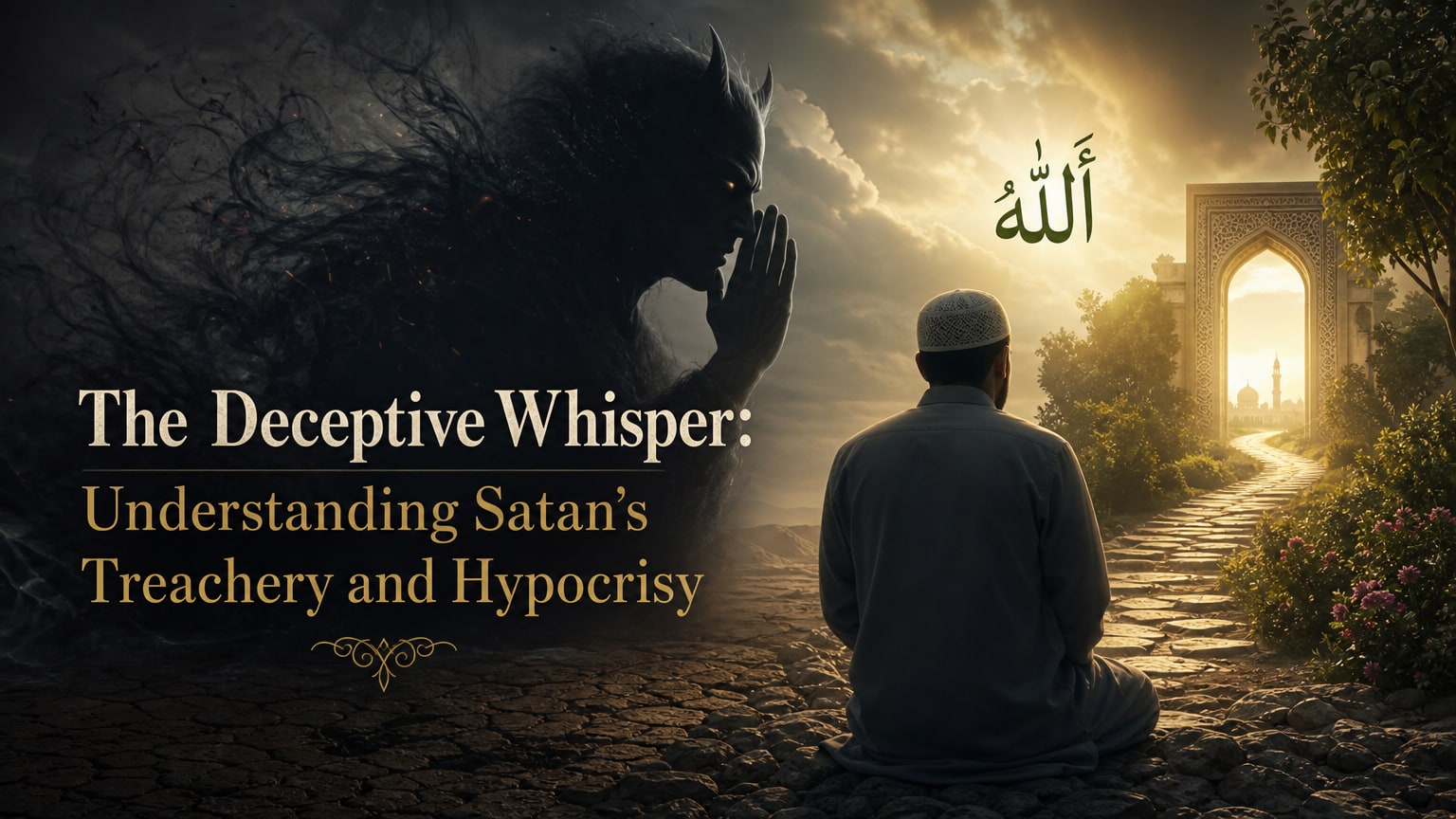
The Deceptive Whisper: Understanding Satan's Treachery and Hypocrisy
This article explores Surah Al-Hashr (59:16), revealing how Satan entices disbelief only to abandon those who succumb, drawing a powerful parallel to the nature of hypocrisy. It highlights the importance of firm faith and seeking refuge in Allah.
In the vast ocean of the Quran, every verse serves as a beacon, guiding humanity towards truth and righteousness. Surah Al-Hashr, in particular, offers profound insights into human nature, faith, and the subtle machinations of evil. Verse 16 of this Surah presents a vivid and chilling analogy, comparing the hypocrites to Satan himself, exposing the ultimate treachery of both.
The Divine Revelation
Let us delve into the verse that forms the core of our reflection today:
كَمَثَلِ الشَّيْطَانِ إِذْ قَالَ لِلْإِنسَانِ اكْفُرْ فَلَمَّا كَفَرَ قَالَ إِنِّي بَرِيءٌ مِنْكَ إِنِّي أَخَافُ اللَّهَ رَبَّ الْعَالَمِينَ
Transliteration: Kamaθali ash-Shayṭāni ið qāla lil-insāni akfur falamma kafar qāla innī barī'un minka innī akhāfu Allāha rabba al-'ālamīn.
Translation: "[The hypocrites are] like the example of Satan when he says to man, 'Disbelieve.' But when he disbelieves, he says, 'Indeed, I am disassociated from you. Indeed, I fear Allah, Lord of the worlds.'"
Qur'an Reference: Surah Al-Hashr (59:16)

Context and Interpretation
This powerful verse appears in Surah Al-Hashr, a Surah that primarily addresses the expulsion of the Jewish tribe of Banu Nadir from Madinah due to their treachery against the Prophet Muhammad (peace be upon him) and the Muslim community. The Surah also touches upon the characteristics of hypocrites (munafiqoon) and their alliance with the enemies of Islam. Verse 16 specifically draws a parallel between the deceitful nature of hypocrites and the ultimate betrayal of Satan.
The Hypocrites' Deception
The verse begins by stating that the hypocrites are "like the example of Satan." This comparison is crucial. Hypocrites outwardly profess faith but inwardly harbor disbelief and ill-will towards Islam and Muslims. They promise support and loyalty but abandon believers in times of trial, much like Satan's ultimate abandonment of those he misleads.
Satan's Treachery Explained
The verse then elaborates on Satan's method of deception: "when he says to man, 'Disbelieve.'" Satan's primary goal is to lead humanity astray from the path of Allah, encouraging them to reject faith, disobey divine commands, and commit sins. He whispers temptations, adorns evil, and makes disbelief seem appealing or logical.
However, the true nature of his treachery is revealed in the latter part of the verse: "But when he disbelieves, he says, 'Indeed, I am disassociated from you. Indeed, I fear Allah, Lord of the worlds.'" This vividly portrays Satan's ultimate betrayal. Once a person succumbs to his temptations and falls into disbelief or grave sin, Satan completely disowns them. He declares his innocence and even professes fear of Allah, thereby shifting all blame and responsibility onto the misguided individual. This is a profound lesson in understanding that Satan offers no true support or salvation; his promises are hollow and lead only to destruction.
Important Lessons from the Verse
The True Nature of Hypocrisy: The verse powerfully illustrates that hypocrisy is a form of spiritual betrayal, akin to Satan's deception. Both lure individuals into a false sense of security, only to abandon them when consequences arise.
Satan's Ultimate Betrayal: It reveals that Satan is not a loyal ally. His only objective is to lead people to eternal punishment, and he will disavow any responsibility for their actions in the Hereafter.
The Danger of Blind Obedience: Following the whispers of Satan or the deceptive promises of hypocrites leads to inevitable regret and abandonment.
The Importance of Firm Faith: This verse underscores the necessity of having a strong, unwavering faith in Allah and adhering to His commands, as this is the only true shield against deception.
Accountability for One's Actions: Ultimately, each individual is responsible for their choices. While Satan tempts, he cannot force anyone to disbelieve. The decision to succumb or resist lies with the human being.
Practical Application to Daily Life
How can we apply the profound wisdom of this verse to our daily lives?
Guard Against Deception: Be vigilant against temptations and whispers that encourage disobedience to Allah. Recognize that these are from Satan, and he will never stand by you.
Beware of False Friends: Just as Satan abandons, be cautious of those who encourage you towards wrongdoings or who show superficial loyalty but lack genuine commitment to truth and righteousness.
Strengthen Your Relationship with Allah: The best defense against Satan's schemes is a strong connection with Allah through prayer, remembrance (dhikr), reading the Quran, and seeking knowledge.
Seek Refuge in Allah: Whenever you feel tempted or doubt, immediately seek refuge in Allah from Satan, as taught by the Prophet Muhammad (peace be upon him). Recite "A'udhu billahi minash shaitanir rajim" (I seek refuge in Allah from the accursed Satan).
Reflect on Consequences: Before making a decision, consider its long-term implications, especially in the Hereafter. Satan only focuses on immediate gratification, blinding us to future consequences.
Personal Reflection
This verse serves as a stark reminder of the spiritual battle each of us faces. It highlights how easily one can be swayed by temptation and how hollow the promises of evil truly are. It makes me reflect on moments when I might have been close to giving in to negative thoughts or actions, only to realize the ultimate emptiness and regret they would bring. The fear of Allah, which Satan ironically claims to possess, is the very quality that should guide us away from his path. Our fear of Allah should translate into obedience and a constant striving for His pleasure, ensuring we are never abandoned.
Conclusion
Surah Al-Hashr (59:16) is a powerful testament to the deceptive nature of Satan and the hypocrites. It teaches us to be discerning, to recognize the ultimate betrayal of evil, and to place our trust and obedience solely in Allah, the Lord of the worlds. By understanding this verse, we are better equipped to navigate the challenges of life, resist temptations, and remain steadfast on the straight path, knowing that Allah is our only true protector and guide.
- #surah al-hashr
- #quran 59:16
- #satan
- #hypocrisy
- #deception
- #faith
- #islamic lessons
- #spiritual reflection