
Qur'an Study
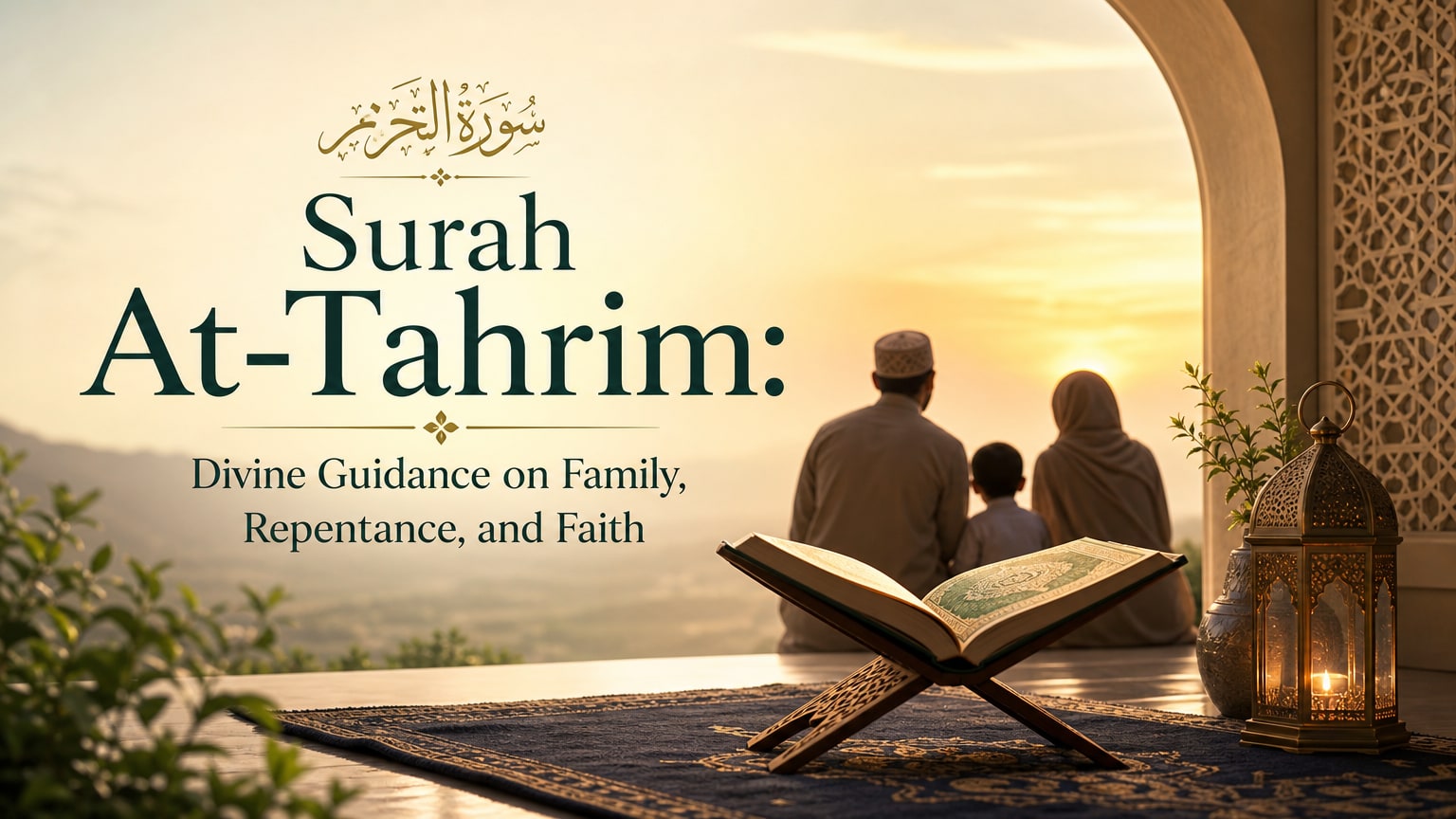
Surah At-Tahrim: Divine Guidance on Family, Repentance, and Faith
Discover the timeless lessons of Surah At-Tahrim, exploring sincere repentance, protecting the household, and noble models of faith through authentic Qur'anic insights.
Surah At-Tahrim (The Prohibition), the 66th chapter of the Qur'an revealed in Madinah, addresses sensitive domestic dynamics within the household of Prophet Muhammad ﷺ, transforming private tests into universal moral teachings. Through twelve powerful verses, this chapter guides believers on upholding lawful boundaries, protecting families from spiritual ruin, seeking sincere repentance, and finding salvation through personal conviction rather than familial association.
The Core Verses and Translation
Among the pivotal commands of Surah At-Tahrim is verse 6, a direct address commanding believers to take active spiritual responsibility over their homes:
يَٰٓأَيُّهَا ٱلَّذِينَ ءَامَنُوا۟ قُوٓا۟ أَنفُسَكُمْ وَأَهْلِيكُمْ نَارًا وَقُودُهَا ٱلنَّاسُ وَٱلْحِجَارَةُ عَلَيْهَا مَلَـٰٓئِكَةٌ غِلَاظٌ شِدَادٌ لَّا يَعْصُونَ ٱللَّهَ مَآ أَمَرَهُمْ وَيَفْعَلُونَ مَا يُؤْمَرُونَ
Transliteration: Yā ayyuhāllaḏīna āmanū qū anfusakum wa-ahlīkum nāran waqūduhan-nāsu wal-ḥijārah, ‘alayhā malā’ikatun ġilāẓun šidādun lā ya‘ṣūnallāha mā amarahum wa-yaf‘alūna mā yu’marūn.
Translation (Surah At-Tahrim 66:6): “O you who have believed, protect yourselves and your families from a Fire whose fuel is people and stones, over which are [appointed] angels, harsh and severe; they do not disobey Allah in what He commands them but do what they are commanded.”
This solemn warning is balanced immediately in verse 8 by the door of hope and return:
يَـٰٓأَيُّهَا ٱلَّذِينَ ءَامَنُوا۟ تُوبُوٓا۟ إِلَى ٱللَّهِ تَوْبَةً نَّصُوحًا عَسَىٰ رَبُّكُمْ أَن يُكَفِّرَ عَنكُمْ سَيِّـَٔاتِكُمْ وَيُدْخِلَكُمْ جَنَّـٰتٍ تَجْرِى مِن تَحْتِهَا ٱلْأَنْهَـٰرُ
Transliteration: Yā ayyuhāllaḏīna āmanū tūbū ilallāhi tawbatan naṣūḥā, ‘asā rabbukum an yukaffira ‘ankum sayyi’ātikum wa-yudḵilakum jannātin tajrī min taḥtihan-anhār...
Translation (Surah At-Tahrim 66:8): “O you who have believed, repent to Allah with sincere repentance. Perhaps your Lord will remove from you your misdeeds and admit you into gardens beneath which rivers flow...”
Context and Reasons for Revelation
The opening verses of Surah At-Tahrim arose from a domestic incident where the Prophet Muhammad ﷺ chose to abstain from something permissible (honey, according to authentic narrations in Sahih al-Bukhari) to appease certain wives. Allah gently admonished His Messenger: “Why do you prohibit [yourself from] what Allah has made lawful for you, seeking the approval of your wives?” (66:1).
This revelation established that human relationships—even the most loving—must never override the legal boundaries established by Allah. It also revealed a breach of trust where a confidant disclosed a private matter, prompting Allah to remind the believers that He knows every hidden thought and private whisper.
Contrasting Parables: Faith Is an Individual Choice
Toward the conclusion of the Surah, Allah presents four women who serve as archetypes of accountability:
- The Warning (Verses 10): The wives of Prophet Nuh (Noah) and Prophet Lut (Lot). Despite living beneath the roof of two chosen messengers of God, their betrayal in faith condemned them. Being married to a prophet provided zero immunity on the Day of Judgment.
- The Examples of Righteousness (Verses 11–12): Asiyah, the wife of Pharaoh, who chose martyrdom and proximity to Allah over the worldly power of history's greatest tyrant, praying: “My Lord, build for me near You a house in Paradise and save me from Pharaoh and his deeds” (66:11). Alongside her stands Maryam (Mary), daughter of 'Imran, who guarded her chastity, testified to divine revelation, and embodied devout obedience.
Key Lessons and Practical Takeaways
- Cultivate Spiritual Stewardship: Protecting your family means teaching them prayer, good character, and sound belief. Faith begins at home.
- Perform Sincere Repentance (Tawbah Nasuh): True repentance involves remorse, ceasing the sin, and a resolute intention never to return to it.
- Individual Accountability: No familial status, spouse, or lineage can save a soul that neglects its relationship with Allah.
- Safeguard Privacy: Trust and confidentiality within marital and family settings are sacred duties, heavily emphasized in the opening verses.
Conclusion
Surah At-Tahrim serves as both a mirror and a beacon for the Muslim household. It instructs us that loving our families requires guiding them toward the eternal pleasure of Allah, while reminding us that our personal integrity remains our ultimate shield before our Creator.
- #surah at-tahrim
- #quran 66
- #repentance
- #family in islam
- #tawbah
- #quran reflection