
Islamic Finance
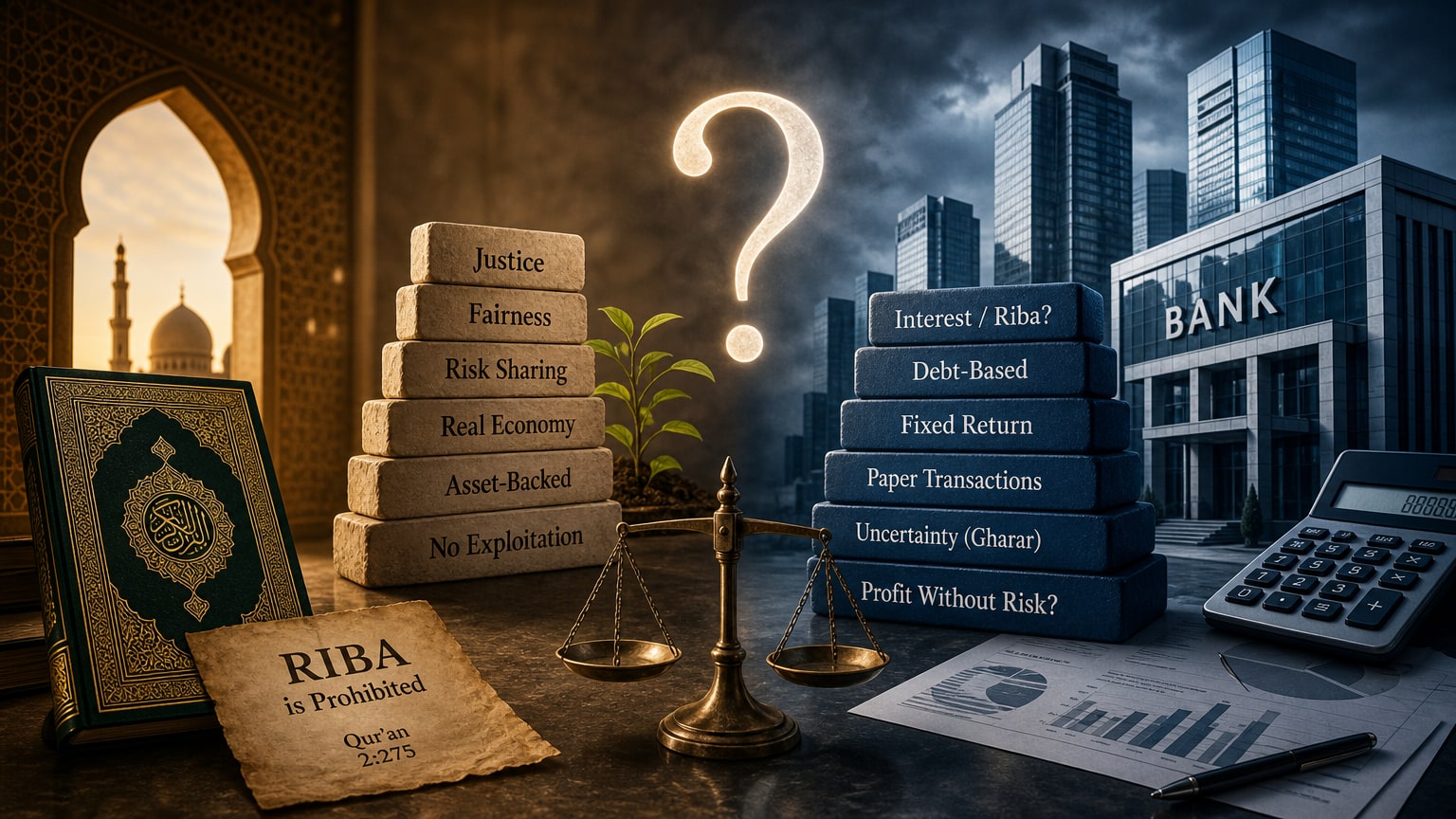
Riba and Modern Islamic Banking: Truth, Shariah Principles, and Reality
A frank examination of Quranic prohibitions on riba, classical fiqh definitions, and whether modern Islamic banking practices truly meet authentic Shariah requirements.
In an era dominated by debt instruments, fiat currency, and speculative capital, Muslims worldwide face serious dilemmas regarding wealth preservation and transactions. While Islamic banking institutions present themselves as ethical, interest-free alternatives, many consumers encounter practices that feel uncomfortably similar to conventional finance. When repayment schedules are extended due to unforeseen crises and the total owed rises, or when contracts carry benchmark rates mirroring interest, questions naturally emerge: What does Islamic law truly dictate concerning riba (usury/interest), and do current Islamic banks uphold these foundational divine standards?
The Quranic Stages of Prohibiting Riba
The prohibition of riba in the Noble Quran unfolded systematically across four distinct stages, reflecting divine wisdom in reshaping societal behavior:
- The Moral Distinction (Surah Ar-Rum 30:39): Allah clarified that wealth given out to increase through people’s assets carries no blessing with Him, whereas charity (zakat) given seeking His pleasure multiplies manifolds:
وَمَا آتَيْتُم مِّن رِّبًا لِّيَرْبُوَ فِي أَمْوَالِ النَّاسِ فَلَا يَرْبُو عِندَ اللَّهِ ۖ وَمَا آتَيْتُم مِّن زَكَاةٍ تُرِيدُونَ وَجْهَ اللَّهِ فَأُولَٰئِكَ هُمُ الْمُضْعِفُونَ
- Censure of Past Transgressions (Surah An-Nisa 4:161): The Quran condemned prior communities for taking riba after having been explicitly prohibited from it, warning of painful punishment for devouring people's property unjustly.
- Banning the Compounding of Debt (Surah Ali 'Imran 3:130): The believers were ordered:
يَا أَيُّهَا الَّذِينَ آمَنُوا لَا تَأْكُلُوا الرِّبَا أَضْعَافًا مُّضَاعَفَةً
This tackled the pre-Islamic practice where a creditor would demand payment at maturity and say: "Either pay up or increase the debt with added time." - Total and Final Obliteration (Surah Al-Baqarah 2:278-279): The ultimate injunction arrived without compromise:
يَا أَيُّهَا الَّذِينَ آمَنُوا اتَّقُوا اللَّهَ وَذَرُوا مَا بَقِيَ مِنَ الرِّبَا إِن كُنتُم مُّؤْمِنِينَ فَإِن لَّمْ تَفْعَلُوا فَأْذَنُوا بِحَرْبٍ مِّنَ اللَّهِ وَرَسُولِهِ
Allah and His Messenger declared outright war against those who persist in usury after the truth has reached them.
The Gravity of Riba in Authentic Sunnah
The severity of dealing in riba is reinforced through rigorous Hadith literature. The Prophet Muhammad (peace and blessings be upon him) outlined the profound spiritual and civilizational destruction caused by usurious transactions.
- A Curse Upon All Participants: In Sahih Muslim (Hadith 1598), Jabir (may Allah be pleased with him) reported that the Messenger of Allah cursed the one who accepts riba, the one who pays it, the one who records it, and the two witnesses to it, stating: "They are all alike."
- Pervasiveness in the Modern World: In an authentic narration recorded in Sunan Abi Dawud (Hadith 3331) and Sunan an-Nasa'i, the Prophet stated: "A time will come upon mankind when no one will remain who does not devour riba; and whoever does not devour it will be touched by its dust." Modern fiat reserves, payment clearinghouses, and cross-border settlement rails demonstrate the literal reality of this prophecy today.
- Societal Ruin: In Musnad Ahmad and Al-Mustadrak, the Prophet warned that whenever usury and fornication manifest publicly within a community, they invite upon themselves the retribution of Allah. While immorality destroys familial integrity, usury systematically destroys financial justice.
The Two Classical Types of Riba
In authentic Sunni jurisprudence, riba is not merely excess charge on a cash loan; it falls into two core categories established by the Sunnah:
1. Riba al-Duyun (or Riba an-Nasi'ah)
This is debt-based or delay-based usury. It occurs when any stipulated or renegotiated excess is extracted purely in exchange for an extension of time. The foundational legal maxim states: "Every loan that brings an added benefit to the lender is a form of riba."
2. Riba al-Fadl
This is transaction-based excess during the exchange of commodities. As established in Sahih al-Bukhari and Sahih Muslim, the exchange of homogeneous goods among the six defined items—gold for gold, silver for silver, wheat for wheat, barley for barley, dates for dates, and salt for salt—must be hand-to-hand and in equal measure, regardless of apparent differences in quality. Imam al-Ghazali and classical scholars noted that money (gold and silver) was created as a neutral measure of value and medium of exchange, not an asset to be rented out for guaranteed profit.
The Core Dilemma: Modern Islamic Banking Realities
Many Muslims experience tension between the marketed ideals of Islamic financial institutions and the contractual mechanisms they execute in practice. A fair examination reveals both structural constraints and points of divergence.
Nominal Contracts vs. Risk Sharing
True Islamic commercial jurisprudence encourages risk-sharing models such as Mudarabah (profit-sharing partnership) and Musharakah (joint venture equity). In practice, however, over 80% of retail Islamic banking portfolios rely on debt-creating sales contracts, primarily Murabahah (cost-plus financing) and Ijarah Muntahiyah Bittamleek (lease-to-own arrangements).
The Mechanism of Contract Restructuring
A frequent point of frustration occurs when a client faces distress—such as during economic shutdowns—and requests loan deferrals. Under pristine Shariah rulings, extending time to a debtor in hardship must be granted without imposing compounding costs. Allah commands in Surah Al-Baqarah (2:280):
وَإِن كَانَ ذُو عُسْرَةٍ فَنَظِرَةٌ إِلَىٰ مَيْسَرَةٍIn certain regulatory environments, when an Islamic institution lengthens the tenure, it recalculates the markup across the new duration or levies late payment penalties. While standard Shariah boards mandate that genuine penalty fees cannot enter bank revenue and must be transferred to external charitable funds (to deter frivolous default without profiting), the practical outcome for the customer can closely resemble commercial loan restructuring.
Benchmarking to Conventional Interest Rates
Most Islamic financial products price their profit margins against conventional indicators like SOFR or regional central bank interbank offered rates. While jurists permit relying on market rates as a mere mathematical benchmark provided the underlying transaction involves lawful sale, possession, and risk transfer, it frequently breeds skepticism among customers who observe that their financing cost mirrors conventional interest down to fractional basis points.
Distinguishing Between Legal Form (Hilah) and Economic Substance
Classical scholar Fakhr al-Din al-Razi observed in his Tafsir that riba corrupts human empathy, damages real production, and concentrates capital among the wealthy without counter-value ('iwad). When Islamic financial products are engineered primarily using legal stratagems (hiyal) simply to duplicate conventional lending products under Arabic nomenclature, they fall short of the civilizational objectives (Maqasid al-Shariah) of Islamic economics.
| Feature | Conventional Banking | Engineered Islamic Finance | Authentic Shariah Standard |
|---|---|---|---|
| Underlying Asset | Money loaned as debt | Contract tied to goods on paper | Genuine asset ownership & risk borne |
| Hardship Relief | Interest compounds automatically | Tenure expanded with revised markup | Deferment granted without added capital extraction |
| Risk Exposure | Shifted fully to the borrower | Frequently minimized through indemnities | Shared between financier and entrepreneur |
Practical Steps for the Conscientious Muslim
Navigating financial realities in a modern economy requires principled discernment and reliance on authentic rulings:
- Scrutinize the Contract: Ensure that purchase-and-sale contracts involve legitimate transfer of liability and actual goods rather than bilateral artificial buybacks (Inah) or syndicated debt trading.
- Avoid Debt-Driven Consumption: Minimize unnecessary credit financing. The Prophet sought refuge daily from the burden of debt.
- Demand Transparency: Ask your institution's Shariah board representatives directly about default penalty allocations, restructuring fees, and asset possession chains.
- Revive Mutual Community Finance: Cultivate community endowments (Awqaf), interest-free revolving personal loans (Qard Hasan), and direct entrepreneurial equity partnerships.
While Islamic banks represent an effort to operate within a global financial infrastructure built on usury, true Shariah compliance cannot settle for semantic adjustments. It demands fidelity to the Quranic ethos: protecting the weak, honoring real productive enterprise, and utterly eradicating the unjust extraction of wealth through time-based debt compounding.
- #riba
- #islamic banking
- #shariah finance
- #quran
- #hadith
- #islamic economics
- #fiqh