
Islamic Finance
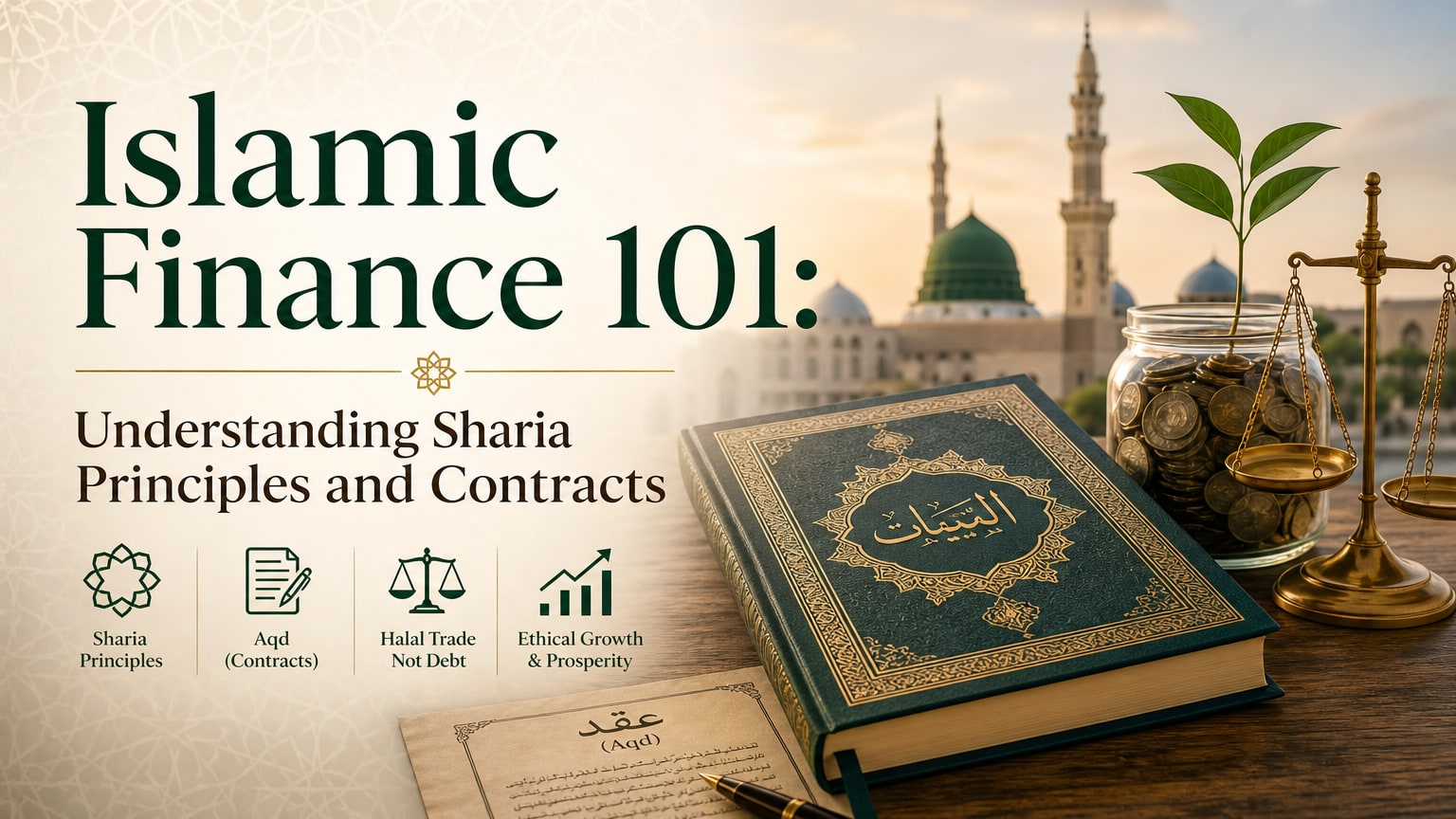
Islamic Finance 101: Understanding Sharia Principles and Contracts
Discover the foundational principles of Islamic finance, the legal anatomy of contracts (Aqd), and the rules separating halal trade from conventional debt systems.
In an increasingly interconnected global economy, financial transactions take place in fractions of a second—from tap-and-pay card readers to international wire transfers. Yet for conscious individuals and entrepreneurs, a fundamental ethical question remains: what governs our financial dealings, and how do our daily transactions align with our values?
The study of Islamic commercial jurisprudence (Fiqh al-Mu'amalat) provides a moral and legal framework that anchors wealth generation in real economic activity, mutual benefit, and social justice. This guide introduces the core principles of Islamic finance and the essential mechanics of contracts.
The Obligation of Halal Earning
Earning an honest living is not merely a secular necessity; it is a spiritual imperative in Islam. Scholars historically observed that supporting oneself and fulfilling family obligations up to the level of need is an obligation upon every able individual.
The Holy Qur'an explicitly commands the faithful to engage productively in the marketplace while staying mindful of their Creator:
فَإِذَا قُضِيَتِ الصَّلَاةُ فَانتَشِرُوا فِي الْأَرْضِ وَابْتَغُوا مِن فَضْلِ اللَّهِ وَاذْكُرُوا اللَّهَ كَثِيرًا لَّعَلَّكُمْ تُفْلِحُونَ
"And when the prayer has been concluded, disperse within the land and seek from the bounty of Allah, and remember Allah often that you may succeed." (Surah Al-Jumu'ah, 62:10)
In another verse, Allah Almighty underlines the connection between ethical acquisition and charity:
يَا أَيُّهَا الَّذِينَ آمَنُوا أَنفِقُوا مِن طَيِّبَاتِ مَا كَسَبْتُمْ
"O you who have believed, spend from the good things which you have earned..." (Surah Al-Baqarah, 2:267)
A sound understanding of commercial ethics also serves as protection. The Prophet Muhammad (peace be upon him) forewarned of a condition where ethical diligence would erode:
يَأْتِي عَلَى النَّاسِ زَمَانٌ لاَ يُبَالِي الْمَرْءُ مَا أَخَذَ مِنْهُ أَمِنَ الْحَلاَلِ أَمْ مِنَ الْحَرَامِ
"A time will come upon people when a person will not care how they gain their money, whether from lawful sources or unlawful sources." (Sahih al-Bukhari, 2059)
The Legal Foundations: Ibadat vs. Mu'amalat
Islamic jurisprudence divides human actions into two primary realms. Understanding the legal presumption (al-asl) of each sphere is vital:
Acts of Worship ('Ibadat): Matters strictly between the servant and the Creator (e.g., prayer, fasting, pilgrimage). Here, the default presumption is restriction (tahrim). An act of worship is only valid if supported by clear revelation.
Human Interpersonal Dealings (Mu'amalat): Everyday transactions, commerce, leases, and partnerships. Here, the legal maxim is reversed: the default rule is permissibility (al-asl fi al-mu'amalat al-ibahah). Everything in trade and finance is allowed unless a specific textual prohibition or contradiction of Sharia objectives exists.
The Purpose: Maqasid al-Sharia
Islamic economic law operates to preserve the universal objectives of the Sharia (Maqasid al-Sharia), which include the preservation of:
Faith (Din)
Life (Nafs)
Intellect ('Aql)
Lineage / Family (Nasl)
Wealth (Mal)
By prohibiting excessive uncertainty (gharar), usurious interest (riba), and gambling (maysir), Islamic law prevents systemic wealth destruction and shields both parties from predatory exploitation.
The Core Building Block: Anatomy of an Islamic Contract (Aqd)
The Arabic word 'Aqd (عقد) literally denotes tying a knot firmly together. Legally, it binds two or more parties to specific rights and liabilities. A sound contract requires four fundamental pillars:
Contracting Parties (al-'Aqidan): Both parties must possess legal capacity—being of sound mind, mature, and possessing the authority to dispose of the assets.
Offer and Acceptance (Ijab wa Qabul): Clear, mutual consent expressed verbally, in writing, or through customary practice (such as point-of-sale terminal interactions).
Unity of the Session (Majlis al-'Aqd): Mutual understanding and confirmation established before the transaction's session concludes.
Subject Matter (Mahall al-'Aqd) and Price (Thaman): The items being exchanged must exist, have recognized value (mutaqawwam), be quantifiable, capable of physical or constructive delivery, and be legally permissible to trade.
The Three Primary Transaction Models
Nearly all Islamic financial instruments are constructed from three elementary forms of exchange:
1. The Sale Contract (Bay')
A commercial exchange involving an immediate, permanent transfer of asset ownership in exchange for a agreed-upon payment (paid either on the spot or deferred as an outstanding debt). Because the seller assumes commercial risk, generating a profit margin is natural and permissible.
2. The Benevolent Loan (Qard Hasan)
A temporary transfer of money or fungible wealth provided purely as a charitable accommodation. In Islamic finance, a loan is categorized as a social virtue, not a profit mechanism. Any contractual stipulation requiring extra money back on a pure monetary loan constitutes forbidden interest (riba).
3. The Lease Contract (Ijarah)
An exchange where the core asset ('ayn) remains in the ownership and liability of the lessor, while the right to use its services or fruits (manfa'ah or usufruct) is transferred to the lessee for a set duration in return for rent. Only assets that can be utilized without destroying their underlying substance can be leased; things consumed upon use (like food, fuel, or liquid cash) cannot be leased.
Conclusion: The Islamic Economic Vision
Islamic finance is not simply conventional banking wrapped in Arabic terminology. At its heart lies a tangible connection between monetary capital and real productive enterprise. By tying financial returns to asset ownership, risk participation, and productive work, it builds a balanced economic system where wealth circulates transparently to benefit all of society.
- #islamic finance
- #sharia
- #halal investment
- #fiqh muamalat
- #business ethics