
Islamic Finance
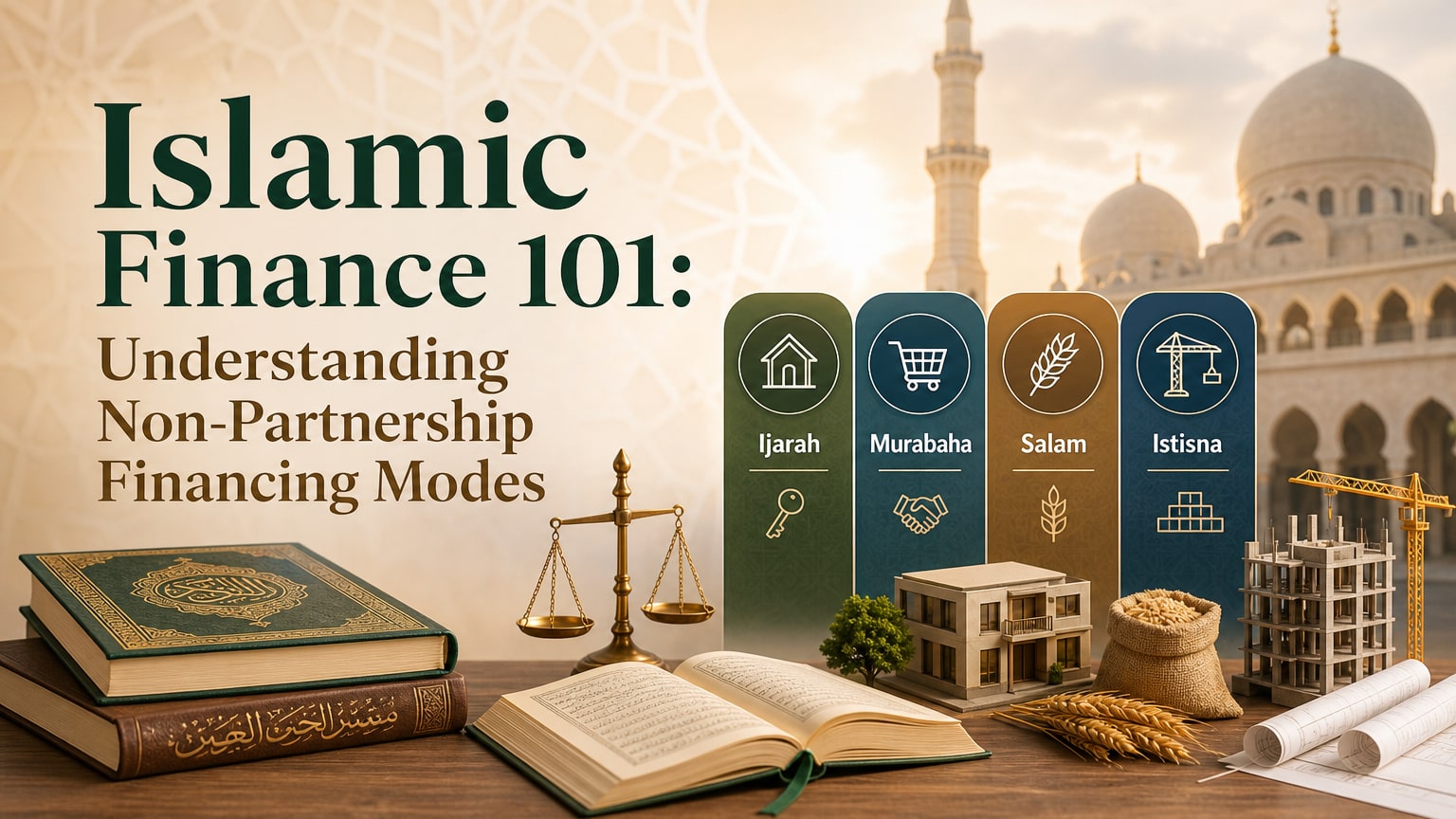
Islamic Finance 101: Understanding Non-Partnership Financing Modes
Discover how Islamic finance structures debt and trade through Ijarah, Murabaha, Salam, and Istisna contracts, backed by authentic Quranic and Hadith proofs.
When examining Islamic finance, many people assume that the only permissible avenue is profit-and-loss sharing through equity partnerships. While partnerships are vital, Islamic jurisprudence (Fiqh al-Mu'amalat) provides versatile non-partnership contracts to facilitate trade, asset acquisition, and commercial production. These contracts replace conventional debt and interest with genuine economic exchange, ensuring every transaction is tethered to tangible assets.
1. Ijarah: The Principle of Leasing
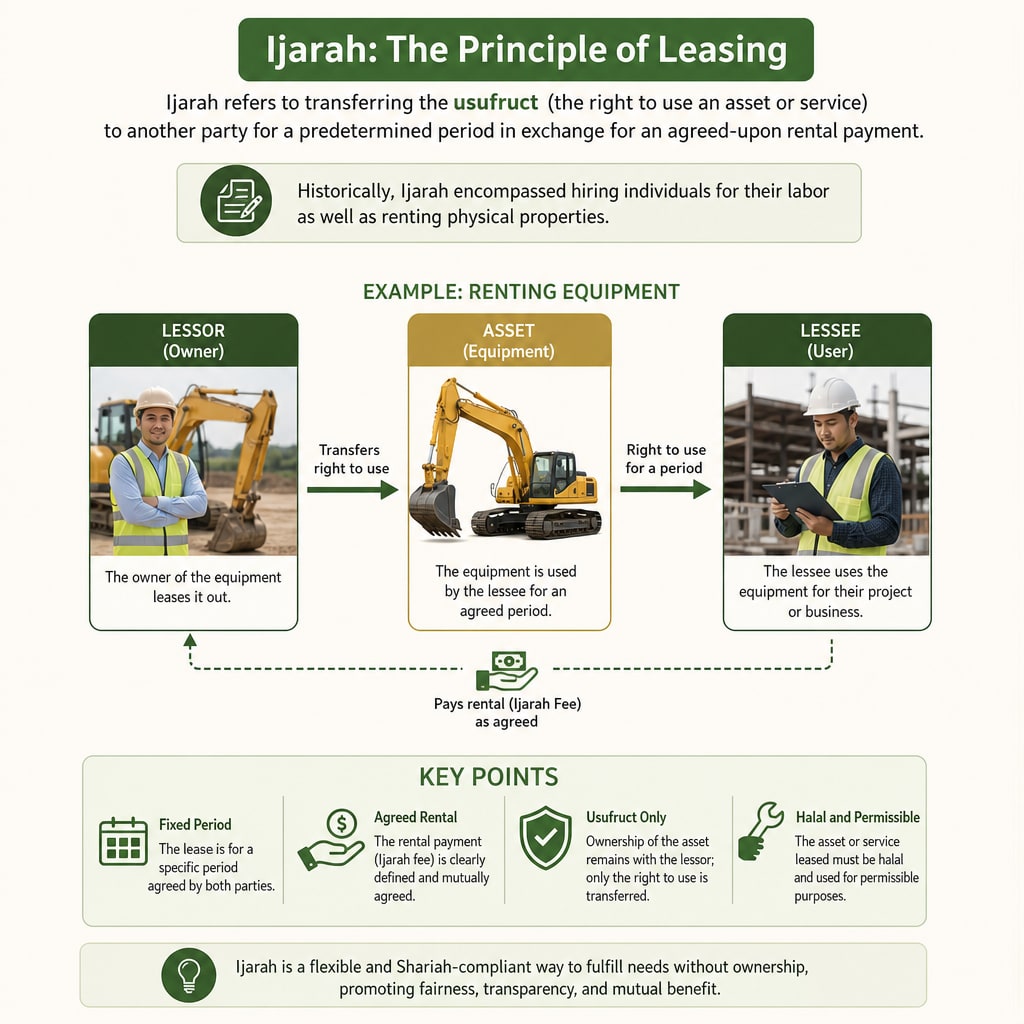
Ijarah refers to transferring the usufruct (the right to use an asset or service) to another party for a predetermined period in exchange for an agreed-upon rental payment. Historically, Ijarah encompassed hiring individuals for their labor as well as renting physical properties.
The Scriptural Foundation of Hiring and Leasing
The concept of hiring competent, reliable labor is affirmed in the Holy Qur'an during the story of Prophet Musa (peace be upon him):
قَالَتْ إِحْدَىٰهُمَا يَا أَبَتِ اسْتَأْجِرْهُ ۖ إِنَّ خَيْرَ مَنِ اسْتَأْجَرْتَ الْقَوِيُّ الْأَمِينُ
"One of the women said, 'O my father, hire him. Indeed, the best one you can hire is the strong and the trustworthy.'"
— Surah Al-Qasas (28:26)
Islam places strict ethical requirements on fulfilling these obligations promptly. Denying a worker their just earnings is considered a grave transgression. The Prophet Muhammad (peace be upon him) related in a Hadith Qudsi that Allah said:
"I will be an opponent to three persons on the Day of Resurrection: one who makes a covenant in My Name, but proves treacherous; one who sells a free person (as a slave) and eats the price; and one who employs a laborer and gets the full work done by him but does not pay him his wages."
— Sahih al-Bukhari (Hadith 2227), Reference: Sunnah.com Sahih al-Bukhari 2227
Modern Applications: Home Financing and Sukuk
In contemporary finance, Ijarah is widely utilized for home acquisition via lease-to-own models, commercial property rentals, and asset-backed Sukuk (investment certificates). For an Ijarah contract to remain valid under Shariah, the lessor must bear the ownership risks of the asset. Merely relabeling interest as rent without transferring tangible rights and responsibilities renders the contract invalid.
2. Murabaha: Cost-Plus Financing
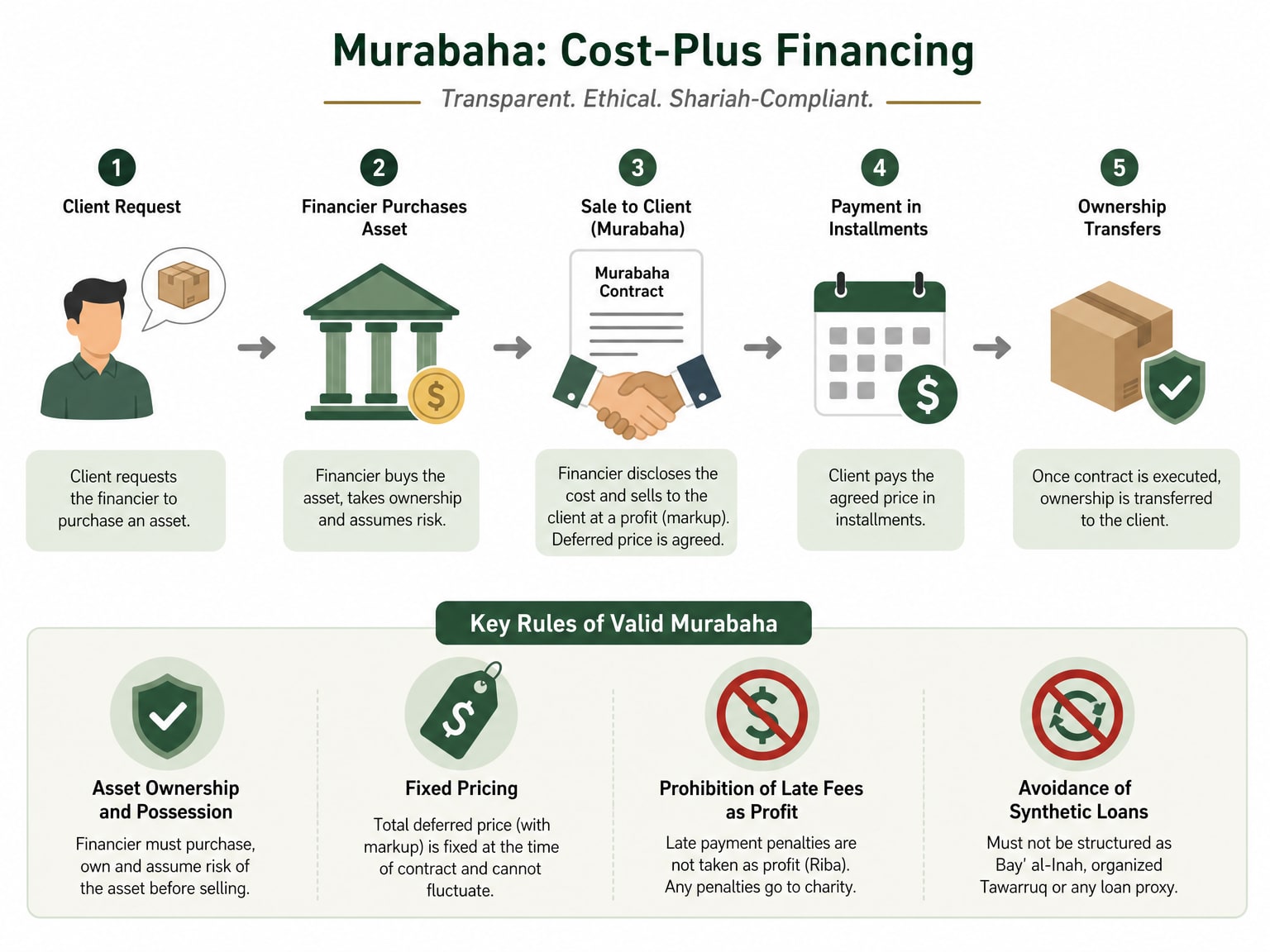
Murabaha is a sale contract where the seller discloses their exact acquisition cost and sells the item to the buyer with an agreed-upon profit margin (markup). Payment is typically settled in installments over time.
Key Rules of Valid Murabaha
Asset Ownership and Possession: The financier must purchase, take ownership of, and assume risk of the asset before selling it to the client.
Fixed Pricing: While the deferred price can be higher than the immediate spot price, the total deferred price must be fixed upon signing the contract. It cannot fluctuate after execution.
Prohibition of Late Fees as Profit: Late payment penalties cannot be taken as profit by the bank, as that constitutes Riba (usury). Any penalty fees collected must be redirected to charity.
Avoidance of Synthetic Loans: The arrangement must not devolve into Bay' al-Inah (buying back the same asset to manufacture cash loans) or organized Tawarruq without genuine delivery.
3. Salam: Forward Financing for Fungible Goods
While the general Islamic rule forbids selling what you do not currently possess, the contract of Salam serves as an authorized exception designed to support working capital requirements, particularly in agriculture and raw commodities.
In a Salam contract, the buyer pays the full purchase price in advance on the spot, and the seller agrees to deliver a specified, standardized commodity at a designated future date.
Evidence from the Qur'an and Sunnah
The permissibility of deferred financial obligations is established in the longest verse of the Qur'an:
يَا أَيُّهَا الَّذِينَ آمَنُوا إِذَا تَدَايَنتُم بِدَيْنٍ إِلَىٰ أَجَلٍ مُّسَمًّى فَاكْتُبُوهُ
"O you who have believed, when you contract a debt for a specified term, write it down."
— Surah Al-Baqarah (2:282)
When the Prophet Muhammad (peace be upon him) arrived in Madinah, he observed the locals entering into forward sales on agricultural yields and provided precise guidelines to eliminate ambiguity and disputes:
"Whoever pays money in advance for fruit (to be delivered later) should pay it for a known measure and a known weight up to a known specified date."
— Sahih al-Bukhari (Hadith 2240), Reference: Sunnah.com Sahih al-Bukhari 2240
4. Istisna: Manufacturing and Construction Contracts
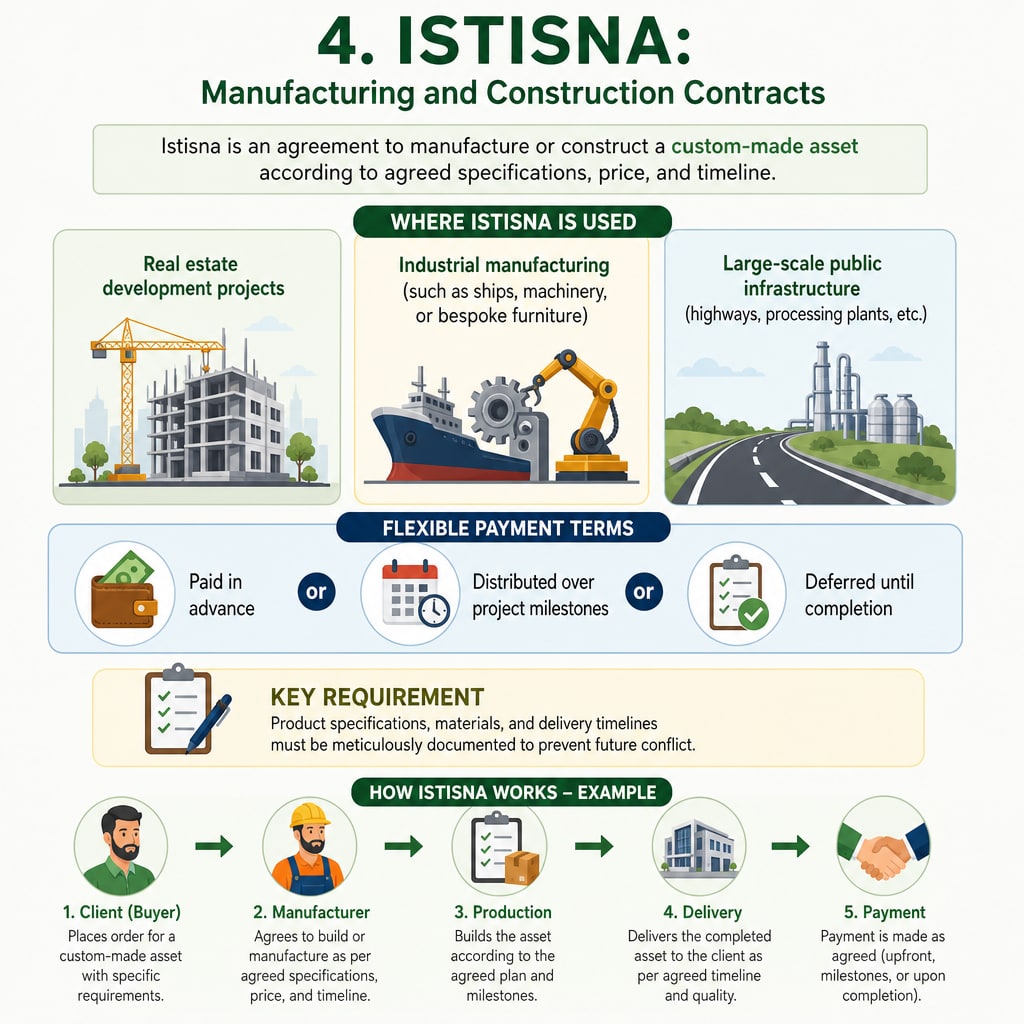
Unlike Salam, which requires standardized, fungible commodities and 100% advance payment, Istisna is an agreement to manufacture or construct a custom-made asset. It is extensively applied to:
Real estate development projects.
Industrial manufacturing (such as ships, machinery, or bespoke furniture).
Large-scale public infrastructure, including highways and processing plants.
In Istisna, payment terms are flexible: they may be paid in advance, distributed over project milestones, or deferred until completion. The product specifications, materials, and delivery timelines must be meticulously documented to prevent future conflict.
The Bottom Line: Anchoring Finance to Real Assets
Islamic modes of financing do not simply repackage conventional lending with Arabic nomenclature. Whether through Ijarah, Murabaha, Salam, or Istisna, every permissible transaction requires a tangible underlying asset, shared or genuine commercial risk, and transparency. By directly funding production, construction, and trade, Islamic finance aligns economic growth with real-world value creation.
- #islamic finance
- #ijarah
- #murabaha
- #salam
- #istisna
- #shariah
- #halal investing