
Quran Reflections
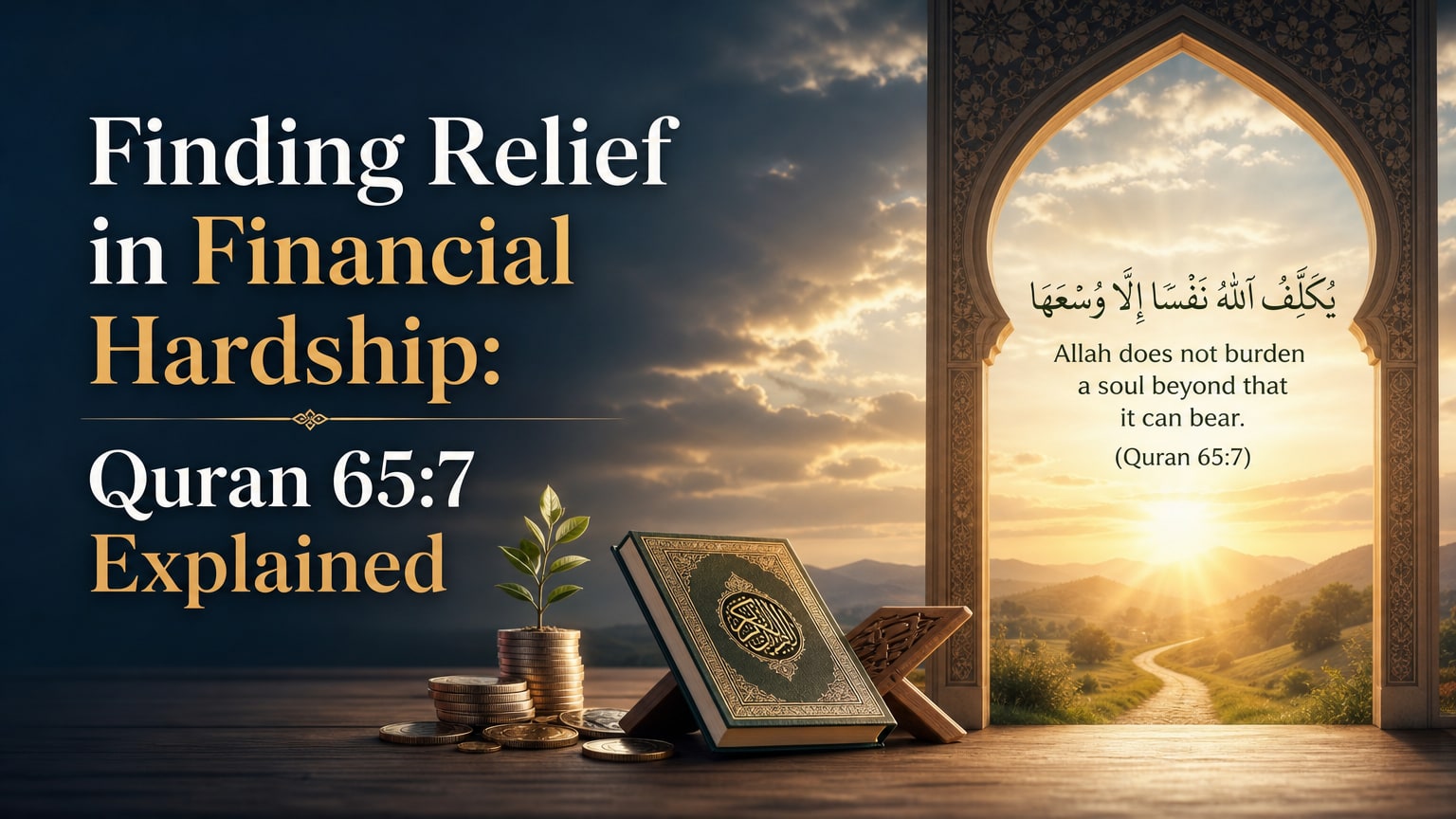
Finding Relief in Financial Hardship: Quran 65:7 Explained
Discover comfort and divine guidance in Surah At-Talaq (65:7). Learn how Allah balances obligations according to our means and promises ease after hardship.
Life is an ever-shifting journey marked by seasons of abundance and seasons of restraint. Financial anxieties, unexpected bills, and periods of economic tightness can weigh heavily on the human heart. Yet, embedded within divine revelation lies a profound comfort that frees the believer from overwhelming pressure while reviving hope in the most challenging times.
The Divine Verse: Surah At-Talaq (65:7)
Arabic:
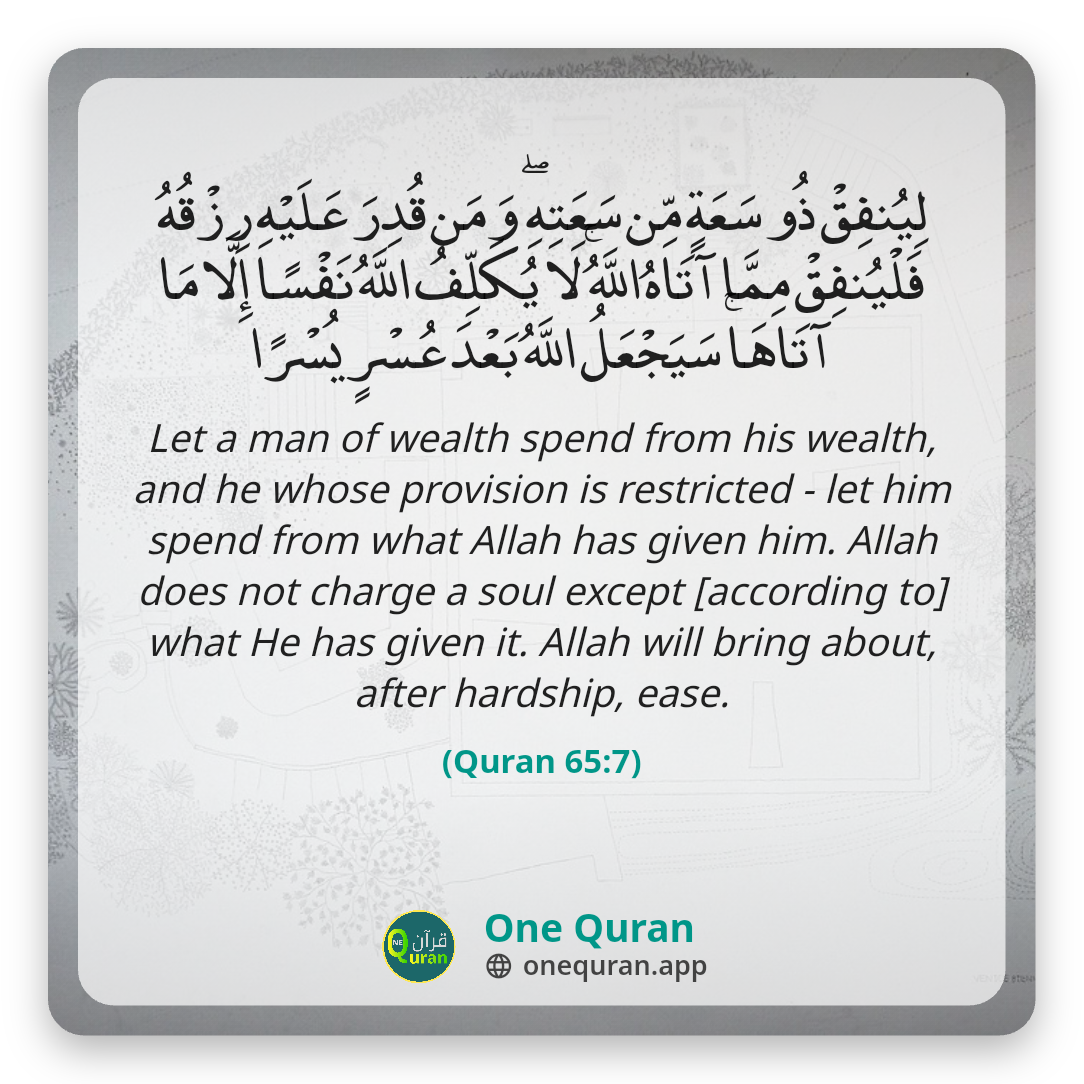
لِيُنفِقْ ذُو سَعَةٍ مِّن سَعَتِهِۦ ۖ وَمَن قُدِرَ عَلَيْهِ رِزْقُهُۥ فَلْيُنفِقْ مِمَّآ ءَاتَىٰهُ ٱللَّهُ ۚ لَا يُكَلِّفُ ٱللَّهُ نَفْسًا إِلَّا مَآ ءَاتَىٰهَا ۚ سَيَجْعَلُ ٱللَّهُ بَعْدَ عُسْرٍ يُسْرًاTransliteration:
Liyunfiq dhoo sa'atin min sa'atih, wa man qudira 'alayhi rizquhoo falyunfiq mimmaa aataahullaah; laa yukallifullaahu nafsan illaa maa aataahaa; sayaj'alullaahu ba'da 'usrin yusraa.Translation:
“Let a man of wealth spend from his wealth, and he whose provision is restricted – let him spend from what Allah has given him. Allah does not charge a soul except [according to] what He has given it. Allah will bring about, after hardship, ease.”
— Surah At-Talaq (65:7)
Context and Understanding of the Verse
Surah At-Talaq provides vital ethical and practical rules regarding divorce, custody, and family support. In this verse, Allah Almighty addresses maintenance (nafaqah) and financial responsibility.
Rather than imposing an impossible uniform standard across society, divine wisdom establishes an equitable, compassionate principle: every person is judged and obligated according to their personal capacity.
The verse highlights three key spiritual truths:
Proportionate Responsibility: Those blessed with financial comfort should give generously, without stinginess. Conversely, those with limited sustenance are asked only to give according to their actual means.
Divine Justice and Mercy: “Allah does not charge a soul except according to what He has given it.” Islam removes the burden of guilt from those struggling financially. Allah never demands resources He has not granted.
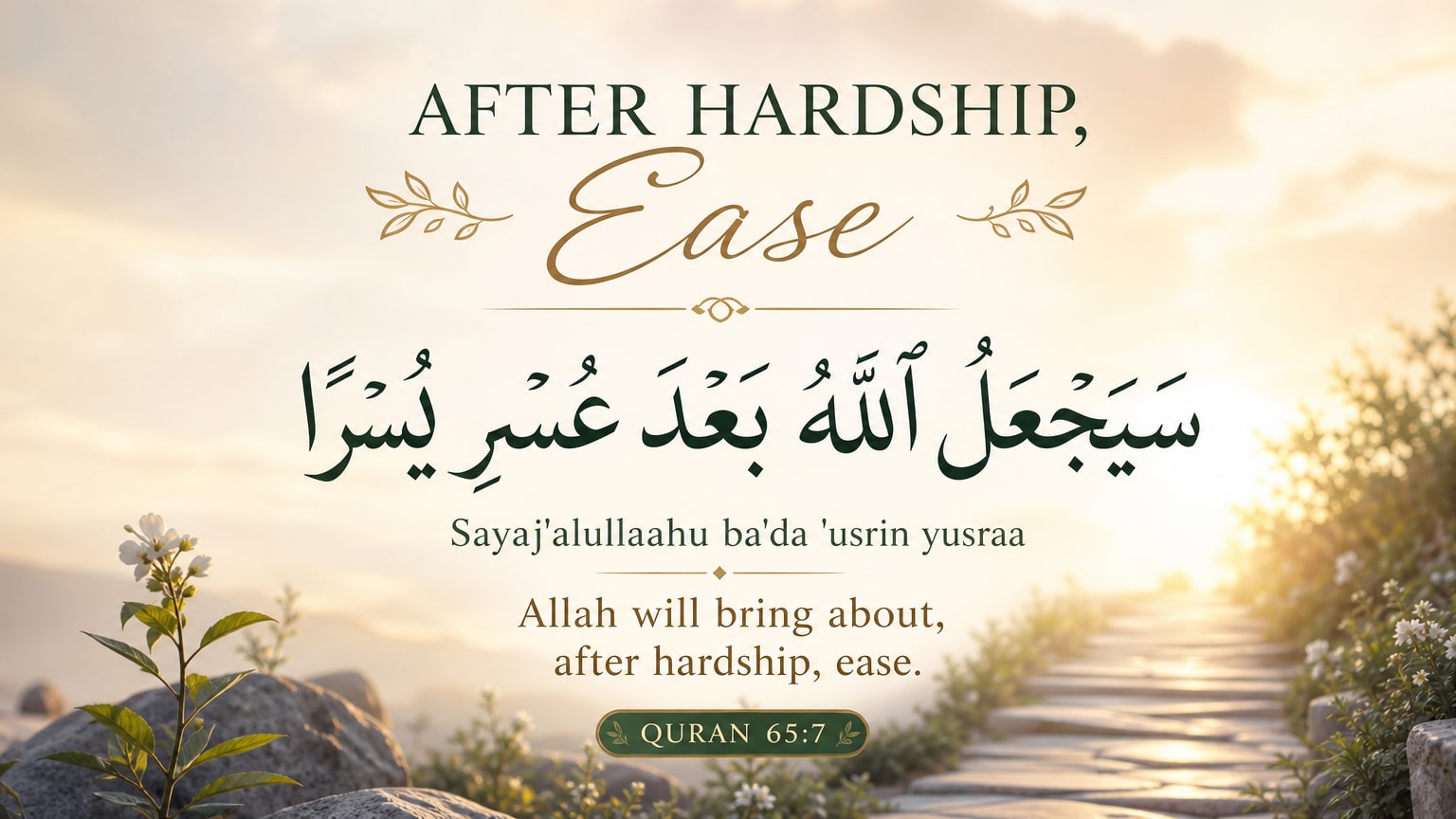
The Definite Promise of Ease: The verse concludes with an uplifting guarantee: “Sayaj'alullaahu ba'da 'usrin yusraa.” Hardship is neither permanent nor endless; it is the precursor to divine relief.
Key Lessons for Daily Life
1. Freedom from Toxic Comparisons
We live in a culture saturated with social media displays of luxury and material success. Verse 65:7 reminds us that provision (rizq) is distributed intentionally by Allah. Our duty is not to match what others spend or possess, but to handle what has been placed in our own hands with gratitude and responsibility.
2. Charity is Not Restricted to the Rich
Allah instructs even the person whose income is constrained to spend from what he has been given. This teaches us that the spirit of charity is measured by sincerity, sacrifice, and willingness, not mere dollar amounts. A single dollar given with devotion during hardship may weigh more heavily in divine scales than thousands given without thought.
3. Cultivating Unwavering Hope
When financial trials or life challenges become intense, despair can knock at the heart. Allah’s promise in this verse serves as an anchor. Hardship is a temporary passage, not a final destination. Ease is already on its way.
Practical Steps to Apply This Verse
Budget with Contentment: Plan your living expenses based strictly on your honest means without falling into harmful debt or pretense.
Give Consistently, Regardless of Amount: Maintain a habit of charity. Even if it is a few cents, a kind word, or helping a neighbor, never stop giving.
Replace Anxiety with Dhikr: When worry strikes, recite the closing words of this verse: “Sayaj'alullaahu ba'da 'usrin yusraa” (Allah will bring about, after hardship, ease).
Personal Reflection and Conclusion
Reflecting upon this verse grants immense tranquility to the believer's soul. It demonstrates that Allah sees our limitations, acknowledges our struggles, and treats us with ultimate compassion. Trust in His decree, fulfill your duties according to your capacity, and hold firm to the certain reality that dawn invariably follows the darkest night.
- #surah at-talaq
- #quran 65 7
- #ease after hardship
- #rizq
- #quran reflection
- #islamic motivation