
Quranic Reflections
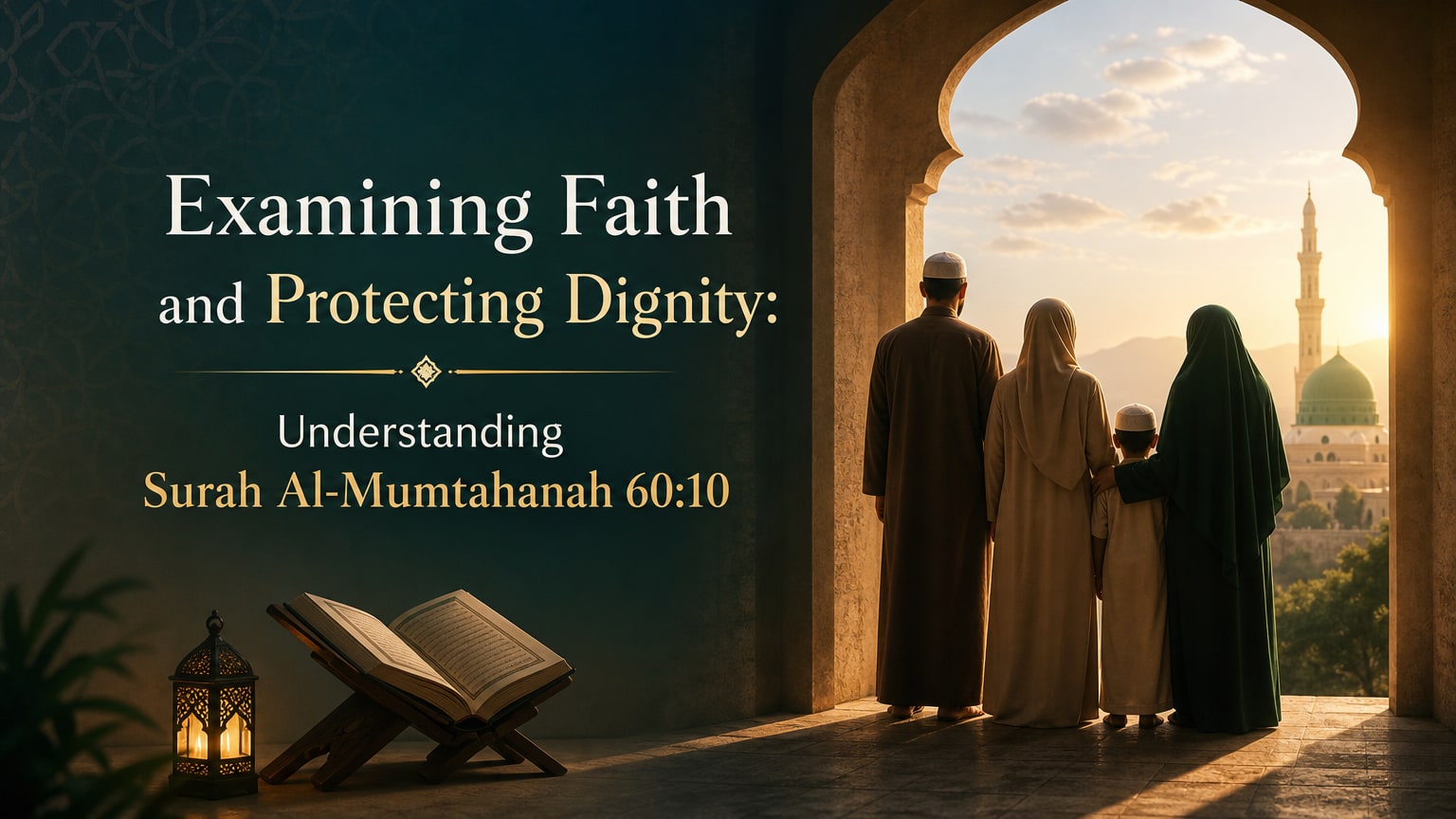
Examining Faith and Protecting Dignity: Understanding Surah Al-Mumtahanah 60:10
Discover the profound lessons of Surah Al-Mumtahanah (60:10) on justice, protecting vulnerable believers, and upholding divine boundaries in relationships.
In times of political upheaval and migration, human dignity and spiritual principles are often put to the test. Surah Al-Mumtahanah, verse 10, provides divine guidance on how the early Muslim community navigated complex social, legal, and relational contracts during migration. This verse highlights Allah's balanced decree between ethical commitments, spiritual loyalty, and financial fairness.
The Quranic Text and Translation
Arabic:
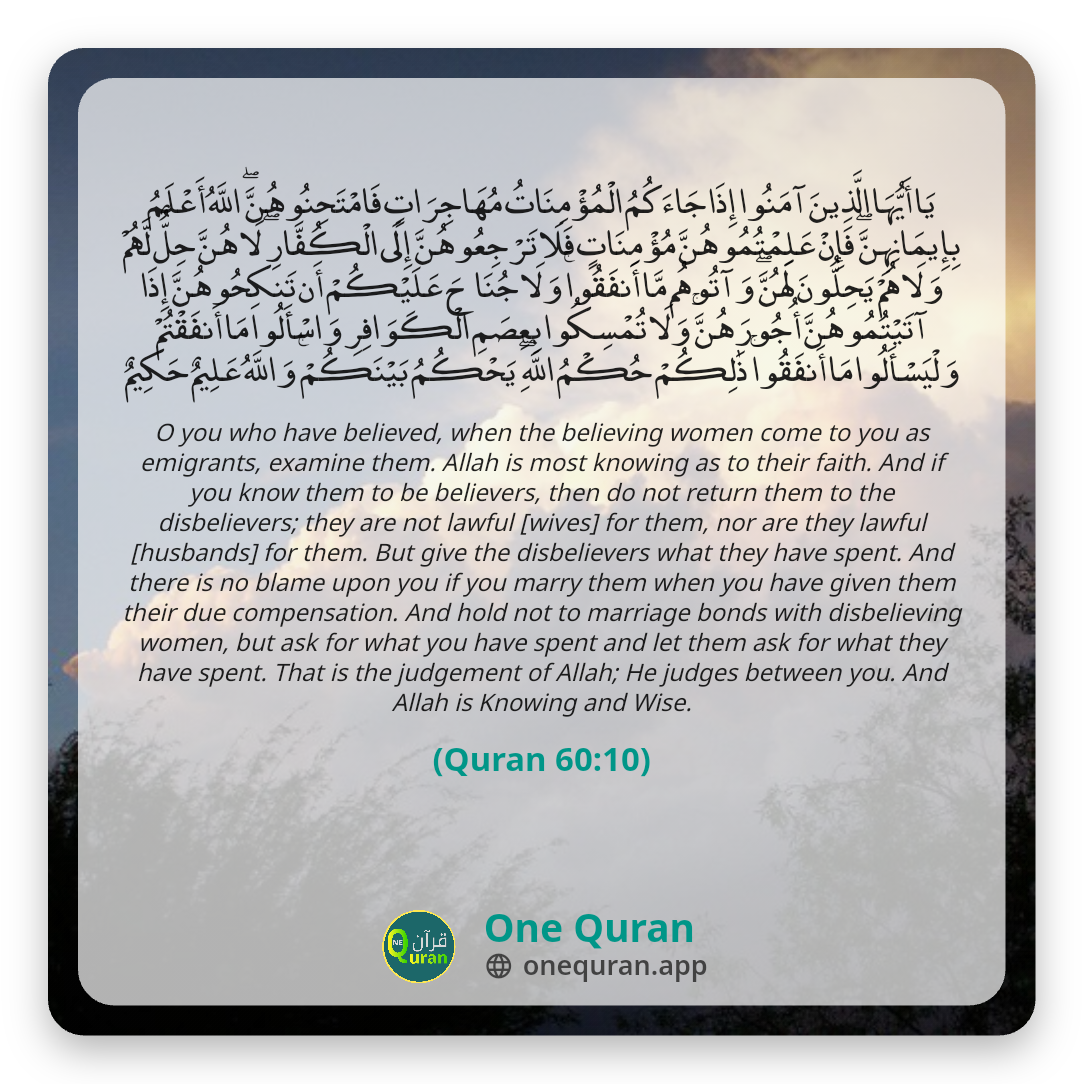
يَا أَيُّهَا الَّذِينَ آمَنُوا إِذَا جَاءَكُمُ الْمُؤْمِنَاتُ مُهَاجِرَاتٍ فَامْتَحِنُوهُنَّ ۖ اللَّهُ أَعْلَمُ بِإِيمَانِهِنَّ ۖ فَإِنْ عَلِمْتُمُوهُنَّ مُؤْمِنَاتٍ فَلَا تَرْجِعُوهُنَّ إِلَى الْكُفَّارِ ۖ لَا هُنَّ حِلٌّ لَّهُمْ وَلَا هُمْ يَحِلُّونَ لَهُنَّ ۖ وَآتُوهُم مَّا أَنفَقُوا ۚ وَلَا جُنَاحَ عَلَيْكُمْ أَن تَنكِحُوهُنَّ إِذَا آتَيْتُمُوهُنَّ أُجُورَهُنَّ ۚ وَلَا تُمْسِكُوا بِعِصَمِ الْكَوَافِرِ وَاسْأَلُوا مَا أَنفَقْتُمْ وَلْيَسْأَلُوا مَا أَنفَقُوا ۚ ذَٰلِكُمْ حُكْمُ اللَّهِ ۖ يَحْكُمُ بَيْنَكُمْ ۚ وَاللَّهُ عَلِيمٌ حَكِيمٌ
Transliteration:
Yā ayyuhāllaḏīna 'āmanū 'iḏā jā'akumu al-mu'minātu muhājirātin fa-imtaḥinūhunna; Allāhu 'a'lamu bi-'īmānihinna; fa-'in 'alimtumūhunna mu'minātin falā tarji'ūhunna 'ilā al-kuffāri; lā hunna ḥillun lahum wa-lā hum yaḥillūna lahunna; wa-'ātūhum mā 'anfaqū; wa-lā junāḥa 'alaykum 'an tankiḥūhunna 'iḏā 'ātaytumūhunna 'ujūrahunna; wa-lā tumsikū bi-'iṣami al-kawāfiri was'alū mā 'anfaqtum wal-yas'alū mā 'anfaqū; ḏālikum ḥukmu Allāhi yaḥkumu baynakum; wallāhu 'alīmun ḥakīm.
Translation:
"O you who have believed, when the believing women come to you as emigrants, examine them. Allah is most knowing as to their faith. And if you know them to be believers, then do not return them to the disbelievers; they are not lawful [wives] for them, nor are they lawful [husbands] for them. But give the disbelievers what they have spent. And there is no blame upon you if you marry them when you have given them their due compensation. And hold not to marriage bonds with disbelieving women, but ask for what you have spent and let them ask for what they have spent. That is the judgement of Allah; He judges between you. And Allah is Knowing and Wise." (Surah Al-Mumtahanah 60:10)
Historical Context (Asbab al-Nuzul)
This verse was revealed after the Treaty of Hudaybiyyah between the Prophet Muhammad ﷺ and the Quraysh of Makkah. One condition of the treaty stated that any man fleeing Makkah to join the Muslims in Madinah must be returned to Makkah. However, when female believers fled persecution to seek refuge, Allah revealed this guidance to ensure that believing women were not sent back into hostile, abusive environments where their faith and lives were endangered.
Key Explanations and Rulings
Classical commentators emphasize several foundational principles addressed within this single verse:
Examining Sincerity: Muslims were directed to verify that these women had migrated out of genuine faith and love for Islam, rather than personal disputes or marital strife. Nevertheless, Allah reminds us that absolute knowledge of what lies within the human heart belongs to Him alone.
Sanctuary and Protection: Once satisfied with their commitment, the believers were forbidden from returning these women to their hostile pagan relatives or husbands.
Financial Justice and Fairness: Even across ideological divides, Islam upholds financial rights. The verse commanded Muslims to return the dowries (mahr) spent by the non-Muslim husbands, preventing undue financial loss for either party.
Sanctity of Marriage: The verse dissolved existing marriage ties between believers and polytheists, clarifying that shared worldview and spiritual harmony form the bedrock of a valid Muslim marriage.
Core Lessons and Practical Reflections
While the verse addressed a specific historic event, its timeless wisdom offers crucial guidance for our daily lives:
Prioritizing Safety and Human Dignity: Islam places the protection of vulnerable people above political convenience. We must offer refuge and care to those escaping harm and persecution.
Fairness to All: Justice in Islam is non-negotiable. Even when dealing with adversaries, financial accountability, equity, and moral integrity must be preserved.
Clear Spiritual Priorities: True unity in a household starts with common moral foundations. Shared values protect families from internal spiritual strain.
Conclusion
Surah Al-Mumtahanah (60:10) reminds us that divine rulings seamlessly unite justice, compassion, and practicality. As Allah concludes the verse, He is 'Alimun Hakim—the All-Knowing, the All-Wise. In every decision we face, trusting in His wisdom guarantees balanced lives, fair dealings, and profound peace of mind.
- #surah al-mumtahanah
- #quran 60:10
- #quran reflection
- #islamic justice
- #faith and ethics