
Quranic Reflection
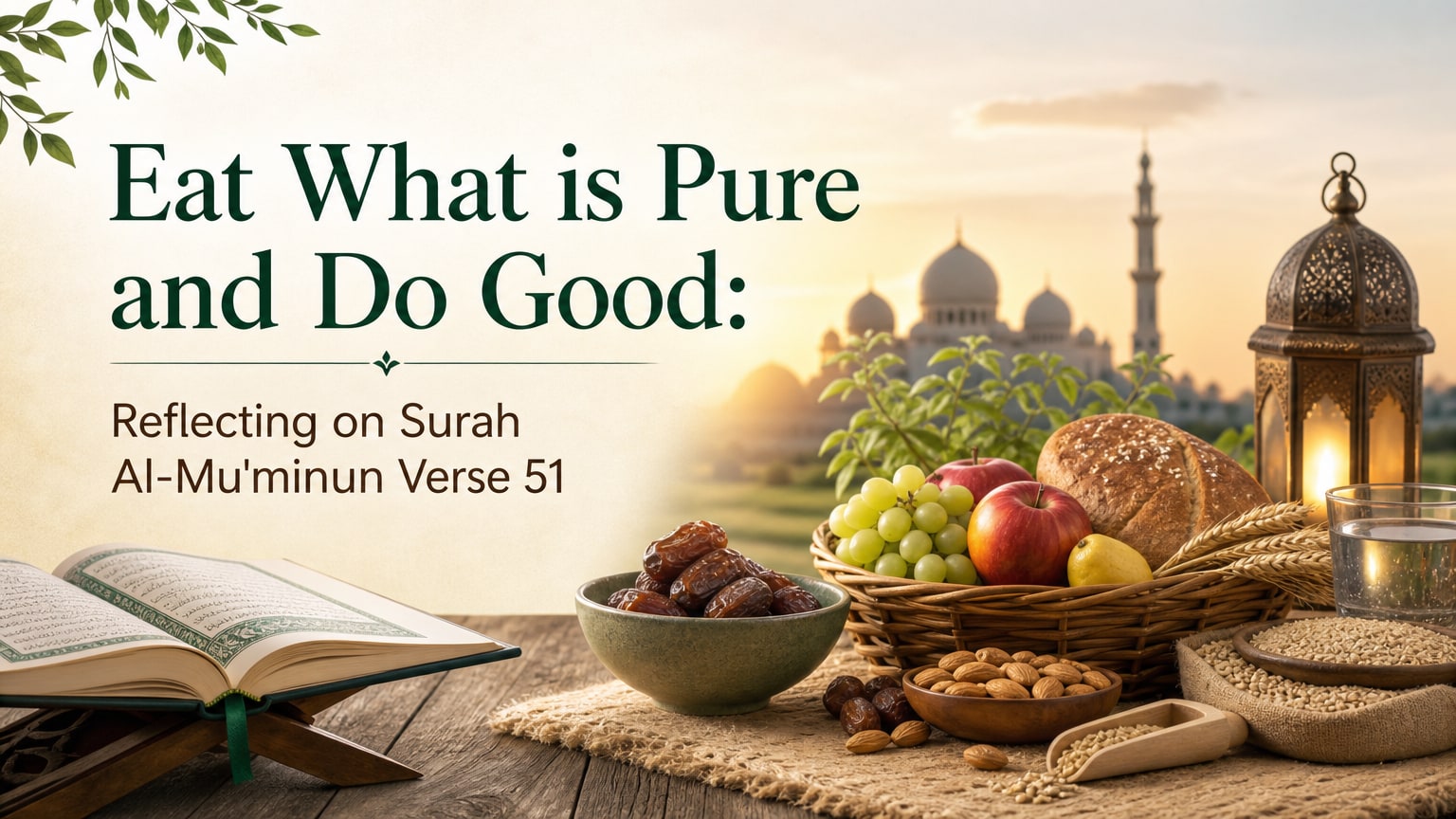
Eat What is Pure and Do Good: Reflecting on Surah Al-Mu'minun Verse 51
Discover the profound link between consuming lawful, wholesome sustenance and performing righteous deeds through the timeless guidance of Surah Al-Mu'minun (23:51).
In an era filled with processed foods and fast-paced lifestyles, finding mindful connections between body and soul has never been more vital. The Holy Qur'an provides a timeless blueprint for holistic living, reminding us that physical nourishment directly influences spiritual well-being.
The Sacred Verse
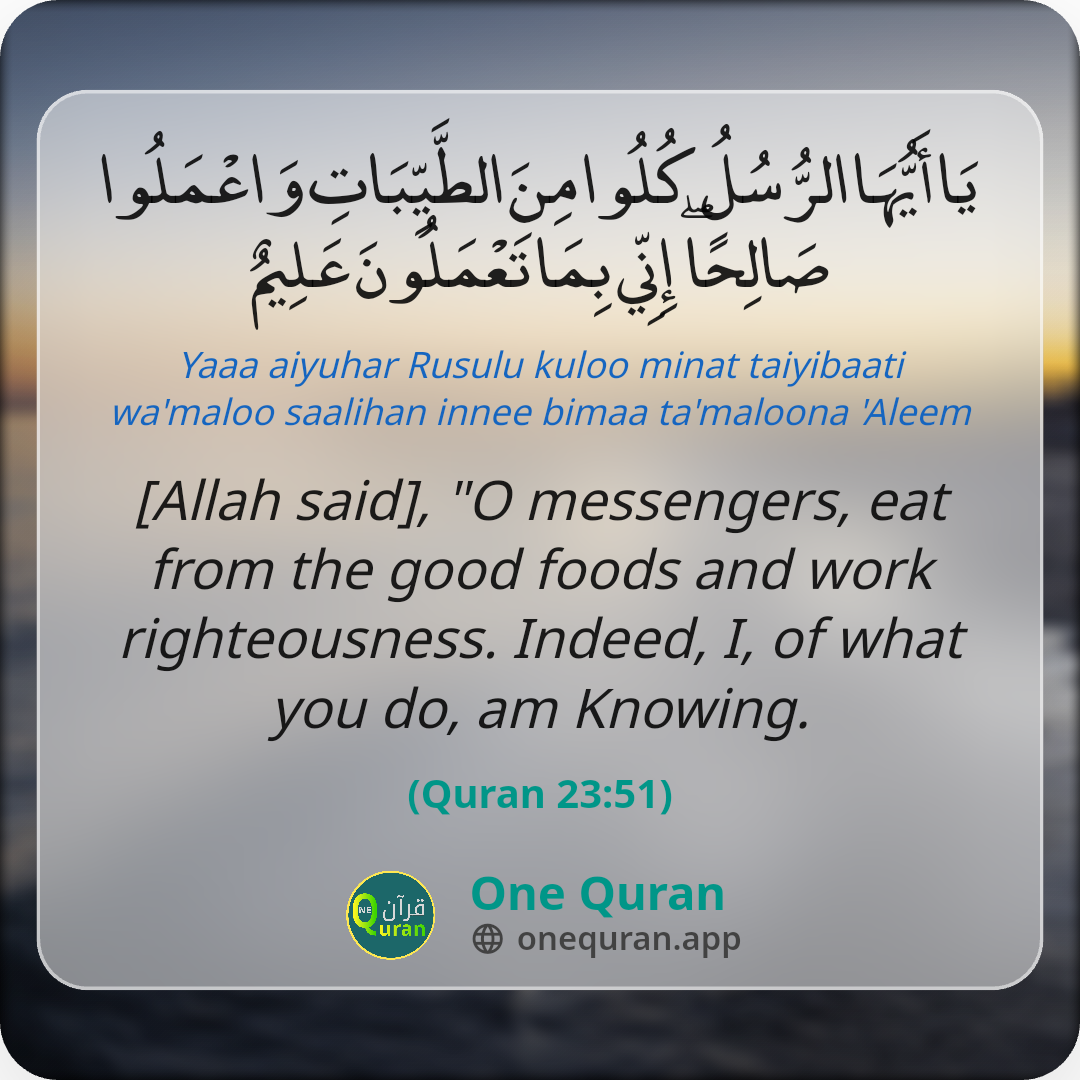
يَا أَيُّهَا الرُّسُلُ كُلُوا مِنَ الطَّيِّبَاتِ وَاعْمَلُوا صَالِحًا ۖ إِنِّي بِمَا تَعْمَلُونَ عَلِيمٌ
Yaaa aiyuhar Rusulu kuloo minat taiyibaati wa'maloo saalihan innee bimaa ta'maloona 'Aleem
Translation: "[Allah said], 'O messengers, eat from the good foods and work righteousness. Indeed, I, of what you do, am Knowing.'"
Understanding the Context and Meaning
In this verse, Allah Almighty addresses His noble Messengers, directing them to engage in two essential acts: consume that which is pure and wholesome (at-tayyibat), and perform righteous deeds (amal salih). Islamic scholars explain that while this command was spoken to the Prophets, it sets a direct standard for all believers.
The concept of tayyib in Islamic scholarship encompasses two core dimensions:
Lawful Acquisition (Halal): The sustenance must be earned ethically and legally, free from fraud, theft, or exploitation.
Pure Quality (Wholesome): The food itself must be clean, beneficial, permissible, and safe for physical and mental health.
The Direct Link Between Pure Food and Good Deeds
Classical commentators such as Ibn Kathir noted that Allah mentions consuming good sustenance alongside performing righteous deeds because wholesome sustenance provides both the physical energy and the spiritual purity needed to worship sincerely. What enters our bodies inevitably shapes our intentions, character, and spiritual receptivity.
This principle is further highlighted in a well-known narration from the Prophet Muhammad (peace and blessings be upon him) in Sahih Muslim:
"Allah the Almighty is Pure and accepts only that which is pure. Indeed, Allah has commanded the believers that which He commanded the Messengers: 'O Messengers! Eat of the good things and do righteous deeds.'"
The Prophet (peace be upon him) went on to describe a traveler whose supplications were rejected despite his prolonged journey and humbleness, simply because his food, drink, and clothes were derived from unlawful means.
Practical Daily Lessons
Applying verse 51 of Surah Al-Mu'minun to modern life requires conscious effort in both physical intake and ethical decisions:
Scrutinize Your Income: Ensure your livelihood is earned honestly, fulfilling business contracts, avoiding deceit, and respecting fair dealings.
Choose Clean and Nutritious Sustenance: Emphasize fresh, wholesome, and ethically sourced foods that nourish the body without harming health.
Fuel Sincere Worship: View every healthy meal as preparation and energy for righteous work, prayers, and community service.
Cultivate God-Consciousness: Remember the closing phrase of the verse, "Indeed, I, of what you do, am Knowing." Allah is fully aware of both our outward deeds and the hidden sources of our provisions.
Personal Reflection and Conclusion
Every bite we consume is not merely calorie intake; it is a spiritual choice. When we strive to ensure our bread is earned through integrity and our food is pure and beneficial, our hearts soften toward kindness, charity, and steadfast worship. By harmonizing what we eat with how we live, we align our lives with the divine balance commanded to the Messengers themselves.
- #surah al-muminun
- #quran 23 51
- #halal food
- #tayyib
- #righteous deeds
- #quran reflection
- #islamic teachings