
Quran Reflections
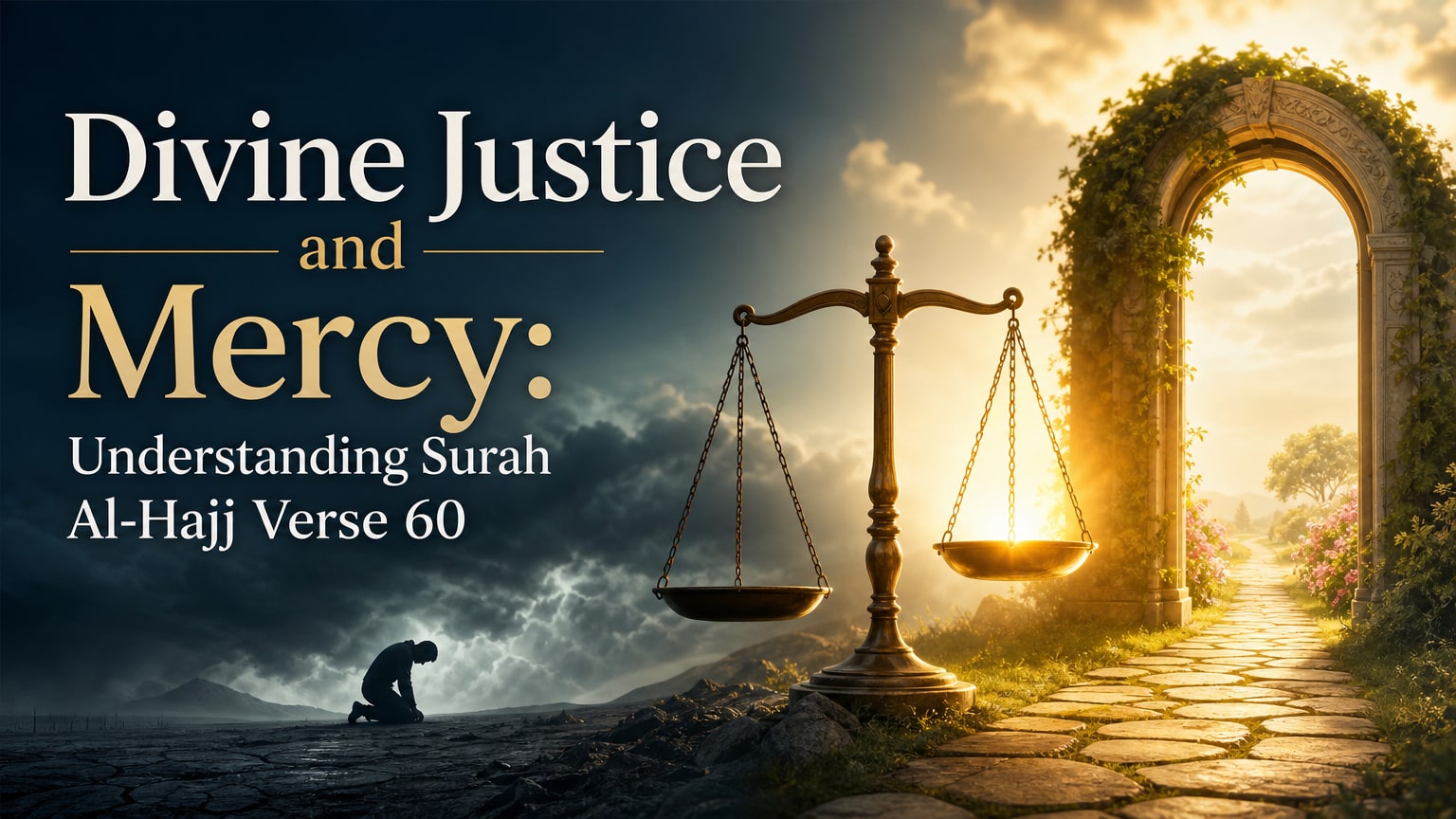
Divine Justice and Mercy: Understanding Surah Al-Hajj Verse 60
Discover the balance of justice, defense against oppression, and divine forgiveness in Surah Al-Hajj (22:60), showing how Allah supports the wronged.
In a world often challenged by conflict, unfairness, and personal grievances, the Qur'an offers a timeless framework for restoring balance. It validates the natural human desire for justice while illuminating the path toward higher moral consciousness and divine aid. Surah Al-Hajj, verse 60, delivers a profoundly reassuring message to anyone who has ever faced wrongful aggression, reminding believers that Allah never overlooks oppression.
The Verse: Surah Al-Hajj (22:60)
Arabic:
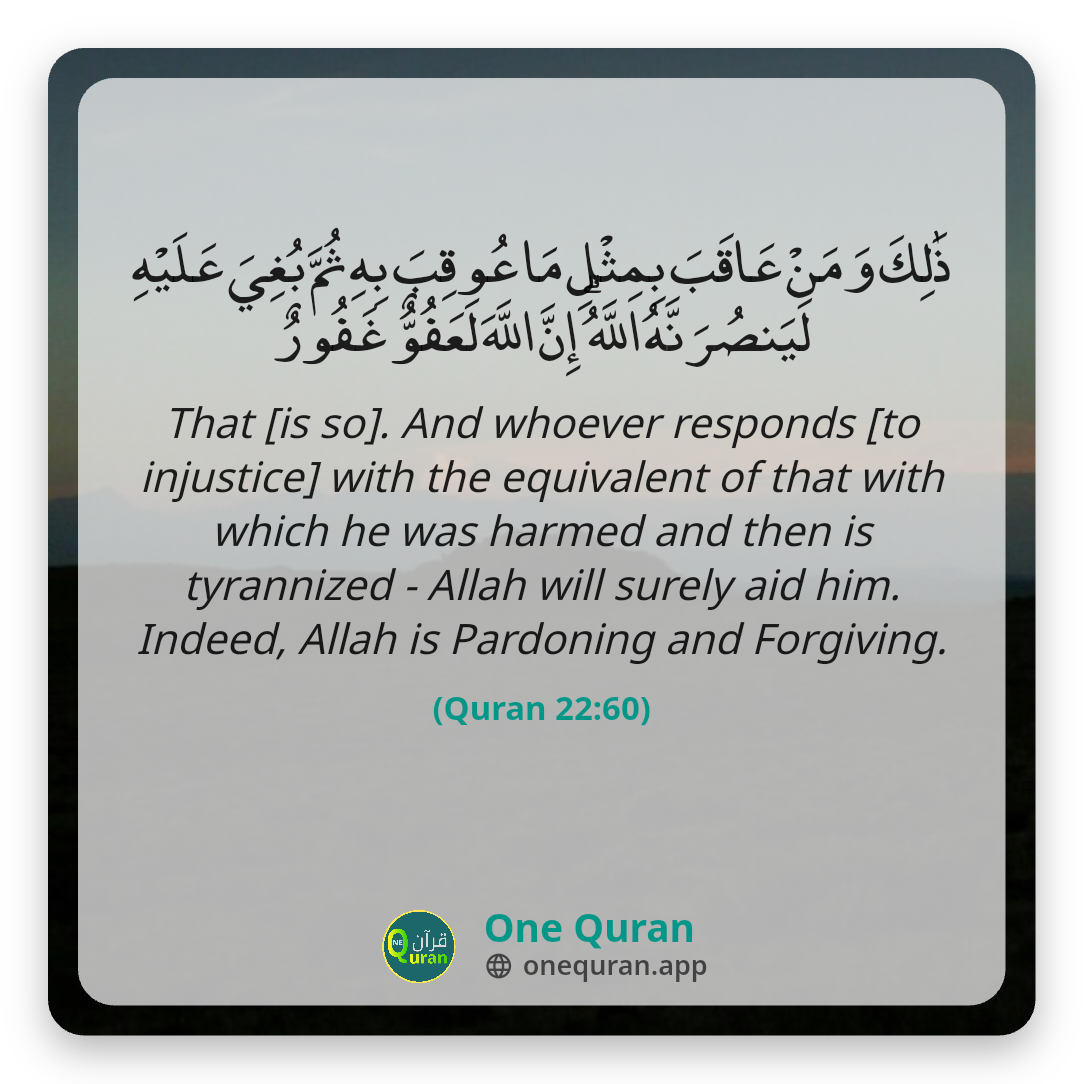
ذَٰلِكَ وَمَنْ عَاقَبَ بِمِثْلِ مَا عُوقِبَ بِهِۦ ثُمَّ بُغِىَ عَلَيْهِ لَيَنصُرَنَّهُ ٱللَّهُ ۗ إِنَّ ٱللَّهَ لَعَفُوٌّ غَفُورٌۭTransliteration:
Zalika wa man 'aqaba bimithli ma 'uqiba bihi thumma bughiya 'alayhi layansurannahullahu inna Allaha la'afuwwun ghafur.Translation:
"That [is so]. And whoever responds [to injustice] with the equivalent of that with which he was harmed and then is tyrannized - Allah will surely aid him. Indeed, Allah is Pardoning and Forgiving." (Qur'an 22:60)
Context and Meaning
Classical commentators of the Qur'an, such as Ibn Kathir and Al-Tabari, note that this verse touches upon the practical realities faced by believers when attacked or mistreated. The verse establishes an essential rule of divine law: proportional retaliation is legally permissible, yet unprovoked hostility or further oppression against the victim triggers direct divine intervention.
The verse highlights three critical principles:
Proportionality in response: If someone seeks justice, they may only take back what is rightfully equivalent to what was taken from them, without transgressing boundaries or inflicting excessive retribution.
Divine guarantee of help: If an individual exercises restraint or claims only their rightful due and is subsequently assaulted or tyrannized again (bughiya 'alayhi), Allah gives an emphatic promise: "Allah will surely aid him."
The call to grace: The verse concludes with two majestic divine attributes: Al-'Afuww (The Pardoner) and Al-Ghafur (The All-Forgiving). Even though justice is permissible, Allah subtly encourages mercy, reminding us that He loves to overlook shortcomings.
Key Lessons from the Verse
1. Islam Recognizes the Reality of Injustice
Islam does not demand passive submission to cruelty. A wronged person has the God-given dignity to stand up, set limits, and demand justice. The Qur'an protects the vulnerable from remaining perpetual victims.
2. Retaliation Must Never Exceed Equity
Human anger often drives individuals to repay an insult with severe harm or a small slight with devastation. Surah Al-Hajj firmly restricts response to "the equivalent of that with which he was harmed." Crossing that line turns the victim into an aggressor.
3. The Promise of Divine Victory
When worldly means fail and an aggressor continues to oppress someone who sought nothing more than balance, Allah Himself guarantees assistance. This assurance provides unmatched psychological strength and peace of heart to the oppressed.
4. Grace Transcends Legal Right
By ending with "Indeed, Allah is Pardoning and Forgiving," the Qur'an invites hearts to ascend from the station of pure justice ('Adl) to the elevated station of excellence and pardon (Ihsan). True strength often lies in the ability to forgive when one possesses the power to retaliate.
Practical Applications for Daily Life
Manage anger in conflicts: When mistreated in family life, business, or community interactions, pause before reacting. Ensure your response does not escalate the conflict beyond the initial harm.
Rely on Allah when outmatched: If you face systematic oppression or workplace bullying where human power favours the tyrant, place your trust in Allah’s explicit promise of assistance.
Choose pardon when possible: Reflect on Allah's pardoning nature. If choosing forgiveness does not encourage further evil or endanger others, embracing mercy cleanses the soul and earns divine reward.
Personal Reflection
Reflecting on this verse reminds us that justice is not merely an institutional concept, but an internal spiritual discipline. When harmed, our instinct is retribution; yet Allah teaches us measured restraint and reminds us of His ultimate support. Knowing that the Lord of the heavens and the earth guarantees aid to the oppressed liberates the heart from helplessness, guiding us toward balanced conduct, unwavering patience, and merciful hearts.
- #surah al-hajj
- #quran 22:60
- #justice in islam
- #divine aid
- #forgiveness
- #quran reflection