

Islamic Spirituality
5 Practical Steps to Overcome Life's Hardships Through True Tawakkul
Discover a transformative five-step framework rooted in Quran and authentic Sunnah to overcome anxiety, master tawakkul, and unlock deep spiritual resilience.
Every human soul experiences moments when trials feel suffocating, anxieties mount, and solutions seem beyond reach. During these critical crossroads, many believers inadvertently oscillate between two extremes: either falling into total despair and relying entirely on worldly instruments, or passively resigning to fate while abandoning the necessary action. In Islamic tradition, genuine peace and triumph are unlocked through Tawakkul (complete reliance upon Allah coupled with active effort). By aligning the heart and limbs with the divine guidance of the Quran and the Sunnah, you can lift burdensome anxieties and confront life with unwavering resilience.
The Core of Tawakkul: Blending Faith and Means
True Tawakkul is neither passivity nor fatalism. Ibn Rajab al-Hanbali (may Allah have mercy on him) noted in Jami' al-'Ulum wal-Hikam that reliance upon Allah consists of the sincere dependence of the heart on Him while simultaneously taking the permissible physical means (al-asbab). Relying on worldly causes alone without Allah is spiritual deficiency, while abandoning practical means under the pretext of trust in Allah is neglect of the prophetic command.
The Messenger of Allah ﷺ explained this equilibrium with utmost clarity when a man asked whether he should tie his camel or merely leave it and rely upon Allah:
عَنْ أَنَسِ بْنِ مَالِكٍ قَالَ: قَالَ رَجُلٌ: يَا رَسُولَ اللَّهِ أَعْقِلُهَا وَأَتَوَكَّلُ أَوْ أُطْلِقُهَا وَأَتَوَكَّلُ؟ قَالَ: «اعْقِلْهَا وَتَوَكَّلْ»
Anas ibn Malik reported: A man said, "O Messenger of Allah, should I tie my camel and rely upon Allah, or leave it loose and rely upon Him?" The Prophet ﷺ said: "Tie her and rely upon Allah."
Reference: Sunan al-Tirmidhi (Hadith 2517), Graded Hasan by Al-Albani. Sunnah.com Reference
With this foundation, let us examine the practical five-step methodology to release mental torment and navigate your trials under divine care.
The 5 Steps to Protect Your Peace and Overcome Any Crisis
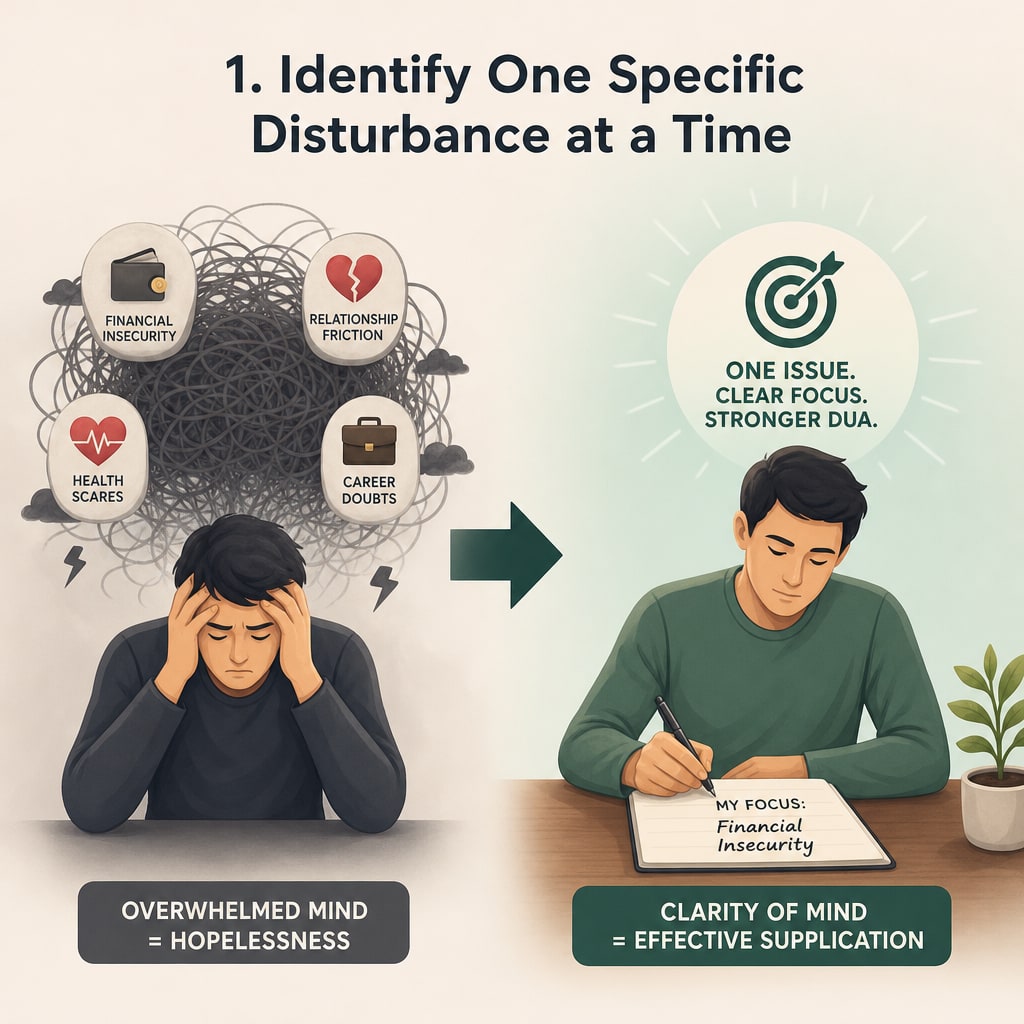
1. Identify One Specific Disturbance at a Time
When hardship strikes, the mind often aggregates multiple anxieties into an overwhelming mountain: financial insecurity, relationship friction, health scares, and career doubts. Shaytan capitalizes on this mental chaos to induce hopelessness. Break this cycle by focusing on a single issue at a time. Pinpoint the precise challenge that weighs most heavily on your conscience and write it down. Dealing with issues in isolation restores mental clarity and prepares the heart for focused supplication.
2. Surrender and Delegate the Burden to Allah (Tafweed)
Once you have pinpointed the exact issue, sit in silence and consciously surrender the problem to the Creator of the heavens and the earth. In Islamic theology, this process is known as Tafweed—entrusting your affairs entirely to Allah's infinite wisdom. Acknowledge your human weakness and lift the internal weight off your shoulders by uttering the profound declaration:
وَأُفَوِّضُ أَمْرِي إِلَى اللَّهِ ۚ إِنَّ اللَّهَ بَصِيرٌ بِالْعِبَادِ
"And I entrust my affair to Allah. Indeed, Allah is Seeing of [His] servants."
(Surah Ghafir, 40:44)
Tell your Creator sincerely: "O Allah, I cannot carry this alone; I place this matter entirely in Your hands." Giving up the burden internally does not mean giving up on life; it shifts the foundation of your confidence from your limited intellect to His limitless power.

3. Strip Away Rigid Expectations and Embody Rida (Contentment)
Much of human suffering originates from forcing personal expectations onto divine decrees. We often demand a specific outcome within our chosen timeframe. The person of sincere tawakkul accepts that Allah knows what is best, even when outcomes clash with immediate personal desire.
وَعَسَىٰ أَن تَكْرَهُوا شَيْئًا وَهُوَ خَيْرٌ لَّكُمْ ۖ وَعَسَىٰ أَن تُحِبُّوا شَيْئًا وَهُوَ شَرٌّ لَّكُمْ ۗ وَاللَّهُ يَعْلَمُ وَأَنتُمْ لَا تَعْلَمُونَ
"Perhaps you hate a thing and it is good for you; and perhaps you love a thing and it is bad for you. And Allah knows, while you know not."
(Surah Al-Baqarah, 2:216)
Release the need to script every detail of the resolution. Trust that whether the outcome looks bitter or sweet on the surface, its ultimate culmination contains goodness and wisdom for your worldly life and the Hereafter.

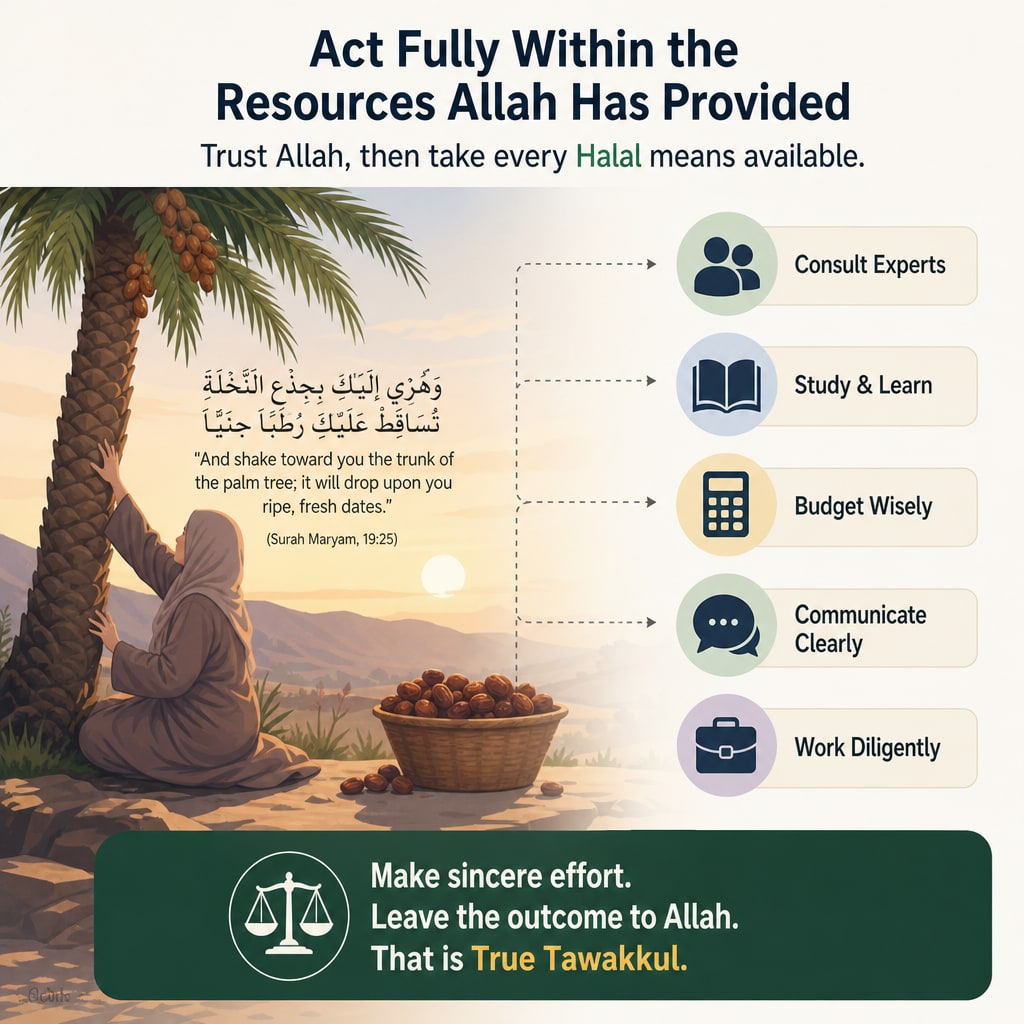
4. Act Fully Within the Resources Allah Has Provided
After entrusting the matter to Allah, channel your energy into practical, Halal solutions. Look at Maryam (peace be upon her): while experiencing labor pains beneath a date palm tree, exhausted and frail, Allah directed her to physical exertion:
وَهُزِّي إِلَيْكِ بِجِذْعِ النَّخْلَةِ تُسَاقِطْ عَلَيْكِ رُطَبًا جَنِيًّا
"And shake toward you the trunk of the palm tree; it will drop upon you ripe, fresh dates."
(Surah Maryam, 19:25)
A solitary woman in intense labor cannot shake a sturdy palm tree to dislodge dates through sheer muscle power. Yet Allah commanded the physical gesture to teach believers that divine miracles intersect with our sincere, modest efforts. Similarly, Prophet Musa (peace be upon him) was instructed to strike the Red Sea with a wooden staff before it split (Surah Ash-Shu'ara, 26:63). Take every lawful measure available to you: consult experts, study, budget, communicate, and work diligently.
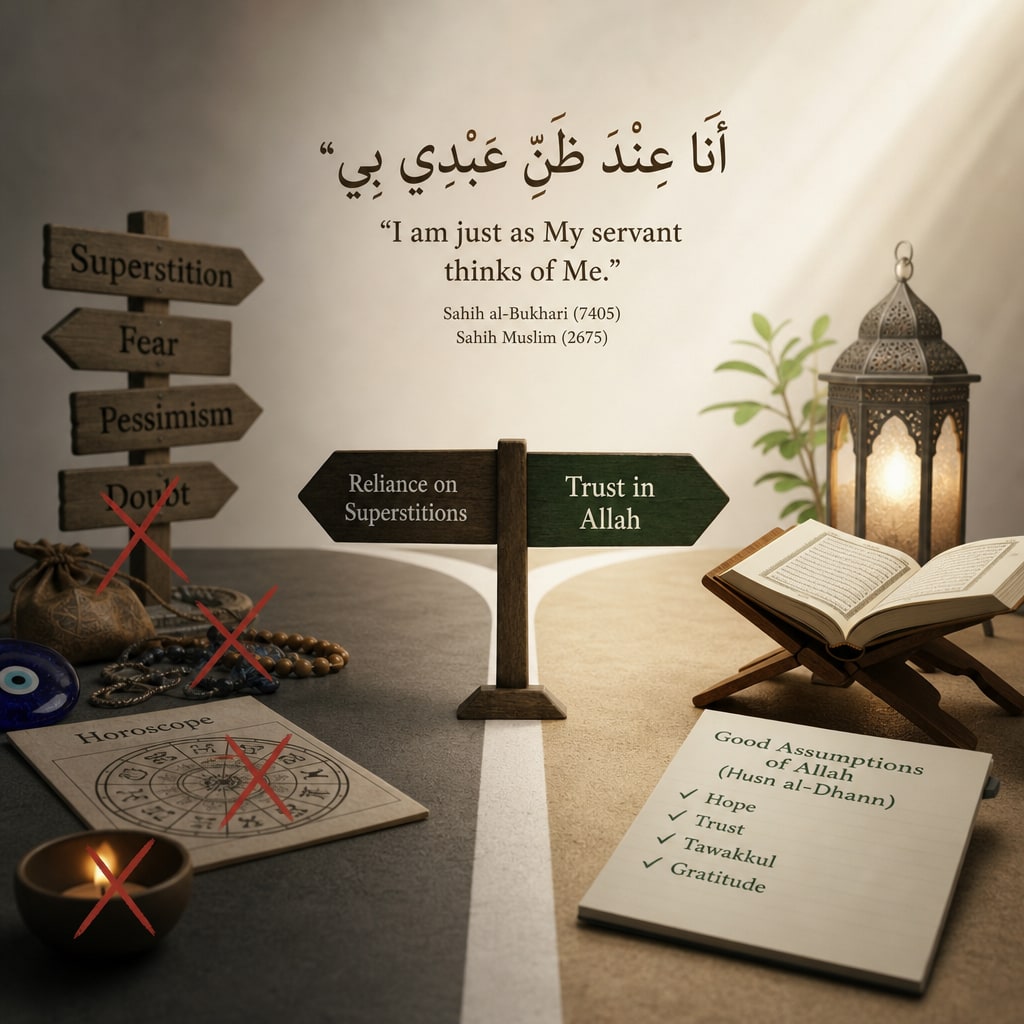
5. Guard Against Superstition and Maintain Good Assumptions of Allah (Husn al-Dhann)
Pessimism, fear of failure, and seeking superstitious shortcuts (such as charms, evil eye beads, horoscopes, or despairing thoughts) contradict the purity of Islamic monotheism (Tawheed). When things go wrong, recognize that Shaytan attempts to weaken your spirit with whispers of regret and doubt.
The Messenger of Allah ﷺ said in an authentic Hadith Qudsi:
عَنْ أَبِي هُرَيْرَةَ رَضِيَ اللَّهُ عَنْهُ قَالَ: قَالَ النَّبِيُّ صَلَّى اللَّهُ عَلَيْهِ وَسَلَّمَ: يَقُولُ اللَّهُ تَعَالَى: «أَنَا عِنْدَ ظَنِّ عَبْدِي بِي»
Abu Huraira reported: The Prophet ﷺ said, "Allah the Exalted says: 'I am just as My servant thinks of Me.'"
Reference: Sahih al-Bukhari (Hadith 7405), Sahih Muslim (Hadith 2675). Sunnah.com Reference
Scholars affirm that maintaining good expectations of Allah is an obligation of faith. For scholarly guidance on the impermissibility of superstitions and how they contradict trust in Allah, refer to the verified fatawa of international legal councils (IslamQA Fatwa #10543 on Superstitions and Charms).
The Four Divine Truths When Trials Linger
Even when a difficulty persists after executing these five steps, reinforce your heart with four foundational realities:
Allah possesses the ultimate decree: Nothing occurs outside His comprehensive knowledge and wisdom.
Latent good resides within every hardship: Hardships expiate misdeeds, purify the character, and elevate spiritual ranks.
Trial is a metric of endurance: Life is a transient examination room designed to reveal our devotion and patience.
Setbacks provide indispensable growth: Even our errors, when followed by sincere repentance (Tawbah), teach us divine mercy, humility, and the resilience to emerge stronger.
By delegating your burdens to the Almighty, acting diligently upon the causes in front of you, and anchoring your soul in authentic revelation, you cultivate an impenetrable fortress of peace that no worldly turbulence can shake.
- #tawakkul
- #islamic mindset
- #quran verses
- #authentic hadith
- #overcoming anxiety
- #spiritual resilience